When I was in elementary school, the school I went to did this thing called “Whiz Kids ” that was an extracurricular academic project. Kids who wanted to would put together a presentation, similar to a science fair project, but on any topic of their choosing. Then, they would present this in class. As I remember it, someone from the administration, like the principal, would come to give the presentation a grade. Everyone got a certificate who presented, but there were definitely differences in the grades received. I once did a presentation on World War I airplanes. I worked on this for quite a while, including going to the library with my dad to find some information on the different planes and then drawing some of them. My dad and I also built a pretty cool model of the Fokker Dr.I, the famous red triplane flown by the Red Baron. I had a lot of fun with the project and learned some stuff, but the presentation was maybe a little weak, and that showed in the fact that I didn’t get the highest marks possible. Other than that experience, World War I has been something I haven’t learned a lot about.
 The Guns of August by Barbara W. Tuchman (ISBN: 978-0-345-47609-8), since it is about the first thirty days of the war, doesn’t do much more than mention reconnaissance planes a couple times when it comes to the airplanes of World War I, but the book does provide a very detailed review of those critical early battles in 1914. The stage is set with an extensive review of both French and German military doctrine leading up to the war, as well as the military and political personalities involved. After the French and German positions were well established, the reader learned about the English and the Belgians. Then, things got moving, and the Germans invaded Belgium. It didn’t go quite as they planned, though, with a lot more Belgian defensive efforts than they planned on and an English response that somehow seemed to not be completely accounted for in German war planning. The Germans still advanced quickly, taking advantage of their superior numbers and superior firepower. Once they were well into French territory, the French finally gathered themselves and were able to stop the German advance only miles from Paris. The French effort was eventually aided by the British, who were shown to, overall, be slow and indecisive during this opening stage of the war, and by the Russians, who opened an eastern front that the Germans were forced to respond to even though it ultimately proved to be less of a concern than initially thought. Throughout the first thirty days of the war, all parties involved suffered from indecisiveness, incomplete information, and decisions based more on what people had planned on than on what was actually happening. These mistakes were a large reason the war took the turn that it did, leading to four years of trench warfare that left Europe broken.
The book was an interesting read, heavy on names and dates, although written in a very readable, narrative form, which earned Tuchman the Pulitzer Prize and is considered a classic of history. As noted above, I know less than I probably should about World War I, but the book solidified for me the overall impression I had of the war: a petty squabble that turned into a worldwide mess that resulted in a ridiculous level of loss of life and destruction. The war was started by empires itching for a fight. Once they got in the ring, tactical and strategic blunders turned what could’ve been a knock out in the first round into one of those marathon twelve-round bouts. Over and over, as I read, it just seemed like so much unnecessary fighting. Although I found the book a little dry at times, I liked learning more about the war and those involved. It had a large impact on what would happen only twenty years later.
The Guns of August by Barbara W. Tuchman (ISBN: 978-0-345-47609-8), since it is about the first thirty days of the war, doesn’t do much more than mention reconnaissance planes a couple times when it comes to the airplanes of World War I, but the book does provide a very detailed review of those critical early battles in 1914. The stage is set with an extensive review of both French and German military doctrine leading up to the war, as well as the military and political personalities involved. After the French and German positions were well established, the reader learned about the English and the Belgians. Then, things got moving, and the Germans invaded Belgium. It didn’t go quite as they planned, though, with a lot more Belgian defensive efforts than they planned on and an English response that somehow seemed to not be completely accounted for in German war planning. The Germans still advanced quickly, taking advantage of their superior numbers and superior firepower. Once they were well into French territory, the French finally gathered themselves and were able to stop the German advance only miles from Paris. The French effort was eventually aided by the British, who were shown to, overall, be slow and indecisive during this opening stage of the war, and by the Russians, who opened an eastern front that the Germans were forced to respond to even though it ultimately proved to be less of a concern than initially thought. Throughout the first thirty days of the war, all parties involved suffered from indecisiveness, incomplete information, and decisions based more on what people had planned on than on what was actually happening. These mistakes were a large reason the war took the turn that it did, leading to four years of trench warfare that left Europe broken.The book was an interesting read, heavy on names and dates, although written in a very readable, narrative form, which earned Tuchman the Pulitzer Prize and is considered a classic of history. As noted above, I know less than I probably should about World War I, but the book solidified for me the overall impression I had of the war: a petty squabble that turned into a worldwide mess that resulted in a ridiculous level of loss of life and destruction. The war was started by empires itching for a fight. Once they got in the ring, tactical and strategic blunders turned what could’ve been a knock out in the first round into one of those marathon twelve-round bouts. Over and over, as I read, it just seemed like so much unnecessary fighting. Although I found the book a little dry at times, I liked learning more about the war and those involved. It had a large impact on what would happen only twenty years later.
 | This work, including all text, photographs, and other original work, is licensed under a Creative Commons Attribution Non-Commercial No Derivatives 3.0 License and is copyrighted © MMXIV John Pruess. |


 An American Life: The Autobiography by Ronald Reagan (ISBN: 0-671-69198-8) chronicles Reagan’s life from the time he was born to the end of his presidency. He spends significant time on his childhood, teenage years, and college years. These formative years provided a strong foundation that would serve as a basis for Reagan’s later success in life and in politics. He was open about the shortcomings that both he and his family members had (such as his alcoholic father). He chronicled his entry into the media business, first as a sportscaster and later as an actor, where he had some considerable success. The major portion of the book, though, is dedicated to Reagan’s political pursuits. He spends a little bit of time discussing his stint as governor of California. He talks about political friends and foes, the problems that faced the state, and what he was able to do about them, claiming victory in some instances and admitting defeat in others. Easily half of the book is dedicated to Regan’s time as president of the United States. The budget, the Cold War, and foreign policy are the major themes. In the discussion about budget, there is a major sub-current: liberal bias in the media and the inability of the Democratcs to compromise. Reagan clearly found the Cold War and his role in it to be extremely important because the book talked about that a lot and included more journal entries quoted on that topic than any other. He also quoted lengthy passages from correspondence between himself and Soviet leaders. Here, it seemed, details mattered. Iran-Contra was dealt with extensively. Reagan wanted the U.S. to play a major role in foreign policy in Europe and South America, but strove for balance that encouraged the countries in those regions to solve their own problems, much like his economic policy at home tried to encourage the American people to do their part to pull themselves out of their economic hardships.
 A Higher Call: An Incredible True Story of Combat and Chivalry in the War-torn Skies of World War II (ISBN: 978-0-425-25286-4) by Adam Makos and Larry Alexander is a unique story that tells the story of one of America’s greatest generation as well as a German fighter pilot who was doing his patriotic duty in fighting to defend his family and his country who came together for a few minutes over wartime Germany for an experience like no other. The book chronicles the life of Franz Stigler, the German ace pilot. He had other plans for life, but became one of Germany’s top pilots once war forced itself into his life. In the 480 combat missions he flew, he faced just about everything imaginable, including the loss of his closest kin. It also tells about American Charlie Brown, although I thought maybe not in quite the same detail. Brown did not have the long, distinguished combat career that Stigler did. He got off to a bit of a rough start, though, and his plane and crew were badly shot up in their first bombing raid over Germany. A couple of them lost their lives, and it seemed to the men in the plane that they should not have been able to fly back to their base in England. Brown more than once credited the fact that the plane stayed up to the hand of God, and I do not doubt him. As the American bomber flew away from its target, Stigler approached in his fighter. He could’ve easily been the straw to break the camel’s back, but he was himself amazed at how the plane stayed up in its battered state, flew in for a closer look, and felt a professional respect for his aeronautical compatriot behind the controls of the American plane. His long combat career and worthy mentors had taught Franz that his job was about protecting his homeland and the everyday people of his homeland (Franz, like many of the aviators, was ideologically against the Nazis), not needlessly killing, even when he had the enemy in his crosshairs. Instead of shooting the plane down for yet another kill, Stigler escorted the bomber past the German anti-aircraft defenses. This act was unprecedented and unrepeated. The book finishes with a description of Brown’s desire to find the German pilot who had been so kind to him and their subsequent opportunity to meet up and bring some understanding to people who had been on opposite sides of such an awful conflict.
 I Am Malala by Malala Yousafzai (ISBN: 978-0-297-87092-0) is the story of the schoolgirl from the time she was a little girl to the beginning of her recovery in England. The book starts with her young childhood and takes the reader through day she was shot in great detail. Interwoven into her discussion of cricket with friends, friendly competition among classmates, and trips to ancestral villages to visit extended family are brief lessons on Pakistani history and geography, which adequately set the stage for Malala’s life and what would become important to her as she got older. Far away from the bigger cities where more liberal attitudes existed, life in the villages of Swat went on much like it had for centuries, following traditional Islamic custom. Malala’s father was a trend-setter in many ways and surrounded himself with others who wanted to see progress in the field of education. He believed everyone should have an education. He also didn’t have a lot of use for many of the traditions that prevented women from freely moving about, going to school, or otherwise expressing themselves. His oldest daughter followed in his footsteps and was nationally prominent by the time she was of junior high age, having won a few national awards, having met with various Pakistani dignitaries on the way. She enjoyed school, enjoyed learning, and wished everyone had the same opportunity. She saw how the lack of such opportunities negatively affected others in her community, including her own mother, who was illiterate. She and two others were shot by Taliban gunmen in 2012, and because she needed long-term intensive care and was under continued threat, she and her family were evacuated to the UK, where they have lived ever since.
 A River in Darkness: One Man's Escape from North Korea by Masaji Ishikawa (ISBN: 978-1-5420-4719-7) is just such a tale, although it does have an interesting twist. The author was not born in North Korea; in fact, he was born in Japan and was ethnically half Japanese. His dad, who was not native to Japan, moved his family to North Korea under pressure from ethnic compatriots and the pressure of being an ethnic minority in re-building, post-war Japan, where such minorities weren’t always welcome. The promises of the Communist utopia were very quickly discovered to be a total sham by the author and his family. However, there was no real opportunity to get out. The author's family had nothing to offer the Communist Party, so they lived as peasants, eventually finding that living under the radar of the authorities was easier than trying to conform to the system in North Korea. Eventually, Ishikawa tires of the poverty, starvation, racism, hypocritical inequality, and lack of freedom. He heads toward the border with China, fearful, but determined to make a break for it since, although that would mean an uncertain future, it was better than the future he could easily predict inside North Korea. He made it to China, eventually linking up with the Japanese embassy there, which, with great difficulty, helped exfiltrate him to Japan. Once back, Japan had jumped forward forty or so years, while North Korea had steadily gone backward. Ishikawa struggled to adjust and felt abandoned by Japan.
 Putin Country: A Journey into the Real Russia by Anne Garrels (ISBN: 978-1-250-11811-0) provides a glimpse into Russia outside Moscow’s Ring Road and away from St. Petersburg’s glittering canals. Garrels, who was a journalist in the Soviet Union, returned to Russia and decided to spend time in Chelyabinsk, also an industrial city, but one famous for being part of the Soviet military-industrial complex. Like a lot of Russia, life here was extremely turbulent during the 1990s, right after the fall of Communism, and many people were happy to see some stability come to their lives and their country when Vladimir Putin came to power. Since then, life has gone on, and, as tends to happen, different people’s lives have taken them different places. The author delivers a number of short sketches of these different lives. There are taxi drivers, working moms, doctors, activists, journalists, people fighting for the rights of disabled people, environmentalists, farmers, and entrepreneurs. Not many sections of society are left untouched. With all of her friends and contacts, Garrels eventually gets to the political questions Westerners wonder about. In many cases, the Russians she talks to are either on board with Putin or at least accepting of the way things are going. In the rarer cases when the people she talks to don’t like the way things are trending in Russia, the option isn’t to fight the good fight at home and change things through activism and electing the right people; the alternative to satisfaction with the status quo is to emigrate. Garrels chronicles the hopelessness that many people feel, regardless of their political opinions, because they feel that Putin’s reign is a machine that cannot be altered.
 The Days of the Consuls by Ivo Andrić (ISBN: 978-86-6457-018-3), which has been published in English under the alternative titles of Travnik Chronicle and Bosnian Chronicle, fits right into Andrić's main motif, telling the story of the city of Travnik, which is medium-sized for Bosnia today, but was historically much more important as the seat of the Ottoman Empire in Bosnia, during a few short years while the Austro-Hungarian Empire and Napoleon’s France kept consuls in the town. The story is told from an omniscient narrator point of view, but focuses largely on French consul, his entourage, and his interactions with the others in Travnik, be they local or outsider. The French consul deals with being an outsider himself, shunned by the local Muslims and never really understood by the Ottoman representative, although their relationship was cordial. He remains the enemy of the Austro-Hungarian consul, although he sees many similarities between the two men and carries on professional, if not friendly, relations with him. The members of the consuls’ families and entourages are met with varying degrees of acceptance or disgust by those around them, including those from the local clergy. The Muslim population seems to be the most vocal in their distaste for the outsiders, but the Orthodox, Catholic, and Jewish populations also steer clear and are distrustful of the changes the presence of the consuls seems to be ushering into their otherwise simple lives. When Napoleon is finally defeated, the French no longer see the need for a consul in Travnik, and the French consul is recalled. The Austrians also remove from Bosnia. With all that has changed, all has remained the same.
 Dachau and the Nazi Terror: 1933–1945: Testimonies and Memoirs edited by Wolfgang Benz and Barbara Distel (ISBN: 3-9808587-0-7) is a collection of memoirs written up by a variety of people who, in some way, experienced the Nazi concentration camps. The volume contains thoughts from a couple different German Jews, a member of the French resistance, American liberators, Jews from other parts of Europe, including Poland, what was then Czechoslovakia, and even the further-away Latvia. It was interesting to read the variety of experiences. The common denominators were that everyone, sooner or later, experienced the terror of the concentration camps and that the vast majority of those interred were there because of their ethnicity or because of their political beliefs. Other than the two short testimonies provided by American liberators, each of the former prisoners discussed the drudgery of prison life, the daily struggle for life that got harder and harder the longer the war dragged on, and extreme contrast between the brutality of so many and the kindness of a few soldiers and citizens who rose above the prevailing patterns of thought and behavior. It was interesting to read about the various commentators’ lives before and during the war, their varying degrees of commitment to their religious or political ideals, and their varied responses to life in the concentration camps.
 An Inconvenient Book: Real Solutions to the World's Biggest Problems by Glenn Beck (ISBN: 978-1-4165-5219-2) discusses some of the big political and social problems that face America. There are 22 chapters that take on topics ranging from global warming to avoiding chick flicks and from illegal immigration to dating. The book takes a simple tack: a problem is discussed, some examples or arguments from one side are given, Beck’s rebuttal is given, and then a solution is proposed. The book, which is more akin to a coffee table book than anything else, features illustrations and little thoughts (usually humorous) thrown in throughout. With a couple exceptions (i.e., chick flicks as mentioned above), the problems are ones that seem to define America and that seem to divide America. As one would expect a conservative media host to do, the writing is straightforward and holds nothing back; as one would expect from Beck and his team, there’s a bit of humor worked in. It is also full of a wide range of material that keeps things interesting.
 The Zookeeper’s Wife: A War Story by Diane Ackerman (ISBN: 978-0-393-33306-0) is one such story. The story’s heroine is Antonina Żabińska, who was a Polish writer and the wife of the head of the Warsaw Zoo, Jan Żabiński. Both were members of the underground resistance that fought the Nazi occupiers of their homeland. They, like most members of the resistance, used what they had on hand to do this. In their case, the story is rather remarkable because what they had on hand was a zoo. This gave them cover for Jan to be out and about more than the average Varsovian and provided some unusual hiding spots for fellow resistance members and Jews alike. Jan also used his position working for the municipality to help Jews escape from the ghetto, and they were often housed at the zoo, both in spaces formerly inhabited by animals and in the family’s house (which was always home to an extensive menagerie of unusual pets). As with any underground operation, there were risks and close calls. Hitler’s henchmen were interested in purebred animals as well as purebred people, so the zoo was of interest to some high-ranking Nazis, some of whom visited the zoo. Regular soldiers used it as barracks and shot some of the animals for food. The whole situation was always dangerous because one could never be sure just what those walking past the house would notice about the extra bodies in the house. Jan, Antonina, their son, and some of their animals made it out of the war alive, having done the right thing by all those whom they helped and having risked it all.
 Star Wars: A New Dawn by John Jackson Miller (ISBN: 978-0-553-39286-9) talks about how two of the main Rebels characters met and teamed up to fight the Empire. A guy named Kanan is living out his life in anonymity, usually jumping from one job to another to stay ahead of anyone really getting to know him, mostly because he’s a little afraid of the Empire and because he’s really never known anything different. His public image is that of a rough-and-tumble cowboy, piloting ships carrying explosives and fighting anyone who so much as looks at him crookedly. However, he often finds himself helping people out of sticky situations, usually seemingly without thinking as it just seems to be a part of who he is. Opposite him is Hera, a Twi’lek, a humanoid alien (basically a human with so-called head-tails), who is an excellent pilot and has already dedicated her life to fighting against the Empire, although she is not part of any truly organized effort. Their worlds collide on a planet where the moon is the real draw because it can be mined. Kanan saves a few people, having used the Force to keep a cave from collapsing on them, and so is looking for a way away from the planet to avoid detection as a former Jedi. Hera comes to get some information from a guy who works for a Star Wars version of a signals intelligence agency. They meet in a dark alley, fighting off the local gang bangers and protecting people in the process. Eventually, rather begrudgingly (especially for Kanan), they’re drawn into a mission that involves smuggling things on board an Imperial ship, fighting a cyborg, and a few shoot-outs. There’s lots of action, some Star Wars-style romance, and the necessary positive ending after all the damage is done along the way. The result is that the groundwork is laid for Hera and Canan, no longer completely running from his Jedi past, leading a small team of rebels all over the galaxy, resisting the Empire whenever they get the chance.
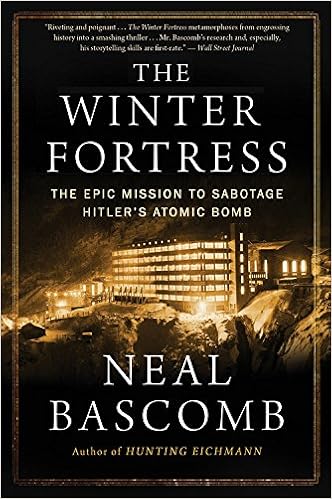 The Winter Fortress: The Epic Mission to Sabotage Hitler’s Atomic Bomb by Neal Bascomb (ISBN: 978-0-544-36806-4) is a story that tells just such a story (incidentally, also in Norway). The book tells part of the story of Nazi Germany’s efforts to acquire an atomic bomb. Those efforts were tightly tied to Norway’s hydroelectric capabilities and a substance known as heavy water, or water with extra deuterium in it. Early experiments by Allied and Axis scientists alike indicated that heavy water could be used in making an atomic bomb. Germany pursued this theory rather aggressively. After occupying Norway, the Germans used Norway’s production of heavy water to accelerate their nuclear experiments. The Allies knew this and wanted to come up with a plan to prevent the German scientists from getting what they needed. Norwegians in the resistance did a lot in their day-to-day efforts to sabotage the heavy water without doing too much damage to the plants where it was produced since that would lead to German reprisals and put many Norwegians out of work. It was something the Norwegians had to carefully balance. As things got down to the wire, though, even the Norwegians could see that their efforts would have to increase in scale. With help from the UK, various plans were set in motion, including one that led to some disastrous deaths in the Norwegian outback as saboteurs rode gliders into Norway only to crash land with horrible results. Later attempts were more successful with Norwegian commandos, already in Norway, conducting two successful raids against heavy water, one damaging the plant and one preventing a large delivery of the water from being completed. After the first raid on the plant, the production capabilities were eventually brought back on line, but when they were, the U.S. bombed the plant, putting down for the count until the end of the war. The book chronicles these operations, all that led up the them, and many of the brave people it took to make them successful.
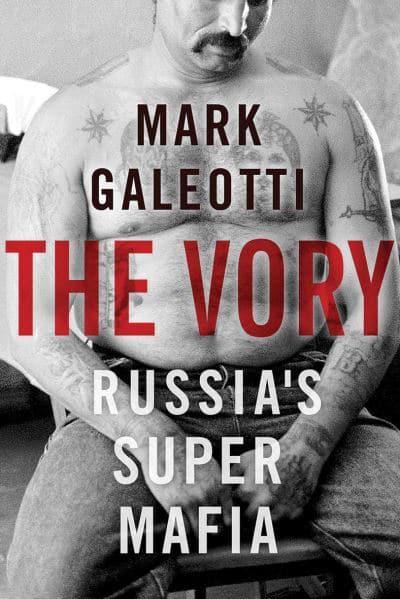 In The Vory: Russia's Super Mafia (ISBN: 978-0-300-18682-6) by Mark Galeotti, one gets a much more in-depth look at Russia’s criminals. The book looks at the heavy hitters, not the petty thieves, starting way back in tsarist times and finishing with events of the last couple years. The history of Russia’s criminals is interesting in that it is rather tightly woven together with the history of Russia itself. The Russian Empire, the Bolsheviks, Stalin, Gorbachev, and then Yeltsin and now Putin have all left a mark on Russian organized crime. The central figures, the so-called thieves in law (“in law” because they lived according to the thieves’ code) have proven themselves resourceful and adaptable, changing their methods and worldview to fit whatever comes their way. Originally unwilling to be part of mainstream society, Stalinist repression and policy caused a demographic shift in the underworld that resulted in the top criminals finding a partner, not an enemy, in the state, and that relationship has continued to morph up through today, where crime, business, and politics is often a blurry and hard-to-define conglomeration. Russian organized crime was a hot topic in the 1990s, when it and the oligarchs settled their scores openly and violently on the streets of Moscow and St. Petersburg, and security services around the world warned of the Russian mafia and its potential influence in Europe and even farther abroad. Galeotti discusses that, too, including organized crime in America that is tied to the Russians. He notes, though, that most of the Western fears never materialized, and the Russian criminals were never able to (or never even tried to) overtake the criminals who were already in place. Now, with their shady ties to legitimacy, they ply their trades on the margins, providing services such as hacking or providing frontline fighters in Crimea. There are a few significant words on the costs of crime, both in terms of people and economics. The author’s main thesis is that the Russian thieves, the vory, now a solid part of mainstream society, a complete 180° turn from their pre-Revolution days, have adapted before and will continue to adapt to whatever situation comes their way.
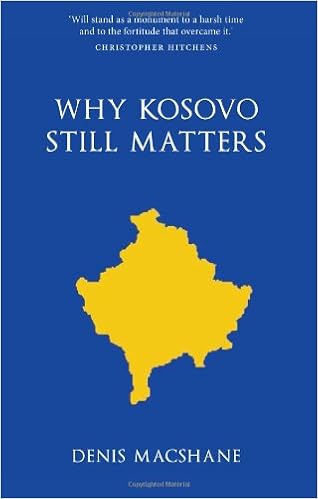 Already eight years ago, Why Kosovo Still Matters by Denis MacShane (ISBN: 978-1-907822-39-1) was printed. At that time, Kosovo had only been independent for three short years, with many in the West wondering why this little country was such a focus for so many in government. The book gives a short history of Kosovo, but spends the bulk of its relatively few pages discussing the more modern history of the country from the fall of Yugoslavia to its troubled beginnings as an independent state. Kosovo faces a number of difficulties. Most are local, many having to do with the hostility of its neighbor and former overlord, Serbia. These are unlikely to subsist soon because of the large Serbian minority in Kosovo. Other problems exist because of the lack of support from the international community. In essence, Europe and the U.S. created the country, but the West has since then done what some perceive as a poor job at integrating the country into the West, which has left Serbia pretty free to meddle in the country it wishes had never been created. Serbia has a few allies in its efforts to keep Kosovo in a constant state of change. Some are more active than others in these efforts, but overall, only a little over half of UN members have recognized Kosovo’s independence. This situation makes it hard for the country to develop and for the people there to experience the benefits that independence and democracy are supposed to bring. The end of the book discusses a few ideas on how to move forward. Although it’s a little dated, some of the ideas being floated as ways to solve Kosovo’s troubles then are still being talked about, such as letting Serbia have the regions populated by a majority Serb population, but that is dismissed out of hand. The problems are best dealt with, according to MacShane, by accepting that both Kosovo and Serbia are going to be around and then moving forward with an eye to improving the lots of the people on both sides of the ethnic divide.
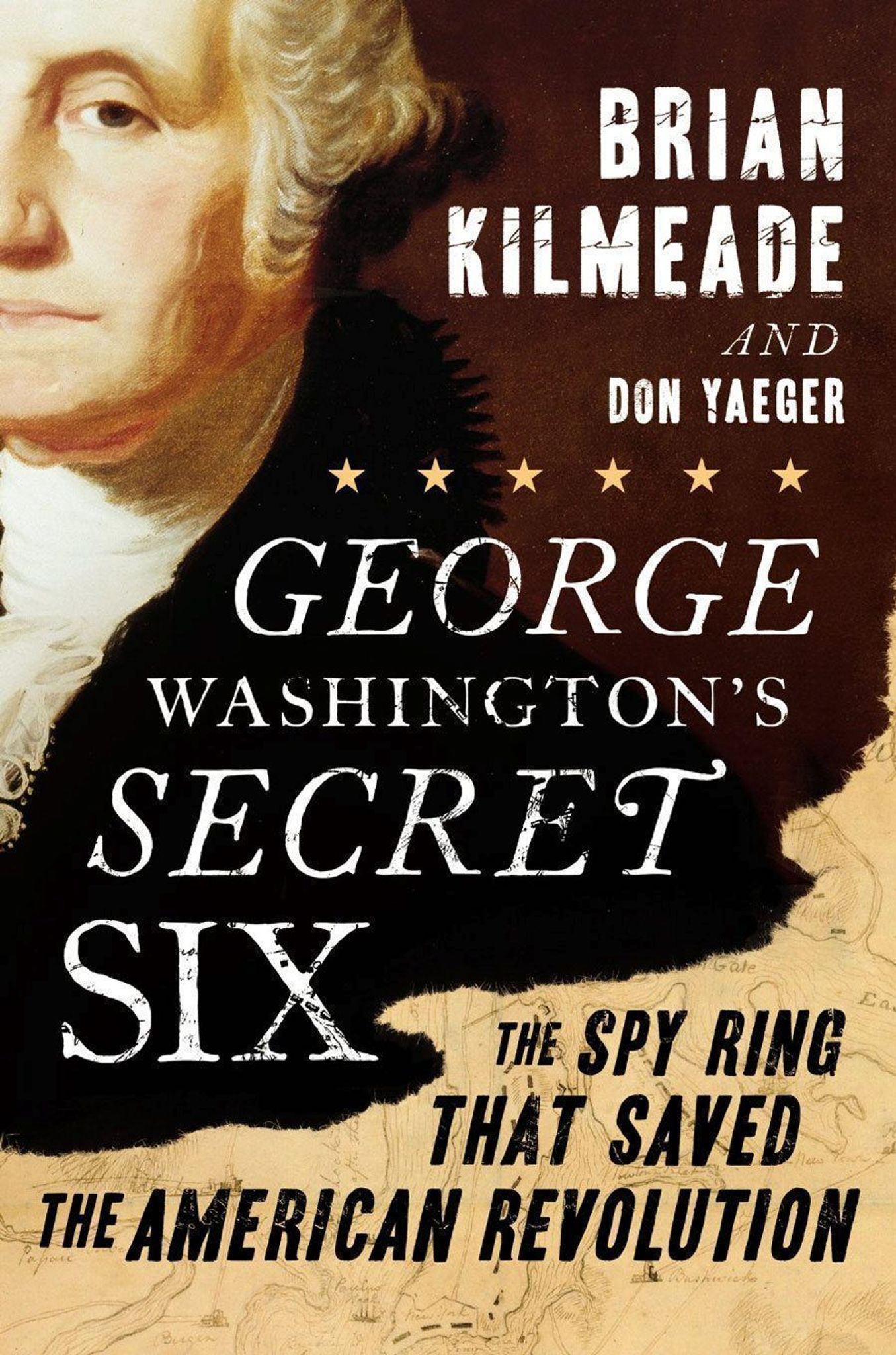 George Washington's Secret Six: The Spy Ring That Saved the American Revolution by Brian Kilmeade and Don Yaeger (ISBN: 978-1-59523-103-1) tells a very interesting story and gives some important insights into just how Washington and the other rebels upset one of the greatest empires in the world. Washington was not opposed at all to spying, and the methods he was willing to employ were rather cutting edge for his time. Importantly, the American forces were first to plunge into the spy game, so the British, who eventually put off the old ways of thinking about spying and the old ways of spying itself, had to play catch up. Since New York was of such great importance to the warring armies, getting solid intelligence out of the Tory-held area was critical to the American cause. Washington’s chief of intelligence, Benjamin Tallmadge, was able to recruit six agents in New York, known as the Culper Ring, after the pseudonyms of the main agents, who then provided the Continental Army with key information throughout the war. They were able to help thwart a British attack on French forces friendly to the American rebels, they helped capture traitor extraordinaire Benedict Arnold, they helped Washington avoid defeat by warning him not to chase after what was a British diversion, and they helped the Continental government fight against British attempts to infuse America with counterfeit money. Kilmeade and Yaeger provide a number of details about those involved in the spy ring, the officers on both sides, and the various events they were involved in from the ring’s inception to the end of the war.
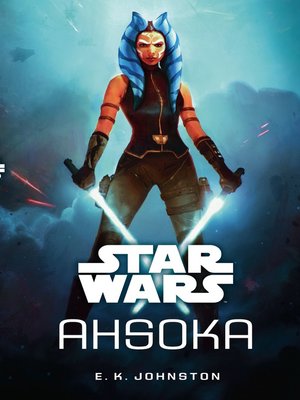 Ahsoka by E. K. Johnston (ISBN: 978-1-4847-8231-6) is the story of former Jedi Padawan, Ahsoka Tano (trained by no other than Darth Vader’s former self, Anakin Skywalker), no longer a Jedi, constantly on the run like others who had been Jedi or Jedi in training at the time of the infamous Order 66. She has hopped from one outlandish Star Wars planet to another, always trying to steer clear of the Empire, but never really managing to do so. Her background as a warrior and soldier is constantly catching up to her, too. The book follows her adventures as she lands in another situation where her better nature and her military skills come in handy to help a few people fight against the oppression of the Empire. She ends up, after overcoming an internal struggle between Ahsoka on the run and Ahsoka the Jedi, helping people from multiple planets, all the while fighting off evil Imperials, including the super creepy inquisitors, who care nothing for the people and planets they oppress.