I have visited concentration camps in Germany a couple times. Each time, it has seemed incomprehensible that such atrocities were actually carried out. As I have witnessed extremist ideologies gain greater acceptance throughout my lifetime, I have come to appreciate the lessons taught by the preserved concentration camps even more. They are memorials to what happens when we put aside basic individual rights and liberties. They serve as a stark warning about what happens when societies continue down the slippery slope of denying rights to others in the name of a greater good. When I first visited the concentration camps, I did not have children, but by the time of my second visit, I did. That made the lessons of the past a little more emotional since the National Socialists in Germany did not spare children from the horrors of the camps.
 Escape: Children of the Holocaust by Allan Zullo (ISBN: 978-0-545-09929-5) and Sophie Scholl: Die Weiße Rose by Achim Seiffarth (ISBN: 978-3-12-556024-6) are books written for young people (junior high kids seemed to be the target audience), but present some of the stories of Nazi Germany that are good for readers of any age to know. Zullo’s book told the story of about a dozen Jewish children and their survival of the Holocaust. The stories were varied and all captivating. They usually started with the pre-war life of the kids or, at least, their life under Hitler when it still wasn’t too crazy. This allowed for the reader to see how quickly things went downhill. Inevitably, before long, families were separated, people were in ghettos or concentration camps, and life would never be the same again as kids were forced to grow up quickly and learned that the adult world wasn’t all it was cracked up to be since it induced a lot of pain, suffering, and cruelty. The kids in Zullo’s book all displayed incredible levels of resiliency, though, scraping by and taking advantage of what was few chances and opportunities were given them, such as a truck taking workers to another camp with a sympathetic guard who was known to let one or two people at a time make a run for it. The stories, which are of those who survived, do not glass over the fact that the survivors of the ghettos and camps were in the vast minority, and it is sobering to read of all the friends and family these survivors lost. Seiffarth’s book is written for learners of German, but although relatively simply written, still does a great job presenting a fascinating story. Sophie Scholl was a young woman who went from teenager to college student during the Nazi rise to power. Originally a believer in what Hitler was doing, as she came closer to adulthood, she saw the errors intrinsic to nationalist socialism. Following the lead of her older brother, an activist in the underground resistance, her religious father, who could not abide the unfair treatment of Jews and others oppressed by the regime, and a college professor who encouraged free thinking and debate even when it was unpopular, Sophie joined the resistance, helping to distribute anti-Nazi flyers. Her efforts helped present what was an unpopular opinion to the masses, especially as she helped found resistance cells among young people in cities outside her hometown. Eventually, the Nazi regime caught up to her, her brother, others in their circle, including their professor, and they were executed.
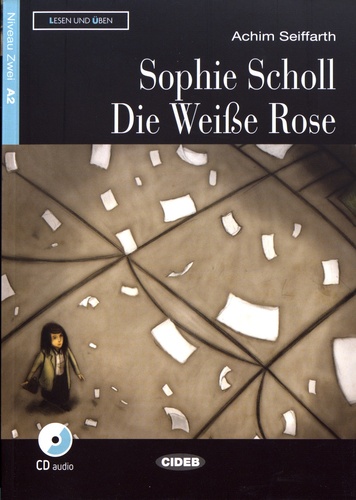 As stated above, while both books are juvenile literature, they are quality works. I enjoyed trying to stretch my knowledge of German, the native language of my grandparents and other ancestors who have a story or two of their own involving the Nazi authorities. The stories in Escape easily kept my attention, told interesting details, and were from a variety of people, such as those from Germany proper as well as from occupied territories. This variety gave more flavor and a nice, broad overview of what are certainly not isolated incidents. I thought Sophie Scholl was also a nice overview that provided sufficient detail to be informative and yet not get bogged down. I had seen a movie on her a few years ago, but this book gave me some new information and was, I thought, better (I always think that about books relative to movies, though). Both of these books present an interesting and accurate picture of what life was like under the Nazis — for Jews in the first and for conscientious Germans in the other. They remind us what we should be fighting to avoid, even if it’s only a step or two in that direction, and the kind of people we should be striving to be, even if that striving leads to unpopular positions, ostracization, and, possibly, the ultimate sacrifice. Liberty — for ourselves and for others — is worth those things.

|
This work, including all text, photographs, and other original work, is licensed under a Creative Commons Attribution-NonCommercial-NoDerivatives 4.0 International License and is copyrighted © MMXXI John Pruess. |


 It seems there are

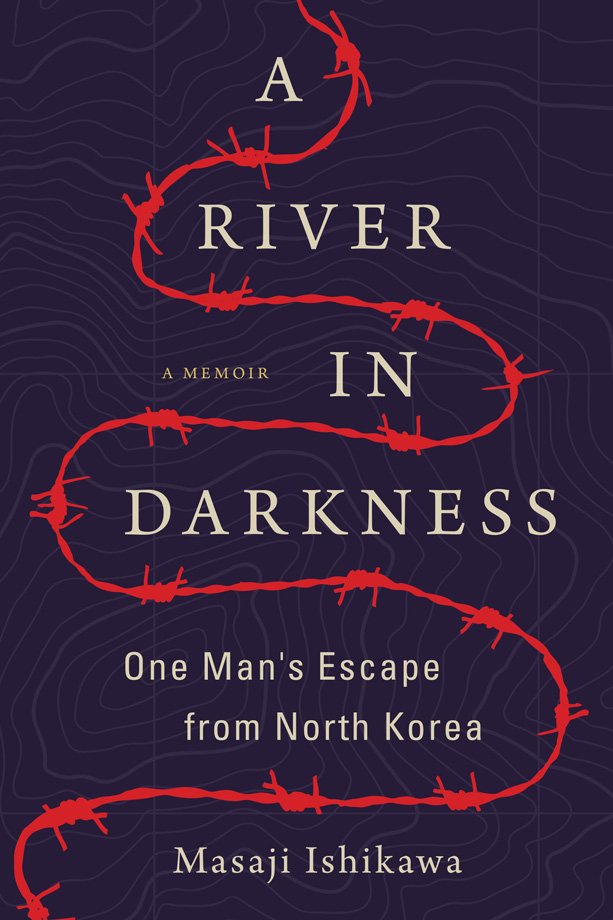 A River in Darkness: One Man's Escape from North Korea by Masaji Ishikawa (ISBN: 978-1-5420-4719-7) is just such a tale, although it does have an interesting twist. The author was not born in North Korea; in fact, he was born in Japan and was ethnically half Japanese. His dad, who was not native to Japan, moved his family to North Korea under pressure from ethnic compatriots and the pressure of being an ethnic minority in re-building, post-war Japan, where such minorities weren’t always welcome. The promises of the Communist utopia were very quickly discovered to be a total sham by the author and his family. However, there was no real opportunity to get out. The author's family had nothing to offer the Communist Party, so they lived as peasants, eventually finding that living under the radar of the authorities was easier than trying to conform to the system in North Korea. Eventually, Ishikawa tires of the poverty, starvation, racism, hypocritical inequality, and lack of freedom. He heads toward the border with China, fearful, but determined to make a break for it since, although that would mean an uncertain future, it was better than the future he could easily predict inside North Korea. He made it to China, eventually linking up with the Japanese embassy there, which, with great difficulty, helped exfiltrate him to Japan. Once back, Japan had jumped forward forty or so years, while North Korea had steadily gone backward. Ishikawa struggled to adjust and felt abandoned by Japan.
 In The Long Walk: The True Story of a Trek to Freedom (ISBN: 978-1-59921-975-2) by Sławomir Rawicz, one can read about just such an escape and one that combines World War II history, the Gulag, and adventure travel into one. Billed as a true story, the reader follows Rawicz, a Polish cavalry officer, from Moscow's notorious Lubyanka to the a small outpost of a prison camp in northern Siberia, and then about 4,000 miles south, to India, after his escape. The escape itself is one of the few truly exciting scenes in the book, as the rest reads much like a travelogue, but it is all adventure after adventure as the small party of fugitives walks through Russia and then the wastelands of Mongolia and China. They pick up a fellow escapee near Lake Baikal and experience Oriental hospitality over and over again in their travels through the deserts and mountains of western East Asia. These usually touching, sometimes comical, visits are a major reason the travelers made it to India alive. As is to be expected, they lose a few of the party along the way to starvation and exhaustion. In the end, though, their desire to be free is triumphant, as they walk out of the hills and into the arms of a British Indian patrol.
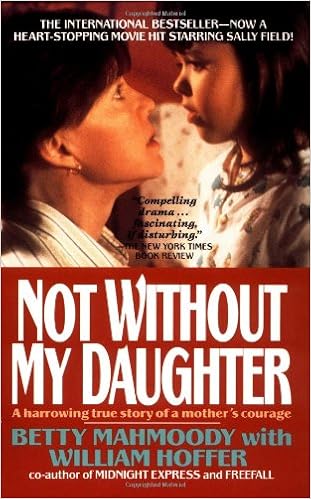 No matter my view of the world, a gripping story of international intrigue, raw, primordial bravery, faith, and patriotism, is told by Betty Mahmoody and William Hoffer in Not without My Daughter (ISBN: 0-312-92588-3), a memoir of Mahmoody's experiences when her husband took her and their daughter to Iran and then forcibly kept them there. Mahmoody starts with her flight to Iran from America's heartland, where she spent her entire life and moved from her blue-collar beginnings to entertaining and comfort of the upper middle class thanks to her Iranian husband. She had various reasons for agreeing on the flight to Iran, but staying there indefinitely wasn't one of them. That such a plan is her husband's plan is apparent within a week of arrival, and it's made worse by the fact that most of his family, and like most eastern cultures, family connections are extensive, is in on the kidnapping. Mahmoody and her kindergarten-age daughter, Mahtob, endure the next two years under what amounts to house arrest in an unfamiliar and usually hostile foreign land where hatred for America is not only the official line, but something many citizens openly and actively agree with. Eventually, Mahmoody is able to make contacts with various people, some simple shopkeepers, some foreign government officials, and others who are just the universal kind-hearted person you always hope exists out there. She uses these contacts to organize a treacherous escape for her and her daughter, and through a few minor miracles, they are smuggled to freedom.