 Restoring the Ancient Church: Joseph Smith and Early Christianity by Barry Robert Bickmore (ISBN: 978-1-893036-16-1) explores the idea that the church founded by Joseph Smith was not made up, but actually follows the ancient church as set up by Christ while on the earth. It starts with a discussion of the apostasy and if a restoration was even necessary. Once that was established, the author delves into topics such as the nature of God, the organization and structure of the church, the afterlife, and even a little bit about baptism and the temple ordinances. There are extensive and thorough excerpts from ancient writings, some apocryphal, some simply scholarly and philosophical explanations from the first four centuries after Christ that show that the ancient Christian church believed and practiced many things that align with the modern teachings of the church founded by Joseph Smith. The idea of a non-trinitarian, non-creedal God consisting of three separate beings united in purpose was quite normal. An afterlife consisting of more than simple understandings of heaven and hell, but of degrees of inheritance and the possibility for progression was extant. The ancient church had sacred ordinances not shared with outsiders that focused on the creation and man’s mortal journey as a stepping stone to return to his Heavenly Father. A case is made that even baptism was regarded as a sacred thing, not necessarily to be shared with everyone, and was more closely guarded than it is today. The organizational structure of the ancient church, at least as presented, had many similarities. The overarching point was that Joseph Smith had no possible access to most of the sources provided, and even if theoretical access existed to others, it wasn’t something a hard-working but poor farmer had the time the nor means to deal with. The evidence points to two things: Joseph Smith had access to revelation and the restored Church is the same Church as the one Christ Himself established.
I found the book to be fascinating, although dry in places. I found the explanation of the apostasy and the need for a restoration to be kind of bland, although necessary. The evidence was all very interesting. Some bits of evidence were strong than others, and some of the more difficult-to-understand passages from ancient theologians sometimes seemed to miss the mark. It seemed all very thorough, though. The evidence presented is convincing, but in no way replaces the real way to know if something is true or not, which is to follow Joseph Smith’s example and ask of God. One final note: The book was clearly published on a budget, and there were enough typos and formatting errors for me to be distracted at times. Like all modern books, what should be footnotes are endnotes, causing a lot of wasted time flipping between where one is reading and the endnotes (even with a bookmark in the endnotes).

|
This work, including all text, photographs, and other original work, is licensed under a Creative Commons Attribution-NonCommercial-NoDerivatives 4.0 International License and is copyrighted © MMXXI John Pruess. |


 Paul Revere’s Ride by David Hackett Fischer (ISBN: 0-19-509831-5) is an in-depth biography of the man whose famous horse ride and plan to warn the colonists of impending danger has largely withstood the test of time and has been passed down to the present day through prose, poetry, and visual art. Paul Revere’s father was a poor French boy when he arrived in the New World, but hard work allowed him to establish himself and provide a solid foundation for his family. Revere followed in his father’s footsteps by learning to silversmith. He added engraving to his repertoire along with being unafraid to try his hand at other things, including dentistry (not exactly the science we know today). He was also a master networker and communicator who felt and filled a large civic duty. He was a part of multiple civic organizations and participated fully in various local boards and commissions. People up and down the Massachusetts coast knew and trusted him. He did undertake his famous nighttime ride, but he was not alone, and it didn’t involve only the Old North Church. Revere rode one route while two other men took a different route. Revere’s was arguably more successful, as he made contact with more people than the other riders, but both played an important role. As they made contact in the towns and villages near Boston, other riders then carried the warning farther inland or farther north. Wildly, Revere was actually apprehended briefly by a British patrol, but they let him go after questioning. Ultimately, the other Massachusetts towns were warned in time to prepare for the coming of the British army. After the famous ride, Revere went on to continue his involvement in American politics, including making engravings that told the colonists’ side of the story and helped organize them around the revolutionary cause. Revere made many contributions above and beyond his famous ride to the revolutionary effort.
 John Adams by David McCullough (ISBN: 0-684-81363-7) provides a deep and broad look at the second president and a man who is often credited as being the voice of independence. The book starts just a little before John Adams was born, telling the reader about his parents and lineage before getting into the details of the future president’s life. McCullough tells the Founder’s life story in great detail, in part because Adams left extensive diaries and letters to draw from. One learns about his schooling, his law practice, his family life, his farm in Massachusetts, and his ascendency onto the national stage, where he flourished. One learns about his shortcomings as well, including a propensity to get down on himself, a willingness to let others’ opinions of him matter (vanity), and a sometimes quick temper. Once Adams makes to Philadelphia to advocate for independence, the book goes into great detail, explaining his thinking and his actions and then follows his career. He was a diplomat, helping Benjamin Franklin in France and forging his own path in the Netherlands, where he, on his own, secured loans to help the American cause as the Revolutionary War dragged on. He was the new country’s first ambassador to England and then the country’s first vice president. In all of his positions, he advocated for what he thought was right. He didn’t back down and wasn’t afraid to take a little heat sometimes. The book paints him as a man of strong moral convictions based on a faith in God. During his time as president, he successfully kept America out of a war with France, which greatly helped America, a weak and fledgling nation, find its wings.
 Founding Father: Rediscovering George Washington by Richard Brookhiser (ISBN: 0-684-82291-1) provides a short overview of the original father of the country, George Washington. The book starts with an interesting discussion of modern history, which is history that often looks to break down the heroes of the past, find fault with them, and discount the stories that have been handed down for generations. Brookhiser claims he’s not looking to disparage Washington like other modern historians while being willing to set aside legend (“I cannot tell a lie,” for example) in order to give a clearer picture of the first president. The book then provides a basic overview of the major parts of Washington’s life, war,
  Miracle at Philadelphia: The Story of the Constitutional Convention May to September 1787 by Catherine Drinker Bowen (ISBN: 978-0-316-10378-7) takes an intimate look at the coming into being of the Constitution. The book starts by acknowledging that the Constitution is the result of a miracle. That is not necessarily the author’s conclusion — although it is; it is what those who attended the Constitutional Convention themselves asserted it to be. The case for that is then made by simply recounting the events of the convention and providing a detailed look at the circumstances surrounding the Constitution’s inception. Bowen relies heavily on James Madison’s notes since they were the most comprehensive, but also incorporates the notes and other writings of other Founding Fathers. The picture painted is thorough, deep, and intricate. The account focuses on the major arguments and compromises, which help show how the birth of the Constitution was a miracle. Many delegates wanted nothing to do with a federal government, some leaving early or protesting every vote. Slavery was famously a contentious issue. The nature of the executive branch and whether or not the legislative branch should be mono- or bicameral were fought over tenaciously by men who held deep-rooted positions based on experience or strong philosophical convictions. America itself, a newborn nation only eleven years old at the time of the convention, was already rapidly changing with internal and external forces influencing it course. Finally, once the Constitution was drafted, there was still a high chance of failure since the document had to be ratified, and there were still many convention delegates as well as everyday citizens who were strongly opposed to what the Constitution proposed. Ultimately, it was successfully ratified and has stood the test of time.
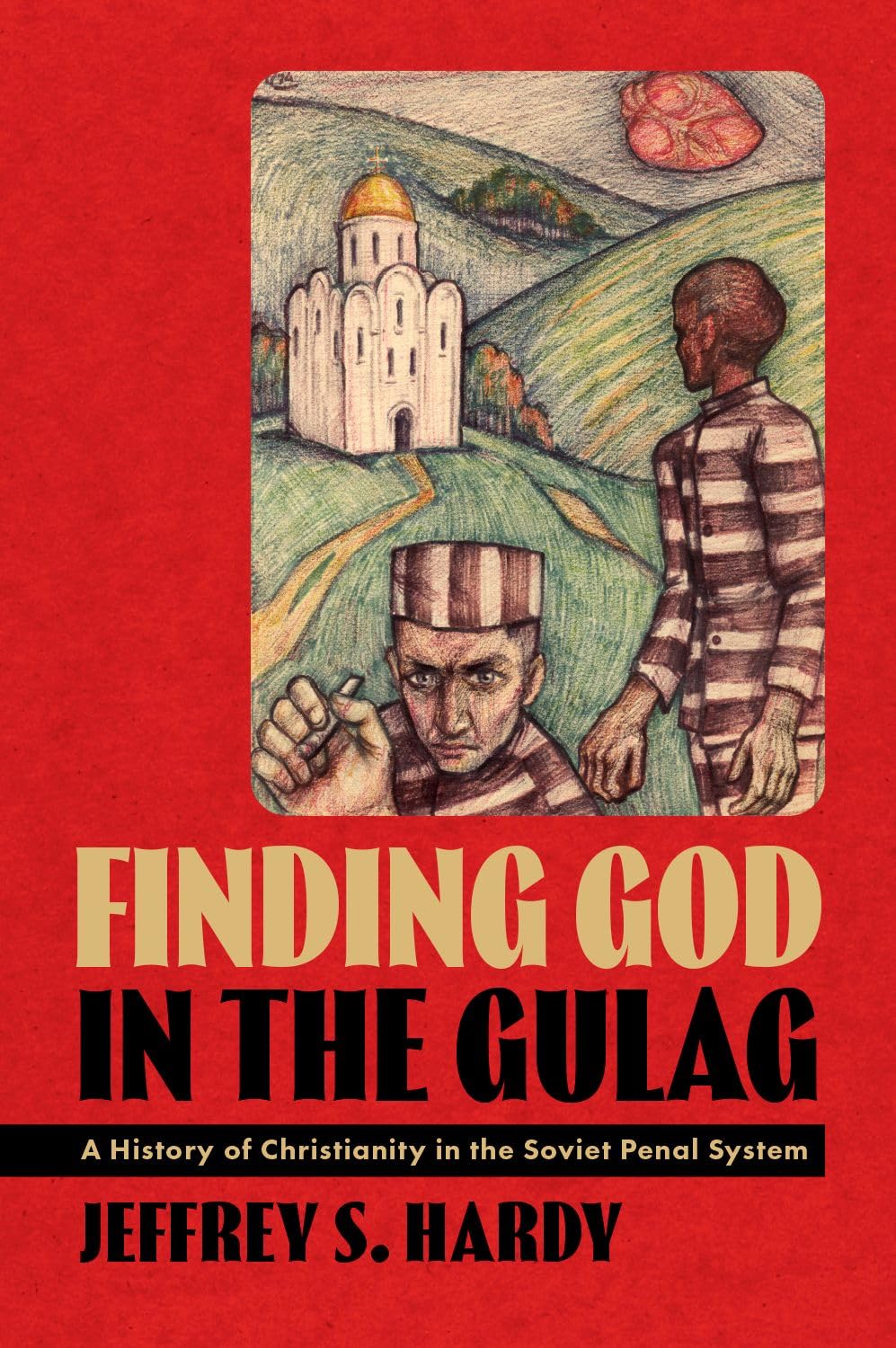 Finding God in the Gulag: A History of Christianity in the Soviet Penal System by Jeffrey S. Hardy (ISBN: 978-0-19-775167-1) is a book that gives readers a chance to know more about life in the Gulag. Unlike Solzhenitsyn’s based-on-a-true-story novel, this book is an academic look at Christianity in the Soviet camps from the earliest days under Lenin to the dying days of the Soviet Union under Gorbachev with a little post-script about a few things in the post-Soviet times. It catalogs both attempts by inmates to life and express their religions and attempts by the prison management to suppress religion. It was interesting to note that efforts to extinguish religion in prisoners was not uniform in the Soviet Union. It was more lax in some camps than in others. There wasn’t always a central policy that camp managers could look to, so they did it their own way. Sometimes that meant believers were beaten and spent time in solitary confinement. Sometimes that meant a Christian guard did nothing when a prisoner prayed or sang a hymn or made an icon. There was a short section on faith among thieves and other such common criminals, including a few paragraphs about the fascinating world of Russian prison tattoos. The book also catalogs people losing their faith, which was unsurprising, and one that is not judged neither by the author nor by most prisoners who are cited in the book. They tended to believe the camps were inhumane and that one should not be judged too harshly or even at all for what they did in the camps. There was also a little proselyting that happened in the labor camps. This was especially true of Baptists and Jehovah’s Witnesses, but Orthodox and Catholic priests also preached and even baptized people. Toward the end of the Soviet regime, religion was sometimes encouraged because it generally had a good influence on prisoners and mediated their violent behavior.
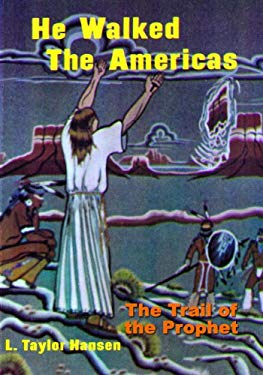 He Walked the Americas: The Trail of the Prophet by L. Taylor Hansen (ISBN: 978-1-939149-19-0) is a compilation of stories from North and South American Indians that relate to a so-called white or pale prophet. The stories tell about the arrival of the prophet, his activities, and then his departure. The legends describe the man, usually as wearing white garments (most often with small crosses on the hem), having brown hair, usually a beard, wearing sandals, and usually with cross-shaped marks in his hands. Sometimes he was accompanied by other white men. Other times he organized churches, established temples, and called people to continue his teachings after his departure. The arrival is usually on a ship in the legends, but one of the stories recorded by the author noted that the mysterious white prophet’s ministry started with his appearance at the temple. The man’s activities while visiting the ancient Indians included preaching peace, ending human sacrifice, healing sick and otherwise afflicted people, and controlling the wind and water. The last two were kind of important in the legends because this god was often referred to as the feathered serpent. Wind was often represented by feathers and the water by the snake. The organization of churches, usually with twelve men called to be leaders and teachers, and the establishing of temples was the other main activity of this white prophet in the legends. The stories then tell of his departure, usually with the people mourning his leaving and eventually forgetting his teachings and reverting to war and human sacrifice.