Showing posts with label Poland. Show all posts

Sunday, July 10, 2022

Iron Curtain

My whole life, Eastern Europe has been of interest to me.  The Soviet Union and the countries of what was called the “Eastern bloc” were the enemies of America when I was a kid.  After the fall of the Soviet Union, I got to watch those formerly oppressed peoples give democracy a try.  Thanks to serving a mission in Russia and marrying a Czech woman, the interest in Eastern Europe has never really disappeared.  Considering the state of Russia’s government today, not to mention the regressions made in Western societies toward authoritarianism, it seems the subject of oppressive regimes is still very germane to modern life.  One thing that was always pretty clear to me, even as a kid, when I imagined people across the Soviet Union being told what their jobs were being something along the lines of graduating from high school and instead of getting a diploma, you got directed to your job, the worst one in my mind was someone whose job it was to endlessly go around an office building emptying the trash cans under everyone’s desks, was that, in most cases, it was those in power who were at fault for the lack of liberty, and not the everyday people.

Book cover.Iron Curtain: The Crushing of Eastern Europe, 1944–1956 by Anne Applebaum (ISBN: 978-1-4000-9593-3) discusses just how Communist regimes came to power in Europe following World War II.  The book chronicles how the Communists came to power in Eastern Europe, focusing on Hungary, Poland, and East Germany, with a fair number of examples from Czechoslovakia and occasionally Romania.  The Communists rose to power quickly in post-war Europe through a comprehensive strategy that thoroughly encompassed the lives of the people.  This included the police, youth organizations, the media, political organizations, the arts, and the economies of the countries where the Soviet Union was victorious over Germany.  In many cases, a combination of factors worked together to make the Communist takeover work.  First, it was the Soviet Union that was in control in these areas.  Even in places where there was arguable Allied control, it was the Soviets doing the day-to-day administration, so they worked to install people and organizations that were compatible with their ideas of how things should work.  Second, there had already been strong support for Communist, socialist, and other Left-leaning ideologies before and during the war.  This only continued after the war.  Third, the activists were the ones most involved.  They were also the ones who were willing to use violence to reach their goals.  While most regular people were concerned about getting a job, rebuilding their homes and businesses, and helping their friends and families, activists were getting involved in politics, unions, youth and religious organizations, and the media.  This helped them make sure that things were done they way they wanted.  In the rare cases when there was some push-back, the activists, often with help from the police or the newly formed secret police organizations, violently quashed any dissent.  Applebaum does discuss resistance a little, but this is a short section, which seems to accurately represent the proportions of active and passive support or acquiescence to the regime and resistance.

I thought the book was interesting, but not quite as impressive as Gulag: A History, Applebaum’s impressive earlier work.  I thought the book was comprehensive, and it was nice to read about the many different areas in which the Communists operated in order to come to power.  One area I thought it might have been nice to explore further was how such a small number of people could so quickly overtake these countries.  Of the three abovementioned factors, the author focused on the third, the activists and Communist party members, but I was often left pondering how such a small fraction of the total populations got so much power so quickly.  On the other hand, that factor is probably the most relevant to today’s political climate, especially in the West.  The book should serve as a warning to those who fall to the right of socialists on the political spectrum.  If they are too slow to step up their involvement and are too willing to be cowed by the Left’s willingness to resort to violence, it won’t be too long before books about “the crushing of Western Europe” or “the crushing of North America” will be possible to publish.

Creative Commons License
This work, including all text, photographs, and other original work, is licensed under a Creative Commons Attribution-NonCommercial-NoDerivatives 4.0 International License and is copyrighted © MMXXI John Pruess.

Monday, July 20, 2020

Irena’s Children

As a kid, World War II fascinated me, but that was mostly because of the aircraft.  I was not drawn as strongly to tanks, ships, or even the history, although I had a grandfather who fought with the U.S. Army in the Pacific and two grandparents who lived through the war as children in Germany.  It was the airplanes that held my attention as a kid, and I drew, painted, and read about them a lot.  I don’t remember exactly when, but sometime during my elementary school years, an exhibit on Anne Frank came to Salt Lake City, and I had the chance to see it.  That opened a whole new world to me: one of the resistance and the underground, a world where people had to risk their lives simply to do what was right.  That seemed very interesting to me then and has continued to be very interesting throughout my life.

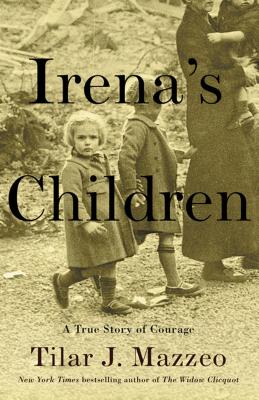
Book cover.It seems there are many stories to be told about those who did what they could to fight against the Nazis from inside, and Irena’s Children: The Extraordinary Story of the Woman Who Saved 2,500 Children from the Warsaw Ghetto by Tilar J. Mazzeo (ISBN: 978-1-4767-7851-8) tells quite an incredible story.  The book chronicles the World War II experience of Irena Sendler, a Polish Catholic who repeatedly risked her life to save Jewish children from the Holocaust.  Over the course of the war, Irena Sendler was able to aid in the escape of at least 2,500 (while she and others did their best to keep records, most of those records were ultimately lost and their reconstruction was admittedly incomplete) Jewish children from the Warsaw ghetto and into ethnically Polish homes and orphanges, where they were usually able to escape detection.  It was rarely a simple process, and included the stuff of thrillers and spy movies: escapes through the sewers, disguise, assumed identities, forged documents, illegal networks, and contacts in high places.  Irena didn’t do the work on her own (something she was always very quick to point out), and around her there was a large network of people that included teenagers that were willing to serve as sewer guides, nurses and doctors who helped with false papers, social welfare workers (Irena’s profession) who used their contacts and access to help, friends, and scores of people along the way such as neighbors and business owners that turned their heads the other way when they needed to, even if they couldn’t do more.  At one point, Irena was arrested and tortured by the Gestapo, and then she was the one being rescued.  The story is full of adventure and danger.  The author also spent a fair amount of time discussing Irena’s love life an seemed to make a lot of effort to fill the reader in on those who played the largest roles in Irena’s network of anti-Nazi collaborators.

The book was definitely an interesting one and told, as the tag line on the cover says, a “story of courage.”  What was particularly impressive (as is often the case with such stories), was that it didn’t seem that Irena had to summon much courage to do what she did, and neither did those around her.  They simply acted based on what they knew was the right thing to do.  Considering the millions of Jews killed during the Holocaust, the nagging question is always whether or not it was worth it.  Irena herself was scarred for life thanks to Gestapo torture.  She was more haunted, though, by the constant second-guessing that she did herself about whether or not she could’ve done more.  I am reminded of the story of a kid tossing drying star fish back into the ocean who is asked by someone else, “Why do you do this?  There are thousands of starfish on the beach; you can’t possibly help them all.” The response comes after throwing one more back in the water, “I made a differenc to that one.”  The book spent what I thought was too much time discussing Irena’s somewhat conflicted love life, including her love for one of the Jews she worked with in the underground (she divorced her first husband to marry her Jewish lover, Adam, then, divorced him, and after his death, remarried her first husband, so it was complicated, as they say), and I thought it often strayed from the story to provide too many details about those around Irena.  They were also couragous and worthy of having their stories told, but I would’ve appreciated a tighter focus, especially as the author seemed to enjoy noting at every possible chance that most of Irena’s circle (herself included), were socialists and came from somewhere on the left side of the political spectrum (mentioning this once would’ve been sufficient).  Given those criticisms, though, the story really was one of courageously making a difference and is a story well worth reading.  As a kid, it was easy to imagine myself in the resistance.  As an adult, I better understand those who struggled to make the right choices.  Stories like this are great because they inspire us to more easily make those correct choices and help others, even if we only make “a differenc to that one.”

Creative Commons License
This work, including all text, photographs, and other original work, is licensed under a Creative Commons Attribution Non-Commercial No Derivatives 3.0 License and is copyrighted © MMXIV John Pruess.

Thursday, January 24, 2019

The Zookeeper’s Wife

I have always been interested in stories about the resistance in World War II.  During a trip to the Netherlands quite some time ago, I really enjoyed visiting famous sights where acts of immense bravery and kindness, such as where Anne Frank and her family hid, took place.  We also walked past Corrie ten Boom’s house, now a museum, but were unable to visit because it was closed when we were there.  We also visited the Dutch Resistance Museum, which was fascinating and which provided a more in-depth view of the resistance and how it functioned and how so many people were able to participate in the Dutch attempt to withstand the evils of Nazism.  There are similar stories from all the countries invaded by Nazi Germany.  Like the Dutch stories that have proven a source of lifelong inspiration, these other stories, usually not quite as famous, cover a wide range of people doing what was right and are able to inspire us to do what is right, even in the face of great danger.

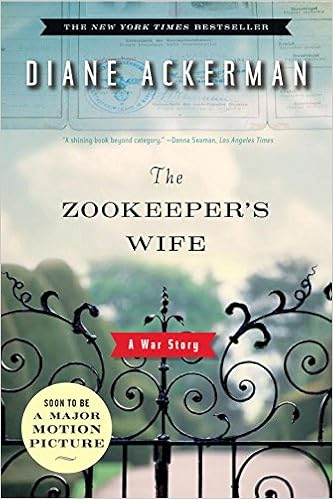
The Zookeeper’s Wife: A War Story by Diane Ackerman (ISBN: 978-0-393-33306-0) is one such story.  The story’s heroine is Antonina Żabińska, who was a Polish writer and the wife of the head of the Warsaw Zoo, Jan Żabiński.  Both were members of the underground resistance that fought the Nazi occupiers of their homeland.  They, like most members of the resistance, used what they had on hand to do this.  In their case, the story is rather remarkable because what they had on hand was a zoo.  This gave them cover for Jan to be out and about more than the average Varsovian and provided some unusual hiding spots for fellow resistance members and Jews alike.  Jan also used his position working for the municipality to help Jews escape from the ghetto, and they were often housed at the zoo, both in spaces formerly inhabited by animals and in the family’s house (which was always home to an extensive menagerie of unusual pets).  As with any underground operation, there were risks and close calls.  Hitler’s henchmen were interested in purebred animals as well as purebred people, so the zoo was of interest to some high-ranking Nazis, some of whom visited the zoo.  Regular soldiers used it as barracks and shot some of the animals for food.  The whole situation was always dangerous because one could never be sure just what those walking past the house would notice about the extra bodies in the house.  Jan, Antonina, their son, and some of their animals made it out of the war alive, having done the right thing by all those whom they helped and having risked it all.

I kind of expected I would like the book, and I wasn’t disappointed.  The story was very interesting and well written.  The reader is presented with a rather detailed (arguably too detailed in places) picture of the Żabiński family, the zoo, and the work Jan and Antonina did to save people from the Nazis.  Throughout the book, I was reminded of the risks they took and thought of how important a characteristic that is to have.  I believe they were always calculated risks, and they didn’t push the envelope when they didn’t have to, but to be able to do the right thing in a world, like the one created by the Nazis, where wrong is right and right is wrong, one has to be able to put aside risk aversion to a certain extent.  It was only by being willing to take certain risks that the story’s heroes could help as many people as they did.  Like all such stories, it helps us to never forget, but hopefully it does more than that and inspires us to not just never forget, but to undertake proactive measures to help the world avoid repeating the same mistakes again.

Creative Commons License
This work, including all text, photographs, and other original work, is licensed under a Creative Commons Attribution Non-Commercial No Derivatives 3.0 License and is copyrighted © MMXIV John Pruess.