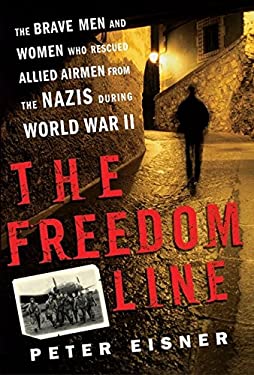
 The Freedom Line: The Brave Men and Women Who Rescued Allied Airmen from the Nazis during World War II by Peter Eisner (ISBN: 0-06-009663-2) is a book largely about big things undertaken by people in Belgium, France, and Spain to do what they simply considered their part in fighting the Nazi regime. The book tells the story of the Freedom Line, a group of people that moved downed Allied airmen from occupied territory to Spain, where they could link up with American or British diplomats and be safely taken home. The Freedom Line was not a huge operation, with no more than a couple dozen figures aided by scores of friends and confidants, but was fairly effective and managed to smuggle between 650 and 700 Allied soldiers out of harm’s way. While there were a few routes that escapees used, the main one was the Comet Line, run mainly by Dédée de Jongh, her father, Jean-François Nothomb, Florentino Goikoetxea, Kattalin Aguirre, and Elvire de Greef. These Belgians, Frenchmen, and Basques worked together to rescue Allies troops from the invaders. It was dangerous work, and many of the resistance members running the Comet Line ended up in prison, concentration camps, or dead, either executed by Germans or perishing along the treacherous smuggling routes through the Pyrenees Mountains. They had a network of safe houses between Belgium and Spain, but there was always the chance traitors would infiltrate the line, and one notorious traitor — Jacques Desoubrie — did so, resulting in the deaths of many Allied airmen and the death or imprisonment of many resistance members. The main figures running the Freedom Line preferred to control their own destiny despite British intelligence’s efforts to exert some control over the operation. British assistance was welcomed, but not necessarily with open arms. The book mainly follows the journey of a crew of Americans, piloted by Bob Grimes, shot down over Belgium from that fateful day to their eventual freedom. That approach provides insight into how the line operated and who the main players were. Sometimes, details from other escapees’ stories are included to complete the picture or provide fun anecdotes like the American pilot passionately kissed on a train by a woman he barely knew only as his guide from one safe house to the other in order to avoid having to show any papers to Nazi soldiers on the train.
The book was interesting and told a lot of good stories, providing what I thought was a rather complete picture of the Freedom Line. I did think the focus on Bob Grimes’ crew possibly limited the scope, but it added a narrative element that helped the book flow in a story-like manner (something the modern history reader seems to expect). The author’s wife is Basque, so the Basque players in the story get some extra focus, but that probably adds to the story instead of detracting since much of the effort would have been impossible were it not for truly heroic efforts by people like Florentino, making the trip through the Pyrenees hundreds of times with airmen and smuggled intelligence. After reading a few pages of the book, I was reminded that I had once read a book called Cruel Crossing: Escaping Hitler across the Pyrenees, which chronicled the same people and effort; however, I thought the Freedom Line was a little more interesting than Cruel Crossing because it was pure history and not the combination of history and travelogue my earlier reading was. What was the most powerful thing about the book was the usual selfless dedication shown by the resistance members who risked their lives and the lives of those around them simply because it was the right thing to do. Many noted that they were simply doing what anyone would or should do and never wanted or expected to be rewarded for their efforts. It is an example of duty and courage that all can learn from. The book is worth a read to be inspired and to learn about the underground efforts to defy the Nazis, some small, some large, all of which contributed to the Allied victory.

|
This work, including all text, photographs, and other original work, is licensed under a Creative Commons Attribution-NonCommercial-NoDerivatives 4.0 International License and is copyrighted © MMXXI John Pruess. |


 Avenue of Spies: A True Story of Terror, Espionage, and One American Family’s Heroic Resistance in Nazi-occupied Paris by Alex Kershaw (ISBN: 978-0-8041-4004-1) is one story of underground activity during the Nazi occupation of France. It is about an American, Dr. Sumner Jackson, his Swiss-born wife, Toquette, and their son, Phillip, who lived on the same street as many of the leaders of the occupying Germans, but aided the French resistance and paid the ultimate price for that patriotic effort. Jackson was a surgeon at an American hospital in France and used both his residence and the hospital as venues for fighting the Germans. Toquette and Phillip were also happy to be involved. Phillip couldn’t do much as a teenager, but understood what his parents were involved in. The house was used as a place to pass documents and information, the hospital was used to make Allied soldiers disappear once they had been adequately treated. Many were able to escape to neutral Spain and then back to England. The Nazis were next door and across the street and in houses all along the street, but the Jackson family was able to aid the resistance for quite some time before eventually being rounded up with other patriotic Frenchmen and sent to concentration camps in Germany. The entire family survived the camps. Toquette was extricated from one by the Swedes (reminded me a tiny bit of Raoul
 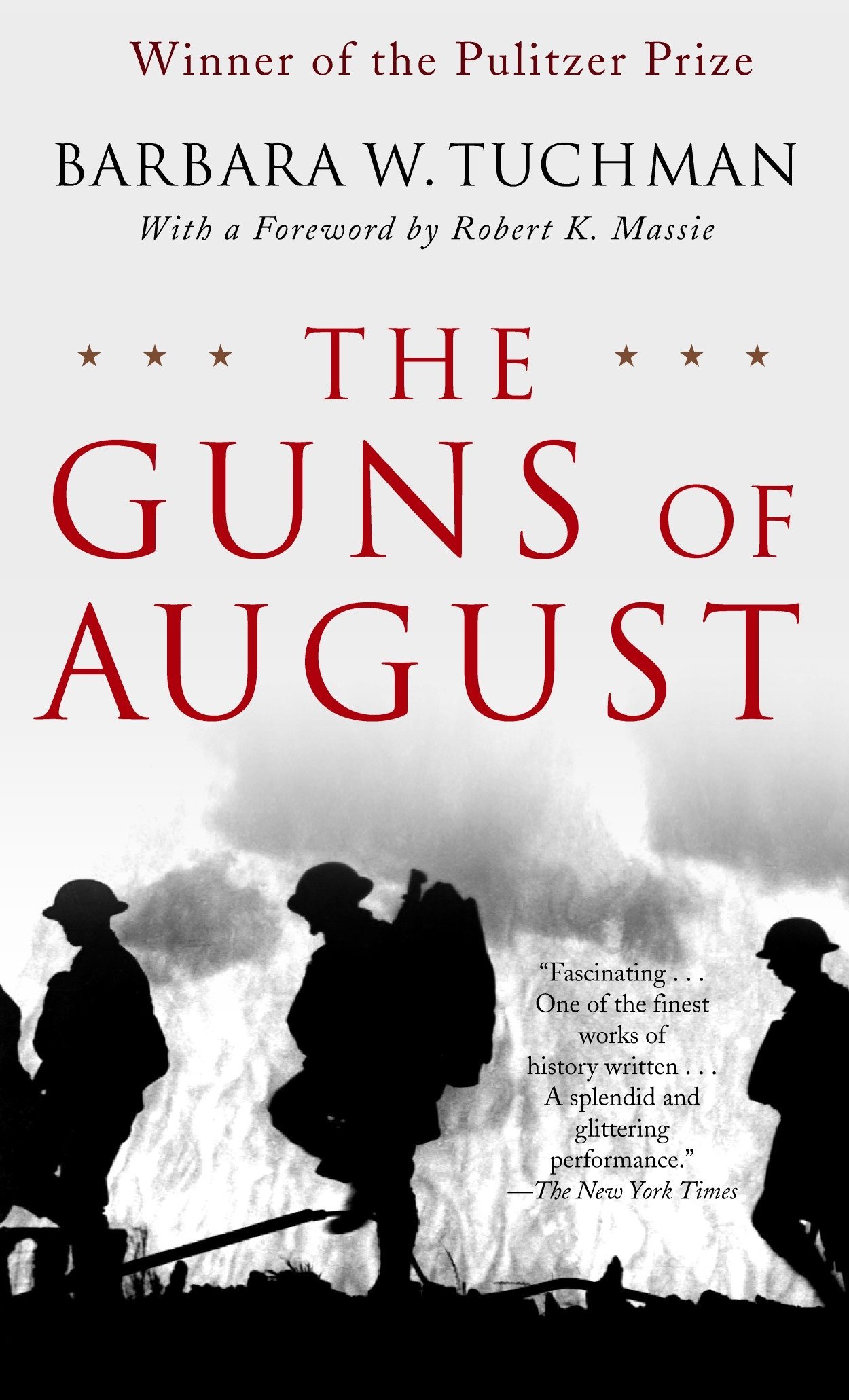 The Guns of August by Barbara W. Tuchman (ISBN: 978-0-345-47609-8), since it is about the first thirty days of the war, doesn’t do much more than mention reconnaissance planes a couple times when it comes to the airplanes of World War I, but the book does provide a very detailed review of those critical early battles in 1914. The stage is set with an extensive review of both French and German military doctrine leading up to the war, as well as the military and political personalities involved. After the French and German positions were well established, the reader learned about the English and the Belgians. Then, things got moving, and the Germans invaded Belgium. It didn’t go quite as they planned, though, with a lot more Belgian defensive efforts than they planned on and an English response that somehow seemed to not be completely accounted for in German war planning. The Germans still advanced quickly, taking advantage of their superior numbers and superior firepower. Once they were well into French territory, the French finally gathered themselves and were able to stop the German advance only miles from Paris. The French effort was eventually aided by the British, who were shown to, overall, be slow and indecisive during this opening stage of the war, and by the Russians, who opened an eastern front that the Germans were forced to respond to even though it ultimately proved to be less of a concern than initially thought. Throughout the first thirty days of the war, all parties involved suffered from indecisiveness, incomplete information, and decisions based more on what people had planned on than on what was actually happening. These mistakes were a large reason the war took the turn that it did, leading to four years of trench warfare that left Europe broken.