 He Walked the Americas: The Trail of the Prophet by L. Taylor Hansen (ISBN: 978-1-939149-19-0) is a compilation of stories from North and South American Indians that relate to a so-called white or pale prophet. The stories tell about the arrival of the prophet, his activities, and then his departure. The legends describe the man, usually as wearing white garments (most often with small crosses on the hem), having brown hair, usually a beard, wearing sandals, and usually with cross-shaped marks in his hands. Sometimes he was accompanied by other white men. Other times he organized churches, established temples, and called people to continue his teachings after his departure. The arrival is usually on a ship in the legends, but one of the stories recorded by the author noted that the mysterious white prophet’s ministry started with his appearance at the temple. The man’s activities while visiting the ancient Indians included preaching peace, ending human sacrifice, healing sick and otherwise afflicted people, and controlling the wind and water. The last two were kind of important in the legends because this god was often referred to as the feathered serpent. Wind was often represented by feathers and the water by the snake. The organization of churches, usually with twelve men called to be leaders and teachers, and the establishing of temples was the other main activity of this white prophet in the legends. The stories then tell of his departure, usually with the people mourning his leaving and eventually forgetting his teachings and reverting to war and human sacrifice.
I thought the book was very interesting. Hansen simply compiled the stories and lets the reader judge for himself what to think. If someone is well acquainted with Mormon theology, the most likely candidate for the great white prophet is Jesus after His resurrection. The legends allow for a few other Book of Mormon-related possibilities, too. Many of the legends involve the white prophet’s arrival via boat. Both the Jaredites and the Nephites arrived by sea and brought with them seeds, which was also in the legends. Some have claimed the legends, especially in North America are the result of Moroni’s travels before finally depositing the plates in the Hill Cumorah. There’s no real way to know since the stories are clouded by time (admitted by the compiler and by some of the Indians relating the legends), but the similarities are fascinating and with so many from such a disparate set of sources, there is also no real reason to discount them all. Knowing the Book of Mormon is true comes through study and prayer, but anthropological evidence for it like this is always nice to have once the spiritual testimony has been gained.

|
This work, including all text, photographs, and other original work, is licensed under a Creative Commons Attribution-NonCommercial-NoDerivatives 4.0 International License and is copyrighted © MMXXI John Pruess. |


 The Anxious Generation: How the Great Rewiring of Childhood Is Causing an Epidemic of Mental Illness by Jonathan Haidt (ISBN: 978-0-593-65503-0) explores why anxiety and other so-called mental health problems have exploded over the last fifteen years. The author believes that most of the blame lies with smart phones. He doesn’t deny that there are good things about smart phones, but he points out that because they allow unfettered access to the Internet and social media in particular, children and teenagers who spend time on the Internet lose out on formative experiences that steel them against anxiety and other mental problems while increasing their likelihood of being negatively affected. Haidt first argues that children need to be exposed to a certain level of risk while they are young to attune the body’s natural response to risk. Throughout history, kids have generally done this by playing outside with other kids, usually unsupervised. A culture of safetyism (eliminating all risks even when the positives of some risk are considered) encourages — in some places, usually more liberal places, forces — parents to keep their kids indoors and only let them out when they or other adults can supervise. This tends to make kids view the world around them as a large and constant threat. The perception of a constant threat is just what so-called clinical anxiety is. Additionally, without being exposed to little risks (the risk of falling off a swing or the risk of being rejected by a peer) that come with interacting with others while outdoors conditions kids to be comfortable only when there is no risk. The second half of Haidt’s argument is that social media exasperates these feelings in most people. Social media generally presents only the good side of things, which is something people on it then worry about it. It is also designed to be addictive (people experience hormone-induced positive sensations when their posts are liked, for example), so it’s a cycle of doom where people endlessly scroll, looking at the supposedly perfect lives of those around them while the post themselves, hoping to feel the dopamine-caused high of the next like or comment. If those are few and far between, the anticipation of the next like keeps people scrolling, all the while increasing negative feelings toward oneself. Haidt notes that girls are particularly prone to this type of activity. Boys are also negatively affected by constant time online. They are less likely to be anxious about social media, but video games and pornography easily engage the young male mind, pulling them away from reality. Since it’s relatively easy to exist in a world where you don’t have to engage in real-world situations that may have negative consequences, boys withdraw into these virtual worlds and try to not emerge. The book ends with some ideas on how to overcome the problems caused by smart phones. He has ideas for governments and for individuals, led by eliminating smart phone exposure for those under fourteen and limiting it for those over, both in school (complete bans on smart phones at schools are his preferred option) and at home. He also advocates letting kids get out and play and do other things on their own, like run simple errands, do chores around the house, and other things that are relatively safe, but still have distinct negative consequences for not accomplishing them.
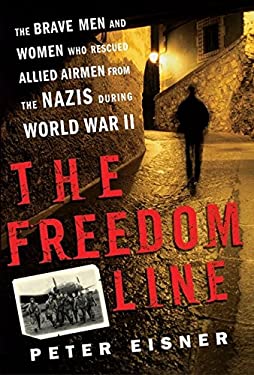 The Freedom Line: The Brave Men and Women Who Rescued Allied Airmen from the Nazis during World War II by Peter Eisner (ISBN: 0-06-009663-2) is a book largely about big things undertaken by people in Belgium, France, and Spain to do what they simply considered their part in fighting the Nazi regime. The book tells the story of the Freedom Line, a group of people that moved downed Allied airmen from occupied territory to Spain, where they could link up with American or British diplomats and be safely taken home. The Freedom Line was not a huge operation, with no more than a couple dozen figures aided by scores of friends and confidants, but was fairly effective and managed to smuggle between 650 and 700 Allied soldiers out of harm’s way. While there were a few routes that escapees used, the main one was the Comet Line, run mainly by Dédée de Jongh, her father, Jean-François Nothomb, Florentino Goikoetxea, Kattalin Aguirre, and Elvire de Greef. These Belgians, Frenchmen, and Basques worked together to rescue Allies troops from the invaders. It was dangerous work, and many of the resistance members running the Comet Line ended up in prison, concentration camps, or dead, either executed by Germans or perishing along the treacherous smuggling routes through the Pyrenees Mountains. They had a network of safe houses between Belgium and Spain, but there was always the chance traitors would infiltrate the line, and one notorious traitor — Jacques Desoubrie — did so, resulting in the deaths of many Allied airmen and the death or imprisonment of many resistance members. The main figures running the Freedom Line preferred to control their own destiny despite British intelligence’s efforts to exert some control over the operation. British assistance was welcomed, but not necessarily with open arms. The book mainly follows the journey of a crew of Americans, piloted by Bob Grimes, shot down over Belgium from that fateful day to their eventual freedom. That approach provides insight into how the line operated and who the main players were. Sometimes, details from other escapees’ stories are included to complete the picture or provide fun anecdotes like the American pilot passionately kissed on a train by a woman he barely knew only as his guide from one safe house to the other in order to avoid having to show any papers to Nazi soldiers on the train.

 Hide Your Children: Exposing the Marxists behind the Attack on America’s Kids by Liz Wheeler (ISBN: 978-1-68451-391-8) provides a look at how the education system has deteriorated further since the 1980s. The book starts with an overview of just who the Marxists the subtitle is talking about and then gives specific examples of how attacks on the nuclear family, endless accusations of racism, critical theory, queer theory, and attacks on homeschool, a proxy for attacks on personal responsibility and liberty, fit into the Marxist program meant to destroy society. Each chapter gives some history of where the modern Marxist threat originated and, using specific examples, how it became more mainstream than it ever should have. The historic sections are followed by a discussion of how it is today and the threat that presents to America, a country built on the idea that it survives only if the people who inhabit it are a moral people. The book ends with a chapter providing some suggestions on how to change the tide and fight back against the Marxist wave that has overpowered our educational system since it’s much easier to change the minds of the impressionable young than older people more set in their ways. The author’s suggestions include fighting the culture war, working to ban critical theory from public institutions, homeschooling whenever possible, fighting for school choice, working against ESG and DEI, remembering that local politics have an outlandishly large impact on our lives, returning to religion, and protecting the innocence of our children. Finally, there were some appendices with the Constitution and papal encyclicals that discussed the dangers of Communism.
 The Airmen and the Headhunters: A True Story of Lost Soldiers, Heroic Tribesmen, and the Unlikeliest Rescue of World War II by Judith M. Heiman (ISBN: 978-0-15-101434-7) tells a fascinating story from the Pacific. As the Allies tried to claw their way toward Japan, while a ground invasion was still a potential plan, territory in what is now Indonesia was of strategic importance to the belligerents. Japan held what was then referred to as Borneo because of its oil reserves. The Allies wanted to cut that off. During a bombing mission against Japanese forces and industry in Borneo, a few U.S. planes were shot down. The occupants of one met death, either in the wreck or at the hands of the Japanese. Two other planes, though, had survivors who avoided capture. While this was initially thanks mostly to good luck, later capture was avoided because of the efforts of the natives, some of whom were formerly formidable headhunting tribes. The case of characters involved Malaysians, various highland jungle tribes, and the Americans. Later, Australian forces joined made it to the jungle and helped the natives fight the Japanese and the Americans get home. In the six months between the downed planes and the exfiltrations, though, the natives and the Malay helped the Americans avoid detection by the Japanese. They provided the Americans with hiding places, food, and taught them some of their ways to help make survival in the jungle a little easier. It wasn’t easy and involved sickness, insects, leeches, and injury, but the downed American soldiers eventually made it back home. In fighting the Japanese and keeping them off the Americans’ trail, the natives brought back their age-old tradition of headhunting. It might not have been exactly the same since it was revitalized out of necessity, but it served its purpose and aided in keeping the Japanese out of the interior jungles.
 The Forgotten Founding Father: Noah Webster’s Obsession and the Creation of an American Culture by Joshua Kendall (ISBN: 978-0425-24545-3) tells about how that “big, red book” came to be thanks to another person who was very interested in words and language. The book chronicles Webster’s life from boyhood to death, taking a very detailed look at the parts of his life that led to his creation of the famous dictionary, part of Webster’s desire to make America its own unique country. Somewhat unusual for his day, Webster went to college even though he came from a farmer’s family. He then pursued a career tied to literature. He wrote extensively, including many essays, letters, and pamphlets in support of American independence and then in support of a federal republic. While his writings are not as well known today as those of others like Hamilton, at the time, there were many leading Americans who believed Webster’s efforts were essential parts of swaying public opinion. Webster initially made his name by publishing a speller, a book that helped schoolchildren learn to read and write. This book provided him with a foundational income throughout his life. He also worked as a lawyer, editor, and publisher. What he realized he loved doing, though, was more similar to the speller: compiling, organizing, and ordering information. This led to his interest in dictionaries. He found flaws in extant dictionaries and decided to improve on them by publishing his own. One motivation he had for this was that he believed a uniquely American language would help create and uphold a uniquely American culture, one that was needed to help the nascent nation maintain its distance from its former imperial overlords and move forward. While his ideas on government changed over the course of his life, his belief in America did not. The dictionary took much more time and money than he thought it would, but it was eventually published and created a new standard as well as codifying much of what was then a unique American language with new words expressing the new ideas embodied by the new nation.
 Why I Stand by Jonathan Isaac (ISBN: 978-1-956007-06-0) is a book that exists because of one of those moments. After the protests and riots that occurred after George Floyd’s death, many athletes used their position (“platform” being the buzzword everyone liked to use) to advocate for a message they believed in. One of the more controversial ways they did this was to kneel during the national anthem. Jonathan Isaac, a very promising NBA player, chose to buck the trend and stand during the national anthem. He stood out even more because he did not choose to wear the Black Lives Matter apparel that most others did. Like most things, his decisions in that matter were not just sudden, spur-of-the-moment thoughts. They were based on a lifetime of experiences and a large body of personal beliefs. The book recounts Isaac’s childhood, high school and college experiences and rather meteoric rise in the sport of basketball from a no-name kid playing inconsistently in high school to a top-10 NBA draft pick. It also discusses Isaac’s struggles with anxiety and belief in his own worth, which were ultimately helped more than anything by a spiritual journey that led to a firm belief in God. He writes about going to church as a kid, but not really knowing why and not applying what was being taught. Like many people, he had some negative experiences with organized religion along the way, and by the time he was playing in the NBA as a rookie, he was connected to religion in name only. A neighbor who was a church leader and a few setbacks in his basketball career provided opportunities for Isaac to re-evaluate his relationship with God, and his honest approach to that led to a conversion that led to action that ranged from feeding the poor to becoming a pastor in his church. Ultimately, those convictions led him to stand while his teammates knelt during the national anthem, but he believed that incident was just one instance of standing for truth and right and that God asks that of His followers in many other situations, too.
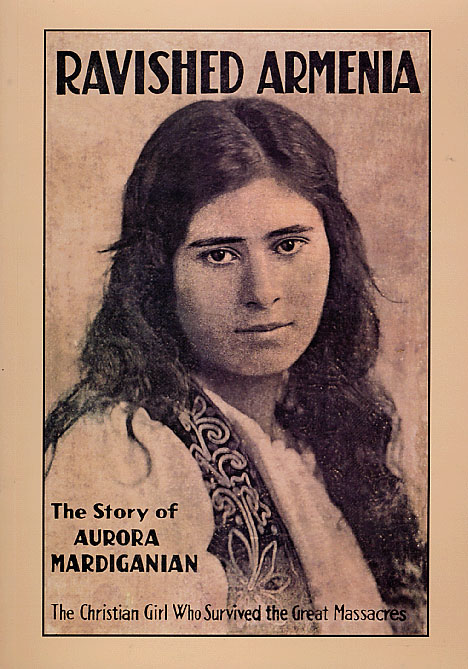 Ravished Armenia: The Story of Aurora Mardiganian, the Christian Girl Who Survived the Great Massacres by Aurora Mardiganian (Arshalyus Mardiganyan) is an autobiographical account of the Turkish oppression of the Armenian people in the Ottoman Empire starting in 1915. The Mardiganian family, relatively wealthy financiers, are warned by their shepherd that he had a dream about the Armenians’ imminent destruction, but his prediction is dismissed. Soon, though, it comes true, as the family is driven from their home, along with all the other Armenians. Occasionally, leniency is shown to those who will renounce their Christian faith and adopt Islam, but even then, the freshly converted Armenians are killed by their Turkish and Kurdish oppressors. Aurora, like most of the women and children, is driven from place to place, guarded by Turkish policemen. Those who are too slow to keep up during forced marches are dispatched quickly and usually cruelly, although Mardiganian’s account does point out a few instances of decency and humanity from guards or locals in the places the Armenians were marched. Her story, like many of those who lived during this time, is made all the more tragic because she was there to see the deaths of her father, mother, a sister, and a brother. She was sold multiple times to be a harem girl. This never worked out for the buyer because Aurora was never willing to accept Islam. It really didn’t work out for her, either, though, because her refusals were usually met with abuse and deprivation. After wandering the Ottoman Empire under the care of the Turkish police or as the property of various rich Turks, having seen so much killing, rape, and pillaging, her old shepherd friend, then working for a Turk trying to get Aurora to submit to Islam before being fully accepted into his harem, helped her escape. She stayed with friendly Kurds before eventually being helped by Americans in the region and then making her way to Russian-controlled territory and under Russian and Armenian military oversight, made her way to Tbilisi, then Russia, and then the United States.
 Avenue of Spies: A True Story of Terror, Espionage, and One American Family’s Heroic Resistance in Nazi-occupied Paris by Alex Kershaw (ISBN: 978-0-8041-4004-1) is one story of underground activity during the Nazi occupation of France. It is about an American, Dr. Sumner Jackson, his Swiss-born wife, Toquette, and their son, Phillip, who lived on the same street as many of the leaders of the occupying Germans, but aided the French resistance and paid the ultimate price for that patriotic effort. Jackson was a surgeon at an American hospital in France and used both his residence and the hospital as venues for fighting the Germans. Toquette and Phillip were also happy to be involved. Phillip couldn’t do much as a teenager, but understood what his parents were involved in. The house was used as a place to pass documents and information, the hospital was used to make Allied soldiers disappear once they had been adequately treated. Many were able to escape to neutral Spain and then back to England. The Nazis were next door and across the street and in houses all along the street, but the Jackson family was able to aid the resistance for quite some time before eventually being rounded up with other patriotic Frenchmen and sent to concentration camps in Germany. The entire family survived the camps. Toquette was extricated from one by the Swedes (reminded me a tiny bit of Raoul
 Up from Slavery by Booker T. Washington (ISBN: 978-0-9997797-3-6) tells of the famous educator’s life from his early boyhood as a slave to his rise as a professor and principal (these days we’d probably say president) of the Tuskegee Institute. The book was short on the childhood section, understandably so, since he was so quite young when slavery ended and had spent his days like all the other slaves: working. Once freed, he and his family struggled like many to find work that would pay the bills, but they succeeded, and his mom encouraged an innate love for learning that eventually led to Washington’s heading off to the Hampton School. A popular place with newly freed blacks trying to improve their lot, the school didn’t have a lot of room, but Booker so impressed the lady in charge of admissions when he was asked to clean some of the school rooms, that he made it in. He didn’t squander a single opportunity, graduated, and then set about to provide opportunities for others. What that led to was his founding the Tuskegee Institute. The greater section of the book is spent chronicling how the school came about, its struggles and successes, and its growth and Washington’s efforts to promote the school and secure the funding needed to keep it on its own two feet. He worked hard no matter what he was involved in, whether teaching, overseeing the school, working in his own home with animals and in his garden, or fundraising. He was also a well-known and in-demand orator, invited to speak at functions, fairs, and other public events. Throughout the book, he spends significant time noting that service, hard work, fulfilling one’s duties, giving things one’s best shot, and honesty are the keys to success and happiness in life. He also touches on the question of race and racism, but only as a reality that is in the background and that mostly stays there when one develops the abovementioned qualities and masters skills that others require, such as the brickmaking, animal husbandry, sewing, architecture, dairy farming, and others that his school taught in addition to academic subjects.