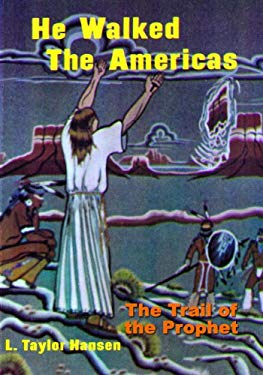
 He Walked the Americas: The Trail of the Prophet by L. Taylor Hansen (ISBN: 978-1-939149-19-0) is a compilation of stories from North and South American Indians that relate to a so-called white or pale prophet. The stories tell about the arrival of the prophet, his activities, and then his departure. The legends describe the man, usually as wearing white garments (most often with small crosses on the hem), having brown hair, usually a beard, wearing sandals, and usually with cross-shaped marks in his hands. Sometimes he was accompanied by other white men. Other times he organized churches, established temples, and called people to continue his teachings after his departure. The arrival is usually on a ship in the legends, but one of the stories recorded by the author noted that the mysterious white prophet’s ministry started with his appearance at the temple. The man’s activities while visiting the ancient Indians included preaching peace, ending human sacrifice, healing sick and otherwise afflicted people, and controlling the wind and water. The last two were kind of important in the legends because this god was often referred to as the feathered serpent. Wind was often represented by feathers and the water by the snake. The organization of churches, usually with twelve men called to be leaders and teachers, and the establishing of temples was the other main activity of this white prophet in the legends. The stories then tell of his departure, usually with the people mourning his leaving and eventually forgetting his teachings and reverting to war and human sacrifice.
I thought the book was very interesting. Hansen simply compiled the stories and lets the reader judge for himself what to think. If someone is well acquainted with Mormon theology, the most likely candidate for the great white prophet is Jesus after His resurrection. The legends allow for a few other Book of Mormon-related possibilities, too. Many of the legends involve the white prophet’s arrival via boat. Both the Jaredites and the Nephites arrived by sea and brought with them seeds, which was also in the legends. Some have claimed the legends, especially in North America are the result of Moroni’s travels before finally depositing the plates in the Hill Cumorah. There’s no real way to know since the stories are clouded by time (admitted by the compiler and by some of the Indians relating the legends), but the similarities are fascinating and with so many from such a disparate set of sources, there is also no real reason to discount them all. Knowing the Book of Mormon is true comes through study and prayer, but anthropological evidence for it like this is always nice to have once the spiritual testimony has been gained.

|
This work, including all text, photographs, and other original work, is licensed under a Creative Commons Attribution-NonCommercial-NoDerivatives 4.0 International License and is copyrighted © MMXXI John Pruess. |


No comments:
Post a Comment