[We w]ill at once walk out from a session, meeting, lecture, play,
or film as soon as [we hear] the speaker utter a lie, ideological
drivel, or shameless propaganda.
— Aleksandr Solzhenitsyn
There was once a guy in a small southern Utah town who made the news all over the place because he put up a sign in his front yard that declared his property a UN-free zone. Lots of people made fun of him, wondering what impact the UN could possibly have on a guy with a few acres of land in the sticks in southern Utah. Given that the UN operates some programs that provide medical aid and food to those in need or preserve cultural heritage sights, albeit in a bureaucratic and inefficient way, alongside some of truly inefficient things they do in the general assembly, at the time, I had no real opinion either way, but always felt the guy probably understood things better than I did. A decade or so later, with the international community firmly entrenched in the
big-government control movement and its many tentacles creeping farther and farther into our everyday lives, it seems the guy who wanted to keep the UN (and other global elites) out of his back yard was on to something.
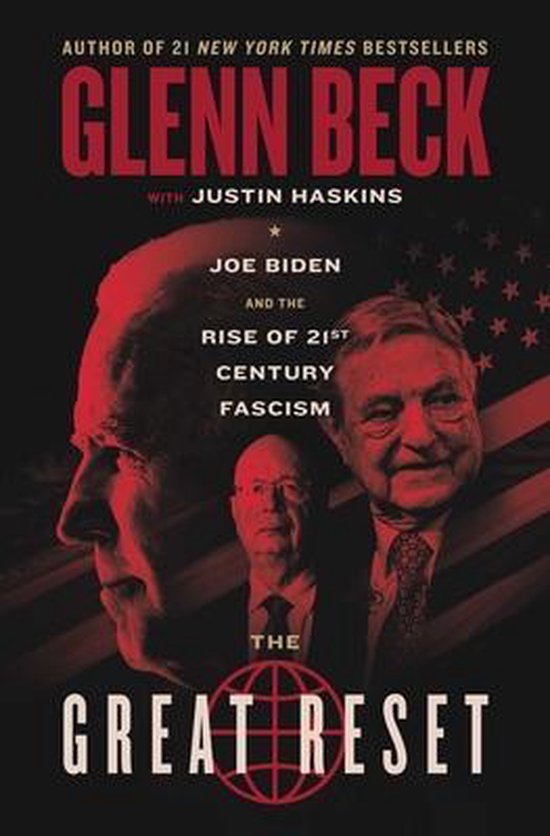
The Great Reset: Joe Biden and the Rise of 21st-century Fascism by Glenn Beck with Justin Haskins (ISBN: 978-1-63763-059-4) provides an overview of just what the Great Reset is. Beck and Haskins view it as an attempt by elites on the global stage to take over and subsequently control people politically and economically. They note that this is a plan that has been in the works for much longer than just since the coronavirus happened in 2020, although that served as a crisis that could be used to further many of the goals of those pushing for the Great Reset (Leftists around the world, not just Joe Biden as the title might lead one to believe). Other things that have served as a way for Klaus Schwab, George Soros, and others to further their agenda include environmentalism and the rise of national debts and inflation, which many Leftists want to combat by employing something called “modern monetary theory,” which states that national debt doesn’t really matter, only inflation does, since governments have the ability print the money they need (taxation is used to control (read: punish) people or organizations, not necessarily to raise revenue). Another economic tool of those pushing the Great Reset, which is a politically loaded term these days, although one that the book includes in direct quotations from the horses’ mouths, is environmental, social, governance (ESG), a system that the elite wants to use to evaluate business and individuals the way in essentially the same way credit scores are used, just without so much worry about credit and more worry about those more political factors. The system was designed to counteract the Right’s call for business to self-regulate and not have the government involved. With ESG involved, big investment firms can buy shares in a company and then demand that the company adhere to ESG standards, thereby causing, ostensibly, business to drive the ESG agenda and not government. Beck and Haskins finish the book with some policy prescriptions, almost all of which are calls to action on a local level in most cases: support small businesses, be politically active on the local level, don’t live lies in our personal lives.
The book was an interesting read. It was written a in 2022, but is especially relevant given the rise of ESG and organizations like the World Economic Forum (WEF), which push the Great Reset. The history of the Great Reset, relevant quotations from those pushing it, not just spouting off about it (all extensively noted in endnotes), and solid explanations of just what these terms refer to and how they apply to the common man, make the book worth a read. I am not a huge fan of the book’s subtitle, although I understand it given that many of the Great Reset players have ties to Biden. Beck does note that the Great Reset is not necessarily a partisan issue as there are culprits normally associated with the American Right, too. However, he focuses on those tied in some way to Joe Biden and the U.S. Democratic machine. I think that section could’ve been a little better. Some readers may not appreciate some of the humor in some of the sections. I was kind of on the fence about some of it — it was all appropriate; I just usually appreciate a more serious tone, but I think regular Beck listeners will get it and appreciate it. In the end, I thought the actions the authors suggested we take were all very solid. They were all things that people can do. I found the extensive quotations from Russian dissident Solzhenitsyn to be powerful, especially the one asking us to not live a lie.


 The Oligarchs: Wealth and Power in the New Russia (ISBN: 1-58648-001-4) by David E. Hoffman starts long before the ruble crash and financial crisis, telling the story of how Russia came to that point after the fall of Communism. The story is told in a very personal way, relying heavily on the author’s many personal interviews with the major players in industry and politics, as well as his and other journalists’ first-hand experiences during the “wild ’90s” in Russia. The book provides short biographies of the major players, household names in Russia and sometimes beyond well into the early 2000s: Aleksandr Smolensky, Yuri Luzhkov, Anatoly Chubais, Mikhail Khodorkovsky, Boris Berezovsky, and Vladimir Gusinsky. The book chronicles these men’s rise to power. They were entrepreneurs, opportunists, risk takers, visionaries, and criminals all rolled into one. The book also provides a lot of information on Boris Yeltsin since the story of the oligarchs is inseparably woven into Yeltsin’s story. From the dying throes of Communism to the dawn of