World War II history has always fascinated me, although that fascination started more because of cool drawings of bombers, fighters, and half-tracks that I saw in a Richard Scarry book, Hop Aboard! Here We Go! Later, I saw the models that a couple of my uncles built, only deepening my interest in this conflict that directly impacted me via my grandparents, who lived through and fought in the war. I still think the vehicles are a pretty cool part of the war, but the history of the people and places has grown on me since my childhood. Since the scope of the war is so broad, there are many stories to tell.
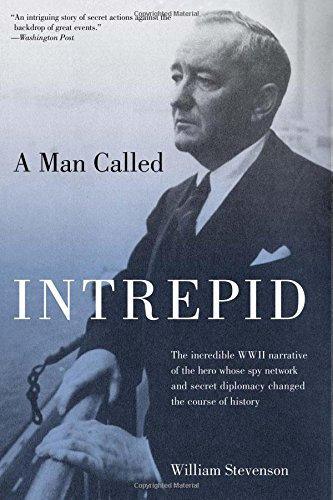
A Man Called Intrepid: The Incredible WWII Narrative of the Hero Whose Spy Network and Secret Diplomacy Changed the Course of History by William Stevenson (ISBN: 978-1-59921-170-1) is the story of Sir William Stephenson, whose code name was Intrepid, a Canadian who served as the head of British Security Coordination (BSC) during World War II, which coordinated most of the UK’s espionage efforts in the Atlantic Theater, particularly with the United States, including before the U.S. was officially involved in the war. The book is long and full of all kinds of stories about things like Camp X, a training center in Canada for various clandestine operators (spies, saboteurs, guerillas, etc.), code breaking, honey pots, financial schemes, resistance efforts (including the Norwegian efforts described in more detail in the Winter Fortress), and even some more traditional spying. Intrepid, in addition to being involved in intelligence activity, was also a diplomat. His efforts were instrumental in securing U.S. and Canadian support for many of the efforts the UK was involved in. He had access to the highest levels of government, including President Roosevelt. He had to navigate inter-agency and inter-service battles, but did so largely successfully and got most of the support he needed from England’s allies, eventually leading, both directly and indirectly, to the Allied victory against the Germans. Many historians figure that without the efforts of Intrepid, the war could have gone very differently, and the book lays out that case rather convincingly. The book ends with an interesting discussion of how Intrepid would’ve preferred a more open society after the war even though clandestine activity helped the Allies secure victory.
I thought the book was very interesting and a good read. It was published in 1976, so is slightly more academic in nature than modern mass-market history (a fact that I appreciate). The intriguing information it contains hasn’t aged. Some of the code breaking and diplomacy-related sections are a little dryer, but fit into a bigger picture of a man who was clearly talented and helped change the course of history. The book doesn’t get into the philosophical or political implications of intelligence work until the very end. Many of the stories in the book can be read about in their own books. This doesn’t always have all the details, but it’s detailed enough in most instances to keep one’s attention and provide an informative read for those interested in the course of World War II. It even has a couple dozen pages of pictures.

|
This work, including all text, photographs, and other original work, is licensed under a Creative Commons Attribution-NonCommercial-NoDerivatives 4.0 International License and is copyrighted © MMXXI John Pruess. |


 Hide Your Children: Exposing the Marxists behind the Attack on America’s Kids by Liz Wheeler (ISBN: 978-1-68451-391-8) provides a look at how the education system has deteriorated further since the 1980s. The book starts with an overview of just who the Marxists the subtitle is talking about and then gives specific examples of how attacks on the nuclear family, endless accusations of racism, critical theory, queer theory, and attacks on homeschool, a proxy for attacks on personal responsibility and liberty, fit into the Marxist program meant to destroy society. Each chapter gives some history of where the modern Marxist threat originated and, using specific examples, how it became more mainstream than it ever should have. The historic sections are followed by a discussion of how it is today and the threat that presents to America, a country built on the idea that it survives only if the people who inhabit it are a moral people. The book ends with a chapter providing some suggestions on how to change the tide and fight back against the Marxist wave that has overpowered our educational system since it’s much easier to change the minds of the impressionable young than older people more set in their ways. The author’s suggestions include fighting the culture war, working to ban critical theory from public institutions, homeschooling whenever possible, fighting for school choice, working against ESG and DEI, remembering that local politics have an outlandishly large impact on our lives, returning to religion, and protecting the innocence of our children. Finally, there were some appendices with the Constitution and papal encyclicals that discussed the dangers of Communism.
 The Airmen and the Headhunters: A True Story of Lost Soldiers, Heroic Tribesmen, and the Unlikeliest Rescue of World War II by Judith M. Heiman (ISBN: 978-0-15-101434-7) tells a fascinating story from the Pacific. As the Allies tried to claw their way toward Japan, while a ground invasion was still a potential plan, territory in what is now Indonesia was of strategic importance to the belligerents. Japan held what was then referred to as Borneo because of its oil reserves. The Allies wanted to cut that off. During a bombing mission against Japanese forces and industry in Borneo, a few U.S. planes were shot down. The occupants of one met death, either in the wreck or at the hands of the Japanese. Two other planes, though, had survivors who avoided capture. While this was initially thanks mostly to good luck, later capture was avoided because of the efforts of the natives, some of whom were formerly formidable headhunting tribes. The case of characters involved Malaysians, various highland jungle tribes, and the Americans. Later, Australian forces joined made it to the jungle and helped the natives fight the Japanese and the Americans get home. In the six months between the downed planes and the exfiltrations, though, the natives and the Malay helped the Americans avoid detection by the Japanese. They provided the Americans with hiding places, food, and taught them some of their ways to help make survival in the jungle a little easier. It wasn’t easy and involved sickness, insects, leeches, and injury, but the downed American soldiers eventually made it back home. In fighting the Japanese and keeping them off the Americans’ trail, the natives brought back their age-old tradition of headhunting. It might not have been exactly the same since it was revitalized out of necessity, but it served its purpose and aided in keeping the Japanese out of the interior jungles.
 The Forgotten Founding Father: Noah Webster’s Obsession and the Creation of an American Culture by Joshua Kendall (ISBN: 978-0425-24545-3) tells about how that “big, red book” came to be thanks to another person who was very interested in words and language. The book chronicles Webster’s life from boyhood to death, taking a very detailed look at the parts of his life that led to his creation of the famous dictionary, part of Webster’s desire to make America its own unique country. Somewhat unusual for his day, Webster went to college even though he came from a farmer’s family. He then pursued a career tied to literature. He wrote extensively, including many essays, letters, and pamphlets in support of American independence and then in support of a federal republic. While his writings are not as well known today as those of others like Hamilton, at the time, there were many leading Americans who believed Webster’s efforts were essential parts of swaying public opinion. Webster initially made his name by publishing a speller, a book that helped schoolchildren learn to read and write. This book provided him with a foundational income throughout his life. He also worked as a lawyer, editor, and publisher. What he realized he loved doing, though, was more similar to the speller: compiling, organizing, and ordering information. This led to his interest in dictionaries. He found flaws in extant dictionaries and decided to improve on them by publishing his own. One motivation he had for this was that he believed a uniquely American language would help create and uphold a uniquely American culture, one that was needed to help the nascent nation maintain its distance from its former imperial overlords and move forward. While his ideas on government changed over the course of his life, his belief in America did not. The dictionary took much more time and money than he thought it would, but it was eventually published and created a new standard as well as codifying much of what was then a unique American language with new words expressing the new ideas embodied by the new nation.
 Why I Stand by Jonathan Isaac (ISBN: 978-1-956007-06-0) is a book that exists because of one of those moments. After the protests and riots that occurred after George Floyd’s death, many athletes used their position (“platform” being the buzzword everyone liked to use) to advocate for a message they believed in. One of the more controversial ways they did this was to kneel during the national anthem. Jonathan Isaac, a very promising NBA player, chose to buck the trend and stand during the national anthem. He stood out even more because he did not choose to wear the Black Lives Matter apparel that most others did. Like most things, his decisions in that matter were not just sudden, spur-of-the-moment thoughts. They were based on a lifetime of experiences and a large body of personal beliefs. The book recounts Isaac’s childhood, high school and college experiences and rather meteoric rise in the sport of basketball from a no-name kid playing inconsistently in high school to a top-10 NBA draft pick. It also discusses Isaac’s struggles with anxiety and belief in his own worth, which were ultimately helped more than anything by a spiritual journey that led to a firm belief in God. He writes about going to church as a kid, but not really knowing why and not applying what was being taught. Like many people, he had some negative experiences with organized religion along the way, and by the time he was playing in the NBA as a rookie, he was connected to religion in name only. A neighbor who was a church leader and a few setbacks in his basketball career provided opportunities for Isaac to re-evaluate his relationship with God, and his honest approach to that led to a conversion that led to action that ranged from feeding the poor to becoming a pastor in his church. Ultimately, those convictions led him to stand while his teammates knelt during the national anthem, but he believed that incident was just one instance of standing for truth and right and that God asks that of His followers in many other situations, too.
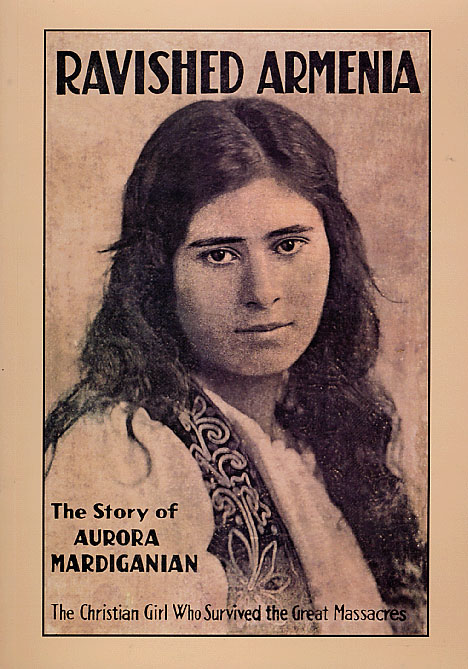 Ravished Armenia: The Story of Aurora Mardiganian, the Christian Girl Who Survived the Great Massacres by Aurora Mardiganian (Arshalyus Mardiganyan) is an autobiographical account of the Turkish oppression of the Armenian people in the Ottoman Empire starting in 1915. The Mardiganian family, relatively wealthy financiers, are warned by their shepherd that he had a dream about the Armenians’ imminent destruction, but his prediction is dismissed. Soon, though, it comes true, as the family is driven from their home, along with all the other Armenians. Occasionally, leniency is shown to those who will renounce their Christian faith and adopt Islam, but even then, the freshly converted Armenians are killed by their Turkish and Kurdish oppressors. Aurora, like most of the women and children, is driven from place to place, guarded by Turkish policemen. Those who are too slow to keep up during forced marches are dispatched quickly and usually cruelly, although Mardiganian’s account does point out a few instances of decency and humanity from guards or locals in the places the Armenians were marched. Her story, like many of those who lived during this time, is made all the more tragic because she was there to see the deaths of her father, mother, a sister, and a brother. She was sold multiple times to be a harem girl. This never worked out for the buyer because Aurora was never willing to accept Islam. It really didn’t work out for her, either, though, because her refusals were usually met with abuse and deprivation. After wandering the Ottoman Empire under the care of the Turkish police or as the property of various rich Turks, having seen so much killing, rape, and pillaging, her old shepherd friend, then working for a Turk trying to get Aurora to submit to Islam before being fully accepted into his harem, helped her escape. She stayed with friendly Kurds before eventually being helped by Americans in the region and then making her way to Russian-controlled territory and under Russian and Armenian military oversight, made her way to Tbilisi, then Russia, and then the United States.
 Avenue of Spies: A True Story of Terror, Espionage, and One American Family’s Heroic Resistance in Nazi-occupied Paris by Alex Kershaw (ISBN: 978-0-8041-4004-1) is one story of underground activity during the Nazi occupation of France. It is about an American, Dr. Sumner Jackson, his Swiss-born wife, Toquette, and their son, Phillip, who lived on the same street as many of the leaders of the occupying Germans, but aided the French resistance and paid the ultimate price for that patriotic effort. Jackson was a surgeon at an American hospital in France and used both his residence and the hospital as venues for fighting the Germans. Toquette and Phillip were also happy to be involved. Phillip couldn’t do much as a teenager, but understood what his parents were involved in. The house was used as a place to pass documents and information, the hospital was used to make Allied soldiers disappear once they had been adequately treated. Many were able to escape to neutral Spain and then back to England. The Nazis were next door and across the street and in houses all along the street, but the Jackson family was able to aid the resistance for quite some time before eventually being rounded up with other patriotic Frenchmen and sent to concentration camps in Germany. The entire family survived the camps. Toquette was extricated from one by the Swedes (reminded me a tiny bit of Raoul
 Up from Slavery by Booker T. Washington (ISBN: 978-0-9997797-3-6) tells of the famous educator’s life from his early boyhood as a slave to his rise as a professor and principal (these days we’d probably say president) of the Tuskegee Institute. The book was short on the childhood section, understandably so, since he was so quite young when slavery ended and had spent his days like all the other slaves: working. Once freed, he and his family struggled like many to find work that would pay the bills, but they succeeded, and his mom encouraged an innate love for learning that eventually led to Washington’s heading off to the Hampton School. A popular place with newly freed blacks trying to improve their lot, the school didn’t have a lot of room, but Booker so impressed the lady in charge of admissions when he was asked to clean some of the school rooms, that he made it in. He didn’t squander a single opportunity, graduated, and then set about to provide opportunities for others. What that led to was his founding the Tuskegee Institute. The greater section of the book is spent chronicling how the school came about, its struggles and successes, and its growth and Washington’s efforts to promote the school and secure the funding needed to keep it on its own two feet. He worked hard no matter what he was involved in, whether teaching, overseeing the school, working in his own home with animals and in his garden, or fundraising. He was also a well-known and in-demand orator, invited to speak at functions, fairs, and other public events. Throughout the book, he spends significant time noting that service, hard work, fulfilling one’s duties, giving things one’s best shot, and honesty are the keys to success and happiness in life. He also touches on the question of race and racism, but only as a reality that is in the background and that mostly stays there when one develops the abovementioned qualities and masters skills that others require, such as the brickmaking, animal husbandry, sewing, architecture, dairy farming, and others that his school taught in addition to academic subjects.
 Franklin & Washington: The Founding Partnership by Edward J. Larson (ISBN: 978-0-06-288016-1) takes an often detailed look at how Benjamin Franklin and George Washington worked toward common goals during the Revolutionary era, often working in concert to attain the desired outcome of a free United States. Larson provides an overview of each man’s life, which establishes that even before they knew each other, they had much in common. They were colonists, their early fortunes were tied to the western frontiers of their respective colonies, and they were involved in military and political matters. While their person routes to success were different, with Franklin rising to wealth and fame via hard work, ingenuity, and learning and exploiting the political scene, Washington had a slightly easier route that involved coming into land and marrying into a wealthy family. Ultimately, though, he, too, was a self-made man, parlaying his surveying and military skills into productive aspects of management and leadership, letting him be a successful estate owner and businessman with a strong ability to find workable compromises in otherwise explosive situations. Once both were convinced that British rule was not the way to go for the colonies, they poured their hearts and souls into independence. They believed strongly in liberty, and put their money where their mouths were, sacrificing time, money, and more to the cause of liberty. Franklin spent years abroad; Washington spent years leading the Continental Army. Once independence had been secured, both turned their attention to helping the thirteen colonies unify, something both strongly believed in. This was more time and sacrifice. They were leaders at the Constitutional Convention. Their styles there sometimes differed, but they worked toward a common goal of a unified country with a federal government strong enough to keep the states in check at times. Larson also spends a significant amount of time talking about one of the biggest differences between the two, which was their outlook on slavery. While they started life someone on the same footing there, Franklin slowly evolved to eventually come to an abolitionist viewpoint. Washington never moved from his position as a slave holder, although he was willing to go along with the anti-slavery clauses in the Constitution.
 Dave Barry’s History of the Millennium (So Far) by Dave Barry (ISBN: 978-0-399-15437-9) is a compilation of those year-end columns for the first few years of the 2000s. Since those were always multi-page columns, the book is a decent length even though it doesn’t even deal with a full decade. The style of Barry’s columns relies on a couple main devices. One is to make fun of real events, and given the state of American politics, that is easy to do. Often, it seemed like he didn’t have to do a lot of writing; the material was writing itself. Another is to start by reporting a real event and then, suddenly and usually rather abruptly, turn it into something surreal or absurd. The subject of the jokes is wide ranging and includes politics, religion, sports, crime, popular culture (singers, movie stars, and generic celebrities who are famous for now real reason), and some bizarre things that make hometown papers only. As the cover to the book suggests, the Republican Party and President Bush are the subject of many jokes, but politicians at all levels find themselves in Barry’s crosshairs. Another continuing theme throughout the book is that things really are getting worse. Each year’s summary starts out with a comment about how we all hoped the year would be a good one and would improve on the past, but that, as usual, we were all disappointed with just how the latest year turned out. Given the ineptitude around us, why should we keep being so optimistic? It’s never dark humor, but there is a level of sarcasm or cynicism that often gives the jokes an edge.
 Reagan and Gorbachev: How the Cold War Ended by Jack F. Matlock, Jr. (ISBN: 0-679-46323-2) is a very detailed, play-by-play recounting of most (all?) of the diplomatic events leading up to the end of the Cold War. Matlock was a career diplomat that served on the National Security Council. This position and his academic and diplomatic career as a specialist on Russia provided him with an insider’s perspective on the processes that led up to the end of the Cold War. The book chronicles, often in great detail, various meetings, negotiations, summits, and communications that involved leaders of the United States and the Soviet Union. The focus was, of course, on what the two countries’ leaders, Reagan and Gorbachev, did, including their preparations before their meetings, their political efforts in their home countries in order to secure the ability to push their preferred policies forward. Matlock talked about the papers prepared for Reagan and how Reagan studied them. He talked about the negotiation processes. He recounted meetings between secretaries of state and foreign ministers. Those meetings, though, and the preparations were made possible by the leaders’ efforts to put people in place that would assist them. The preparations were made because the leaders desired that, something that was not always the case with the leaders who came before them. While Matlock endeavored to explain that so-called summit meetings weren’t the most important things in the diplomatic arsenal, those are what got headlines and what, ultimately, required the most preparation and resulted in the headline deals that moved the West and the Soviets away from nuclear war and toward peace. He, therefore, spent most of the book talking about these meetings that took place in Moscow, Washington, Geneva, and Reykjavík.