World War II is probably most famous for the atrocities of the Nazi regime in Germany. It’s other claims to fame are not much better, including the general death, mayhem, and destruction that are an inevitable part of war. While those are real, true parts of war and human nature, wars and other dire situations also bring out the best in some people. Two pieces of literature taught me that early in life. First was the Winged Watchman, a book about the Dutch resistance during World War II. It is based on true accounts of Dutch efforts in the war. I read and re-read it as a kid, easily placing myself in the roles of the main characters. Second was the Diary of Anne Frank. The family that hid her continues to have my greatest admiration. These books inculcated a sense of duty and sacrifice that are the exact opposite of the destruction the war with which the war is most commonly associated.

Wallenberg: The Incredible True Story of the Man Who Saved Thousands of Jews by Kati Marton (ISBN: 978-1-61145-337-9) tells one of the positive stories from World War II, one that definitely fits the mold of duty, daring, and sacrifice. Wallenberg is the story of Raoul Wallenberg, a member of a wealthy Swedish dynasty, who was unafraid to use his position to augment his natural abilities to help save Jews from Nazis and Hungary’s Nazi-supported regime. Wallenberg, an orphan, did not have the usual family resources available to him, and, with his grandfather’s help, charted his own course after his early years, one that included extensive travel and schooling abroad. He later tried banking, but was unfulfilled. He worked with the Swedish foreign ministry and Western organizations toward a higher purpose in Hungary, where he devised various systems to help preserve the lives of Hungary’s Jews. He provided them with Swedish documents, sometimes as Jews were being loaded on trains to Nazi death camps. He provided Swedish-flagged housing in Budapest and met with Hungarian and Nazi dignitaries, always looking for a sympathetic ear and sometimes finding one, which lent him a little more time. As the Russians closed in on Budapest, he figured his mission was not over, but the Russians believed otherwise, especially since he got some of his money from Western organizations. They arrested him and sent him to the Soviet Union, where he languished in the Gulag until he died, having made the ultimate sacrifice in his efforts to love and serve his fellow man.
The book, coming highly recommended, did not disappoint. Every part of it was interesting, even the discussion of Wallenberg’s family history and early years and some of the post-war intrigue from the Soviets. The Soviet portion of the story was actually pretty sad, especially once Stalin had died. It seemed to me that there was no real reason to hold Wallenberg any longer, but the Soviet system and leaders weren't up to releasing him, somehow viewing that as an affront to them. The story of Wallenberg's daring and sacrifice was exhilarating and inspiring. That may be the book’s largest contribution. The reader is uplifted and gets a glimpse of what it means to do the right thing when doing the right thing likely comes with a very steep cost. Wallenberg's example is one worth emulating.

|
This work, including all text, photographs, and other original work, is licensed under a Creative Commons Attribution-NonCommercial-NoDerivatives 4.0 International License and is copyrighted © MMXXI John Pruess. |


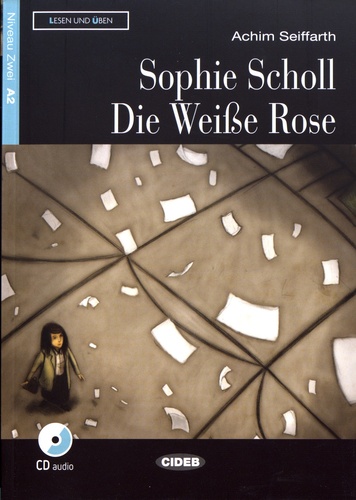
 Escape: Children of the Holocaust by Allan Zullo (ISBN: 978-0-545-09929-5) and Sophie Scholl: Die Weiße Rose by Achim Seiffarth (ISBN: 978-3-12-556024-6) are books written for young people (junior high kids seemed to be the target audience), but present some of the stories of Nazi Germany that are good for readers of any age to know. Zullo’s book told the story of about a dozen Jewish children and their survival of the Holocaust. The stories were varied and all captivating. They usually started with the pre-war life of the kids or, at least, their life under Hitler when it still wasn’t too crazy. This allowed for the reader to see how quickly things went downhill. Inevitably, before long, families were separated, people were in ghettos or concentration camps, and life would never be the same again as kids were forced to grow up quickly and learned that the adult world wasn’t all it was cracked up to be since it induced a lot of pain, suffering, and cruelty. The kids in Zullo’s book all displayed incredible levels of resiliency, though, scraping by and taking advantage of what was few chances and opportunities were given them, such as a truck taking workers to another camp with a sympathetic guard who was known to let one or two people at a time make a run for it. The stories, which are of those who survived, do not glass over the fact that the survivors of the ghettos and camps were in the vast minority, and it is sobering to read of all the friends and family these survivors lost. Seiffarth’s book is written for learners of German, but although relatively simply written, still does a great job presenting a fascinating story. Sophie Scholl was a young woman who went from teenager to college student during the Nazi rise to power. Originally a believer in what Hitler was doing, as she came closer to adulthood, she saw the errors intrinsic to nationalist socialism. Following the lead of her older brother, an activist in the underground resistance, her religious father, who could not abide the unfair treatment of Jews and others oppressed by the regime, and a college professor who encouraged free thinking and debate even when it was unpopular, Sophie joined the resistance, helping to distribute anti-Nazi flyers. Her efforts helped present what was an unpopular opinion to the masses, especially as she helped found resistance cells among young people in cities outside her hometown. Eventually, the Nazi regime caught up to her, her brother, others in their circle, including their professor, and they were executed.
 As stated above, while both books are juvenile literature, they are quality works. I enjoyed trying to stretch my knowledge of German, the native language of my grandparents and other ancestors who have a story or two of their own involving the Nazi authorities. The stories in Escape easily kept my attention, told interesting details, and were from a variety of people, such as those from Germany proper as well as from occupied territories. This variety gave more flavor and a nice, broad overview of what are certainly not isolated incidents. I thought Sophie Scholl was also a nice overview that provided sufficient detail to be informative and yet not get bogged down. I had seen a movie on her a few years ago, but this book gave me some new information and was, I thought, better (I always think that about books relative to movies, though). Both of these books present an interesting and accurate picture of what life was like under the Nazis — for Jews in the first and for conscientious Germans in the other. They remind us what we should be fighting to avoid, even if it’s only a step or two in that direction, and the kind of people we should be striving to be, even if that striving leads to unpopular positions, ostracization, and, possibly, the ultimate sacrifice. Liberty — for ourselves and for others — is worth those things.