While reading A P.O.W.’s Story, I learned that an entire body of literature exists about the time people spent in P.O.W. camps, concentration camps, and the like outside of the Holocaust and outside of the Soviet gulag. Since man’s inhumane treatment of his fellow man seems to be as old as time, many of these works are also quite old, including a number exploring P.O.W. prisons during the American Civil War. I have never been a huge Civil War buff, but I do hold an appreciation for the role it has played in America’s great history. Some of that appreciation has been gained while visiting the famous battlefields like Gettysburg and Manassas. Some has come from reading and coming to better understand the conflict and the stakes at hand.
 The Smoked Yank by Melvin Grigsby (available for free from Google Books), tells the story of one soldier’s time in the Confederate P.O.W. prison in Andersonville, Georgia. It is really the author’s entire wartime experience, so we learn about his role in the Union cavalry before being captured, his time in Andersonville and other prisons, and, then, his time on the run as an escaped prisoner. The account is very interesting and quite adventurous as there are battles, chases, escapes, secret plots, first love, hide-outs, and a happy ending. The author was a patriotic Northerner who believed that black people deserved better treatment. He left school to join the army. He fought honorably in the cavalry before being captured. His initial few months as a P.O.W. were sometimes uncomfortable, but not too much trouble, as he and the other men were treated more-or-less humanely. Some Southerners were even kind enough to provide supplies to the prisoners or lend them books. Later, though, they were transferred to Andersonville. The prisoners didn’t know what awaited them there, but they soon found out. Hygiene was almost non-existent thanks to swampland that served as a latrine for a camp that often housed triple (or more) the number of people it was designed for. Food was in drastic short supply. Disease, which was the number one killer in the war, raged in the camp, too. There were also executions of the Union soldiers, which the author didn’t seem to find too out of line, and Union-on-Union violence, which is one of the larger subtexts to the prison’s story in later academic studies of the prison. Eventually, the author finds a way to make his escape, and then spends (if I was following things correctly) a few months on the road running from Rebels back to the North. The story of the escape is just as intriguing as his time in Andersonville, if not more so. He is helped at almost every turn by the slaves, who, with one notable exception, are grateful for the Northerners’ sacrifices in securing their freedom. There are many close calls, a lot of time spent hidden away in the swamplands of the South, and a lot of risk. Eventually, the author makes it back to his family in the North.
I enjoyed the book and, as mentioned, thought it had a nice mix of information and adventure in the telling of the story. I was, maybe, a little underwhelmed by the author’s description of the infamous prison, but I think his experience, which was not as lengthy as that of many others, was a little different. It was very similar to other stories in the same vein because Grigsby was someone who wasn’t going to let things just happen to him. He was always looking for the next way out, the next work party join, or the next scheme inside the prison yard to stay active. The story of his escape, which simply would not have been possible were it not for the help of what was essentially the Underground Railroad, although he never called it that, was a highlight for me. It seemed the good in the human spirit was on display as so many people, who were still technically slaves, opened their homes to a white man and provided him with food, blankets, medicine, sometimes at great personal risk. Like most good books, this one had a few good lessons packaged inside an intriguing and inspiring story of adventure.
I enjoyed the book and, as mentioned, thought it had a nice mix of information and adventure in the telling of the story. I was, maybe, a little underwhelmed by the author’s description of the infamous prison, but I think his experience, which was not as lengthy as that of many others, was a little different. It was very similar to other stories in the same vein because Grigsby was someone who wasn’t going to let things just happen to him. He was always looking for the next way out, the next work party join, or the next scheme inside the prison yard to stay active. The story of his escape, which simply would not have been possible were it not for the help of what was essentially the Underground Railroad, although he never called it that, was a highlight for me. It seemed the good in the human spirit was on display as so many people, who were still technically slaves, opened their homes to a white man and provided him with food, blankets, medicine, sometimes at great personal risk. Like most good books, this one had a few good lessons packaged inside an intriguing and inspiring story of adventure.
 | This work, including all text, photographs, and other original work, is licensed under a Creative Commons Attribution Non-Commercial No Derivatives 3.0 License and is copyrighted © MMXIV John Pruess. |


 The Days of the Consuls by Ivo Andrić (ISBN: 978-86-6457-018-3), which has been published in English under the alternative titles of Travnik Chronicle and Bosnian Chronicle, fits right into Andrić's main motif, telling the story of the city of Travnik, which is medium-sized for Bosnia today, but was historically much more important as the seat of the Ottoman Empire in Bosnia, during a few short years while the Austro-Hungarian Empire and Napoleon’s France kept consuls in the town. The story is told from an omniscient narrator point of view, but focuses largely on French consul, his entourage, and his interactions with the others in Travnik, be they local or outsider. The French consul deals with being an outsider himself, shunned by the local Muslims and never really understood by the Ottoman representative, although their relationship was cordial. He remains the enemy of the Austro-Hungarian consul, although he sees many similarities between the two men and carries on professional, if not friendly, relations with him. The members of the consuls’ families and entourages are met with varying degrees of acceptance or disgust by those around them, including those from the local clergy. The Muslim population seems to be the most vocal in their distaste for the outsiders, but the Orthodox, Catholic, and Jewish populations also steer clear and are distrustful of the changes the presence of the consuls seems to be ushering into their otherwise simple lives. When Napoleon is finally defeated, the French no longer see the need for a consul in Travnik, and the French consul is recalled. The Austrians also remove from Bosnia. With all that has changed, all has remained the same.
 Dachau and the Nazi Terror: 1933–1945: Testimonies and Memoirs edited by Wolfgang Benz and Barbara Distel (ISBN: 3-9808587-0-7) is a collection of memoirs written up by a variety of people who, in some way, experienced the Nazi concentration camps. The volume contains thoughts from a couple different German Jews, a member of the French resistance, American liberators, Jews from other parts of Europe, including Poland, what was then Czechoslovakia, and even the further-away Latvia. It was interesting to read the variety of experiences. The common denominators were that everyone, sooner or later, experienced the terror of the concentration camps and that the vast majority of those interred were there because of their ethnicity or because of their political beliefs. Other than the two short testimonies provided by American liberators, each of the former prisoners discussed the drudgery of prison life, the daily struggle for life that got harder and harder the longer the war dragged on, and extreme contrast between the brutality of so many and the kindness of a few soldiers and citizens who rose above the prevailing patterns of thought and behavior. It was interesting to read about the various commentators’ lives before and during the war, their varying degrees of commitment to their religious or political ideals, and their varied responses to life in the concentration camps.
 An Inconvenient Book: Real Solutions to the World's Biggest Problems by Glenn Beck (ISBN: 978-1-4165-5219-2) discusses some of the big political and social problems that face America. There are 22 chapters that take on topics ranging from global warming to avoiding chick flicks and from illegal immigration to dating. The book takes a simple tack: a problem is discussed, some examples or arguments from one side are given, Beck’s rebuttal is given, and then a solution is proposed. The book, which is more akin to a coffee table book than anything else, features illustrations and little thoughts (usually humorous) thrown in throughout. With a couple exceptions (i.e., chick flicks as mentioned above), the problems are ones that seem to define America and that seem to divide America. As one would expect a conservative media host to do, the writing is straightforward and holds nothing back; as one would expect from Beck and his team, there’s a bit of humor worked in. It is also full of a wide range of material that keeps things interesting.
 The Zookeeper’s Wife: A War Story by Diane Ackerman (ISBN: 978-0-393-33306-0) is one such story. The story’s heroine is Antonina Żabińska, who was a Polish writer and the wife of the head of the Warsaw Zoo, Jan Żabiński. Both were members of the underground resistance that fought the Nazi occupiers of their homeland. They, like most members of the resistance, used what they had on hand to do this. In their case, the story is rather remarkable because what they had on hand was a zoo. This gave them cover for Jan to be out and about more than the average Varsovian and provided some unusual hiding spots for fellow resistance members and Jews alike. Jan also used his position working for the municipality to help Jews escape from the ghetto, and they were often housed at the zoo, both in spaces formerly inhabited by animals and in the family’s house (which was always home to an extensive menagerie of unusual pets). As with any underground operation, there were risks and close calls. Hitler’s henchmen were interested in purebred animals as well as purebred people, so the zoo was of interest to some high-ranking Nazis, some of whom visited the zoo. Regular soldiers used it as barracks and shot some of the animals for food. The whole situation was always dangerous because one could never be sure just what those walking past the house would notice about the extra bodies in the house. Jan, Antonina, their son, and some of their animals made it out of the war alive, having done the right thing by all those whom they helped and having risked it all.
 Star Wars: A New Dawn by John Jackson Miller (ISBN: 978-0-553-39286-9) talks about how two of the main Rebels characters met and teamed up to fight the Empire. A guy named Kanan is living out his life in anonymity, usually jumping from one job to another to stay ahead of anyone really getting to know him, mostly because he’s a little afraid of the Empire and because he’s really never known anything different. His public image is that of a rough-and-tumble cowboy, piloting ships carrying explosives and fighting anyone who so much as looks at him crookedly. However, he often finds himself helping people out of sticky situations, usually seemingly without thinking as it just seems to be a part of who he is. Opposite him is Hera, a Twi’lek, a humanoid alien (basically a human with so-called head-tails), who is an excellent pilot and has already dedicated her life to fighting against the Empire, although she is not part of any truly organized effort. Their worlds collide on a planet where the moon is the real draw because it can be mined. Kanan saves a few people, having used the Force to keep a cave from collapsing on them, and so is looking for a way away from the planet to avoid detection as a former Jedi. Hera comes to get some information from a guy who works for a Star Wars version of a signals intelligence agency. They meet in a dark alley, fighting off the local gang bangers and protecting people in the process. Eventually, rather begrudgingly (especially for Kanan), they’re drawn into a mission that involves smuggling things on board an Imperial ship, fighting a cyborg, and a few shoot-outs. There’s lots of action, some Star Wars-style romance, and the necessary positive ending after all the damage is done along the way. The result is that the groundwork is laid for Hera and Canan, no longer completely running from his Jedi past, leading a small team of rebels all over the galaxy, resisting the Empire whenever they get the chance.
 The Winter Fortress: The Epic Mission to Sabotage Hitler’s Atomic Bomb by Neal Bascomb (ISBN: 978-0-544-36806-4) is a story that tells just such a story (incidentally, also in Norway). The book tells part of the story of Nazi Germany’s efforts to acquire an atomic bomb. Those efforts were tightly tied to Norway’s hydroelectric capabilities and a substance known as heavy water, or water with extra deuterium in it. Early experiments by Allied and Axis scientists alike indicated that heavy water could be used in making an atomic bomb. Germany pursued this theory rather aggressively. After occupying Norway, the Germans used Norway’s production of heavy water to accelerate their nuclear experiments. The Allies knew this and wanted to come up with a plan to prevent the German scientists from getting what they needed. Norwegians in the resistance did a lot in their day-to-day efforts to sabotage the heavy water without doing too much damage to the plants where it was produced since that would lead to German reprisals and put many Norwegians out of work. It was something the Norwegians had to carefully balance. As things got down to the wire, though, even the Norwegians could see that their efforts would have to increase in scale. With help from the UK, various plans were set in motion, including one that led to some disastrous deaths in the Norwegian outback as saboteurs rode gliders into Norway only to crash land with horrible results. Later attempts were more successful with Norwegian commandos, already in Norway, conducting two successful raids against heavy water, one damaging the plant and one preventing a large delivery of the water from being completed. After the first raid on the plant, the production capabilities were eventually brought back on line, but when they were, the U.S. bombed the plant, putting down for the count until the end of the war. The book chronicles these operations, all that led up the them, and many of the brave people it took to make them successful.
 In The Vory: Russia's Super Mafia (ISBN: 978-0-300-18682-6) by Mark Galeotti, one gets a much more in-depth look at Russia’s criminals. The book looks at the heavy hitters, not the petty thieves, starting way back in tsarist times and finishing with events of the last couple years. The history of Russia’s criminals is interesting in that it is rather tightly woven together with the history of Russia itself. The Russian Empire, the Bolsheviks, Stalin, Gorbachev, and then Yeltsin and now Putin have all left a mark on Russian organized crime. The central figures, the so-called thieves in law (“in law” because they lived according to the thieves’ code) have proven themselves resourceful and adaptable, changing their methods and worldview to fit whatever comes their way. Originally unwilling to be part of mainstream society, Stalinist repression and policy caused a demographic shift in the underworld that resulted in the top criminals finding a partner, not an enemy, in the state, and that relationship has continued to morph up through today, where crime, business, and politics is often a blurry and hard-to-define conglomeration. Russian organized crime was a hot topic in the 1990s, when it and the oligarchs settled their scores openly and violently on the streets of Moscow and St. Petersburg, and security services around the world warned of the Russian mafia and its potential influence in Europe and even farther abroad. Galeotti discusses that, too, including organized crime in America that is tied to the Russians. He notes, though, that most of the Western fears never materialized, and the Russian criminals were never able to (or never even tried to) overtake the criminals who were already in place. Now, with their shady ties to legitimacy, they ply their trades on the margins, providing services such as hacking or providing frontline fighters in Crimea. There are a few significant words on the costs of crime, both in terms of people and economics. The author’s main thesis is that the Russian thieves, the vory, now a solid part of mainstream society, a complete 180° turn from their pre-Revolution days, have adapted before and will continue to adapt to whatever situation comes their way.
 Already eight years ago, Why Kosovo Still Matters by Denis MacShane (ISBN: 978-1-907822-39-1) was printed. At that time, Kosovo had only been independent for three short years, with many in the West wondering why this little country was such a focus for so many in government. The book gives a short history of Kosovo, but spends the bulk of its relatively few pages discussing the more modern history of the country from the fall of Yugoslavia to its troubled beginnings as an independent state. Kosovo faces a number of difficulties. Most are local, many having to do with the hostility of its neighbor and former overlord, Serbia. These are unlikely to subsist soon because of the large Serbian minority in Kosovo. Other problems exist because of the lack of support from the international community. In essence, Europe and the U.S. created the country, but the West has since then done what some perceive as a poor job at integrating the country into the West, which has left Serbia pretty free to meddle in the country it wishes had never been created. Serbia has a few allies in its efforts to keep Kosovo in a constant state of change. Some are more active than others in these efforts, but overall, only a little over half of UN members have recognized Kosovo’s independence. This situation makes it hard for the country to develop and for the people there to experience the benefits that independence and democracy are supposed to bring. The end of the book discusses a few ideas on how to move forward. Although it’s a little dated, some of the ideas being floated as ways to solve Kosovo’s troubles then are still being talked about, such as letting Serbia have the regions populated by a majority Serb population, but that is dismissed out of hand. The problems are best dealt with, according to MacShane, by accepting that both Kosovo and Serbia are going to be around and then moving forward with an eye to improving the lots of the people on both sides of the ethnic divide.
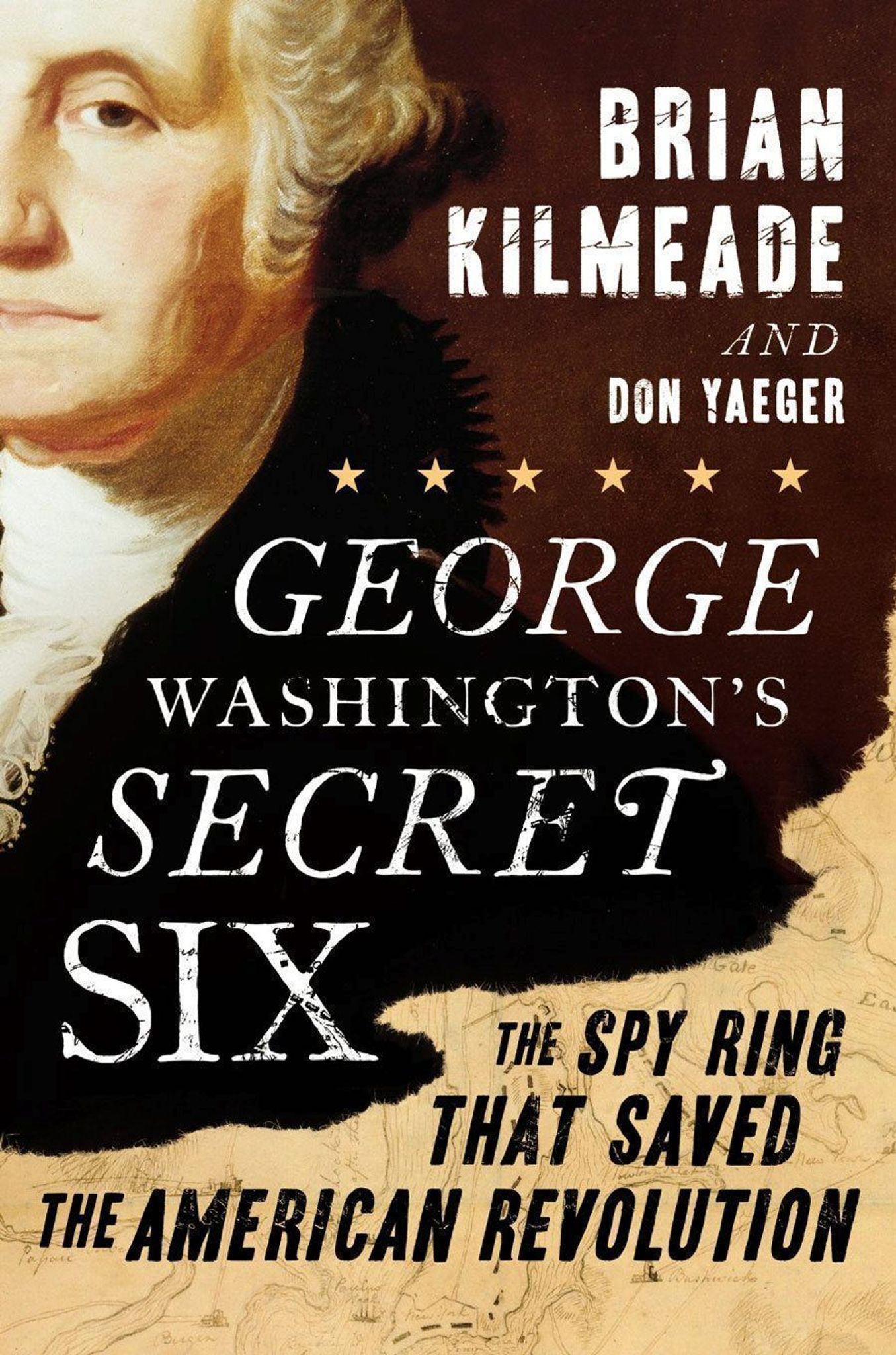 George Washington's Secret Six: The Spy Ring That Saved the American Revolution by Brian Kilmeade and Don Yaeger (ISBN: 978-1-59523-103-1) tells a very interesting story and gives some important insights into just how Washington and the other rebels upset one of the greatest empires in the world. Washington was not opposed at all to spying, and the methods he was willing to employ were rather cutting edge for his time. Importantly, the American forces were first to plunge into the spy game, so the British, who eventually put off the old ways of thinking about spying and the old ways of spying itself, had to play catch up. Since New York was of such great importance to the warring armies, getting solid intelligence out of the Tory-held area was critical to the American cause. Washington’s chief of intelligence, Benjamin Tallmadge, was able to recruit six agents in New York, known as the Culper Ring, after the pseudonyms of the main agents, who then provided the Continental Army with key information throughout the war. They were able to help thwart a British attack on French forces friendly to the American rebels, they helped capture traitor extraordinaire Benedict Arnold, they helped Washington avoid defeat by warning him not to chase after what was a British diversion, and they helped the Continental government fight against British attempts to infuse America with counterfeit money. Kilmeade and Yaeger provide a number of details about those involved in the spy ring, the officers on both sides, and the various events they were involved in from the ring’s inception to the end of the war.
 Ahsoka by E. K. Johnston (ISBN: 978-1-4847-8231-6) is the story of former Jedi Padawan, Ahsoka Tano (trained by no other than Darth Vader’s former self, Anakin Skywalker), no longer a Jedi, constantly on the run like others who had been Jedi or Jedi in training at the time of the infamous Order 66. She has hopped from one outlandish Star Wars planet to another, always trying to steer clear of the Empire, but never really managing to do so. Her background as a warrior and soldier is constantly catching up to her, too. The book follows her adventures as she lands in another situation where her better nature and her military skills come in handy to help a few people fight against the oppression of the Empire. She ends up, after overcoming an internal struggle between Ahsoka on the run and Ahsoka the Jedi, helping people from multiple planets, all the while fighting off evil Imperials, including the super creepy inquisitors, who care nothing for the people and planets they oppress.
 Pros and Cons: The Criminals Who Play in the NFL (ISBN: 0-446-60747-9) by Jeff Benedict and Don Yaeger delves into the subject of the behavior of professional athletes (and, in a way, college and high school athletes since the authors not that professional athletes who get a pass on bad behavior have been getting similar passes for years). The book relies heavily on statistics, which everyone knows are open to manipulation, but the authors go into detail about their methodology. The bulk of the book is anecdotes regarding various players and their criminal undertakings, ranging from gambling (probably the least harmful thing discussed) to robbery, burglary, and assault, and then on up to murder. It’s tough reading in some places as this raw, and real people are involved. The authors’ position is that players, team management, NFL management, and fans are at fault, but the bulk of the fault lies with team and league management, since they are the ones that push for light punishments, involve their lawyers in an effort to get players off the hook, and stick up for guys who spend their days off skirting the law in myriad ways. They do proffer some solutions, most of which center around harsh penalties for all encounters with the law, not just convictions and not just for what people normally think of as “serious crimes.”
 Eurasian Disunion: Russia’s Vulnerable Flanks by Janusz Bugajski and Margarita Assenova (ISBN: 978-0-9855045-5-7) takes a look, region by region, those parts of the world that used to be part of the Soviet bloc and explores their struggles, their ties to Russia, and possible scenarios regarding their futures. Scandinavia, Eastern Europe, the Balkans, the Caucasus, and Central Asia are all examined. Russia is of the opinion that it has and should maintain strategic interest in all these regions and works to maintain a certain level of influence in those areas. It does this through diplomacy, through international organizations, through intelligence operations, through propaganda, through its involvement and control of energy markets, and through supporting general conditions of uncertainty and unrest. (To be fair, other countries and international organizations are involved in the same or similar activities, although motivations may be different.) The authors examine the responses and defenses of the various countries and regions to Russia’s many efforts (the authors identify what they determine to be sixty-eight unique methods Russia tries to project its will on the former Soviet bloc) to protect its influence in those same regions. As noted above, the past twenty or so years have shown that, to varying degrees, the former Soviet countries want to distance themselves from that past and from Russia being their only powerful partner. Most would be happy with engaging with Russia, but not at the expense of other opportunities in the West and in Asia. The authors examine responses to Russia’s efforts and give some brief thoughts on how things might play out given varying scenarios, largely calling for a cross-Atlantic approach that builds on multi-lateral international relations to provide Russia’s flanks with viable alternatives until Russia decides to play by the rules of the game.
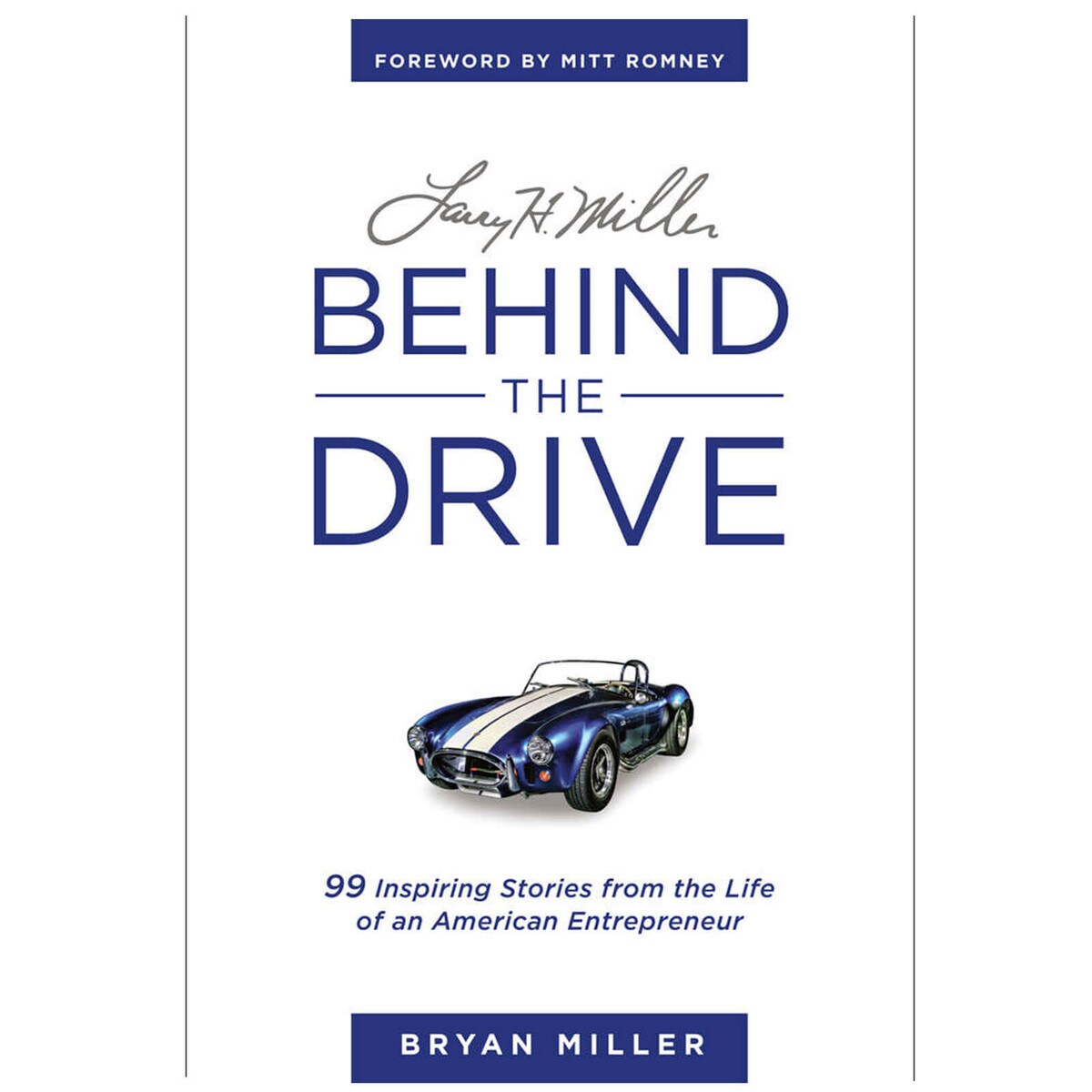 Larry H. Miller: Behind the Drive: 99 Inspiring Stories from the Life of an American Entrepreneur, edited by Bryan Miller (ISBN: 978-1-62972-094-4), is a collection of short anecdotes from the lives of those people on whom Larry Miller had a positive impact. Some of the people who contributed were well known, both inside and out of Utah. Others were people I’d never heard of. All had been helped in one way or another by the man that most knew only as the owner of the Utah Jazz (while his car dealership empire was well known, the Jazz were front and center in the minds of everyone that I knew). There was story after story of Larry Miller giving of his time and money to help someone out, including competitors. There were a couple stories from his immediate family indicating that he had a great appreciation and love for his family and wished, as he got to the end of this life, that he had made better decisions about how much time he spent with his family. He was a passionate, hard-working man, driven by love for his family, his community, and his God, and it showed in the way he helped out in so many different people’s lives. He paid off cars, he bought people appliances, he endowed scholarships for poor kids, he worked to keep the Jazz in Utah, seeing them as something the community could gel around, and he supported his family, friends, and community through service in the Church.
 Wonder by R. J. Palacio (ISBN: 978-0-375-86902-0), explores this latter form of bullying, but also the ability of some people to rise above it, in a short novel about a kid born with a number of physical birth defects who has decided it’s time to go to school with other kids. He chooses to go to a private school, where he is confronted with all the problems one might expect for a kid facing the trouble of being both the new kid and the kid with some unusual facial features. There are a few kids who are genuine in their interactions with him from day one, but for others, it takes some time. Everything in the book is narrated from a first-person point of view, although the first person sometimes changes, as the reader hears from Auggie’s sister and friends on occasion. They have their own unique takes on the situation and show that there is some internal struggle involved in doing the right thing. By the end of the book, most of kids have come around to accepting Auggie, and even come to his defense when some kids from another school decide to pick on him at an overnight outing (a very real phenomenon, as most people feel free to pick on their own friends, families, hometowns, schools, etc., but won’t put up with a single negative word by an outsider). The main character himself has also done some maturing, learning that despite his differences and the hardship they have caused him, there is much he can and even should do on his own.
 Band of Brothers: E Company, 506th Regiment, 101st Airborne from Normandy to Hitler’s Eagle’s Nest by Stephen E. Ambrose (ISBN: 978-1-5011-7940-2) tells the story of a few of the soldiers from that greatest generation. It traces the story of one company from the company’s formation through their intense training, through their roles in some of the most decisive battles of World War II, and then through their march across Europe right to Hitler’s famed headquarters, where they secured and watched over the allied territory. Like the based-on-a-true-story movies that always have a few words about the movie’s heroes before the credits roll, the book had a final chapter about how America’s heroes went through life after the war; with very few exceptions, they lived up to their well-deserved moniker as America ’s greatest. The stories detailed training and then the adrenaline rush of first combat as part of the invasion of Normandy. The men had little use for the French, but a much higher respect for the Dutch. After the initial surges and excitement, they spent months in trenches on the front, and more than a few lost their lives. There was a lot of pain and suffering, but a few light moments were had, too. Throughout it all, the stories weave together a solid narrative of unity and support for each other that comes only through bearing great tribulation together. That unity was one of the men’s greatest assets as they faced their enemy on the battlefields of Europe.
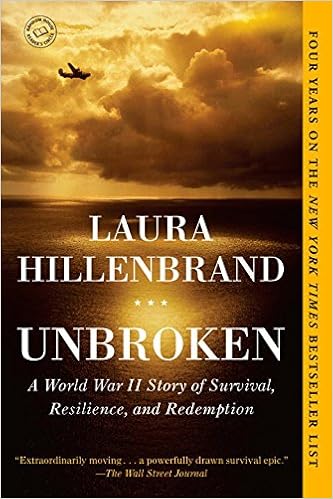 Unbroken: A World War II Story of Survival, Resilience, and Redemption by Laura Hillenbrand (ISBN: 978-0-679-60375-7) is just such a story about overcoming trials. Like so many stories of resilience in the face of overwhelming odds, the story starts with humble origins. Louis Zamperini was the son of Italian immigrants struggling to make ends meet along with most other Depression-era Americans. A caring older brother discovered the track and invited Louie along, later serving as an unofficial coach, and Louie became as star, eventually qualifying for the Olympics, running a race (5,000 meters) he didn’t usually do. He competed admirably in Berlin, finishing eighth against some of the world’s greatest runners. His running career, though, was cut short by the onset of war, and he served as a bombardier. That, too, was cut short because his plane went down during a rescue mission, and he was captured by the Japanese after some time floating in a raft at sea. Floating around for weeks was already an amazing act of survival and resilience, but the worst was yet to come. Zamperini then spent more than two years in various Japanese prison camps undergoing brutal treatment. He and others kept their wits about them by resolving to beat the system and not give in to their captors and abusers. Some made it, some did not. There were some funny stories along the way, but most of it was monotony, drudgery, and pain. Eventually, Zamperini and the others that survived were done with the horrors of the camps because the war ended. Unfortunately, for many, that was not the concrete ending they would’ve preferred. The horrors lived on in many of the former POWs’ minds, causing more than one to turn to alcohol, destructive behaviors, and even suicide to end the pain. Zamperini’s story included a lot of post-war alcoholism, but he eventually quit that thanks to a conversion to evangelical Christianity, in part because of him remembering some promises he made to God while floating aimlessly on the Pacific Ocean in the first few days after his plane went down. Zamperini used this redeeming experience in his life to later inspire and help others as well as come to terms with and even forgive his war-time tormentors.
 The Boys in the Boat: Nine Americans ad Their Epic Quest for Gold at the 1936 Berlin Olympics (ISBN: 978-1-101-62274-2) by Daniel James Brown tells a story in which sports and life worked together to teach just such lessons as young men who made up some of the Greatest Generation strove for excellence in their athletic endeavors and in life, garnering a gold medal along the way. The story follows the life of Joe Rantz the closest, but the reader also gets fairly well acquainted with his rowing teammates, some of his family, his girlfriend, and his coaches along the way. They all were the kind of people that made America great — hard workers who were responsible and self-reliant, expecting nothing from others but the best from themselves. Rantz had an interesting childhood in which his mother died, he spent some time living in a mining camp, his step-mother was the stuff of fairy tales, brutally controlling toward his dad and eventually kicking Rantz out of the house when he was still a young teenager. Joe fended for himself, living in the house the rest of his family abandoned, working his way through high school and college. It bordered, in a way, on a tale of survival during his early years. In college, he tried out for and made the rowing team, showing immense potential as a freshman. Hard work over the next three years eventually landed him and his teammates in the Olympics in Berlin, Germany, where Hitler was in his heyday. Rantz and his fellow oarsman from Washington had overcome a lot throughout their lives, many from similar backgrounds to Joe’s, to make it to the Olympics in a sport historically dominated by elites and other from the moneyed class. In Berlin, they overcame more challenges and the home team to capture gold literally right from underneath Hitler’s nose.