As a kid, Larry Miller was a guy I didn’t really get. I think I didn’t get a lot of people as a kid. I was probably a lot more quick to judge people than I should’ve been. I’m not really sure what it was that made me think he was not up to my standards. Likely it was a picture in the newspaper of him at a Jazz game on a Sunday (which rarely happened) or a quote in the newspaper in which he used some inappropriate language. As I have got older and come to learn more about him and come to recognize my own struggles, it’s been very easy to forgive him for those shortcomings. In fact, it’s probably just the opposite situation now as I tend to see Larry Miller as someone who had many positive characteristics and someone from whom we can learn.
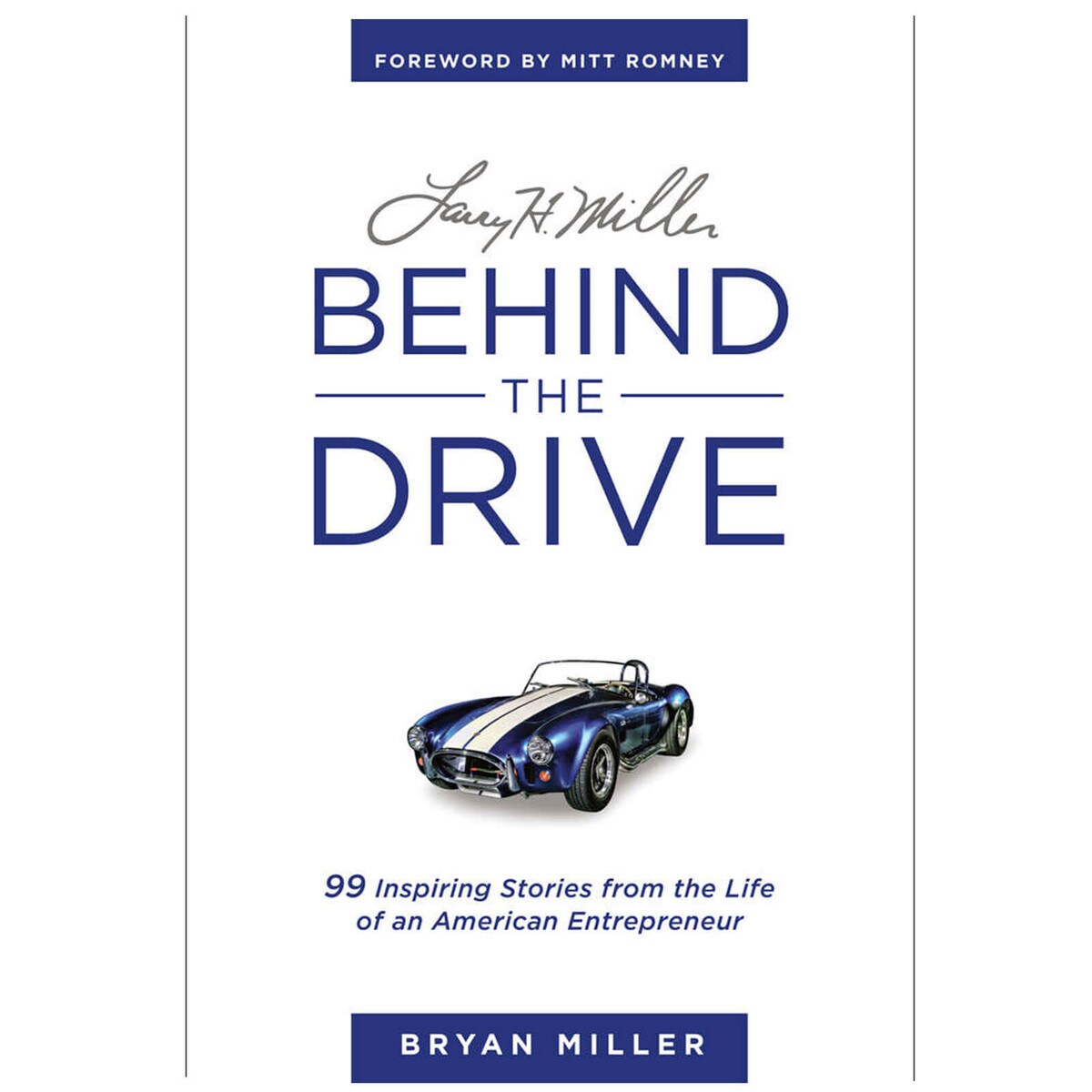 Larry H. Miller: Behind the Drive: 99 Inspiring Stories from the Life of an American Entrepreneur, edited by Bryan Miller (ISBN: 978-1-62972-094-4), is a collection of short anecdotes from the lives of those people on whom Larry Miller had a positive impact. Some of the people who contributed were well known, both inside and out of Utah. Others were people I’d never heard of. All had been helped in one way or another by the man that most knew only as the owner of the Utah Jazz (while his car dealership empire was well known, the Jazz were front and center in the minds of everyone that I knew). There was story after story of Larry Miller giving of his time and money to help someone out, including competitors. There were a couple stories from his immediate family indicating that he had a great appreciation and love for his family and wished, as he got to the end of this life, that he had made better decisions about how much time he spent with his family. He was a passionate, hard-working man, driven by love for his family, his community, and his God, and it showed in the way he helped out in so many different people’s lives. He paid off cars, he bought people appliances, he endowed scholarships for poor kids, he worked to keep the Jazz in Utah, seeing them as something the community could gel around, and he supported his family, friends, and community through service in the Church.
I enjoyed reading Miller’s autobiography, Driven, so it’s not too surprising that I enjoyed this book, too. This provided a differing viewpoint, but included some of the same conclusions. I was amazed at how many people he helped, often without asking a question. He had no second thoughts about paying off a struggling woman’s car loan. Employees, friends, and even strangers (when the wife of a Ukrainian he barely knew needed cancer treatment she could only get in America, he moved them to America and paid for her cancer treatments) benefited from his generosity with his hard-earned money. He was a personable person, taking time to get to know the little people, regularly spending his lunches with mechanics at dealerships or construction workers on building sites, not the managers or foremen. I’ve heard from other sources that Miller was a poor tipper, and that was addressed by a restaurant owner in the book, who said Miller usually gave 15% (standard at the time of the story), but his staff felt that simply because he was rich, he should’ve tipped more. Judging by the rest of the stories, I believe Larry Miller’s tips added up to well over 15% in his life. I found his children’s thoughts on family time fascinating and realized I could learn from that, too, even though he probably fell short in that area. Both the effective and less-effective examples are something we can, if we are smart, learn from.
Larry H. Miller: Behind the Drive: 99 Inspiring Stories from the Life of an American Entrepreneur, edited by Bryan Miller (ISBN: 978-1-62972-094-4), is a collection of short anecdotes from the lives of those people on whom Larry Miller had a positive impact. Some of the people who contributed were well known, both inside and out of Utah. Others were people I’d never heard of. All had been helped in one way or another by the man that most knew only as the owner of the Utah Jazz (while his car dealership empire was well known, the Jazz were front and center in the minds of everyone that I knew). There was story after story of Larry Miller giving of his time and money to help someone out, including competitors. There were a couple stories from his immediate family indicating that he had a great appreciation and love for his family and wished, as he got to the end of this life, that he had made better decisions about how much time he spent with his family. He was a passionate, hard-working man, driven by love for his family, his community, and his God, and it showed in the way he helped out in so many different people’s lives. He paid off cars, he bought people appliances, he endowed scholarships for poor kids, he worked to keep the Jazz in Utah, seeing them as something the community could gel around, and he supported his family, friends, and community through service in the Church.I enjoyed reading Miller’s autobiography, Driven, so it’s not too surprising that I enjoyed this book, too. This provided a differing viewpoint, but included some of the same conclusions. I was amazed at how many people he helped, often without asking a question. He had no second thoughts about paying off a struggling woman’s car loan. Employees, friends, and even strangers (when the wife of a Ukrainian he barely knew needed cancer treatment she could only get in America, he moved them to America and paid for her cancer treatments) benefited from his generosity with his hard-earned money. He was a personable person, taking time to get to know the little people, regularly spending his lunches with mechanics at dealerships or construction workers on building sites, not the managers or foremen. I’ve heard from other sources that Miller was a poor tipper, and that was addressed by a restaurant owner in the book, who said Miller usually gave 15% (standard at the time of the story), but his staff felt that simply because he was rich, he should’ve tipped more. Judging by the rest of the stories, I believe Larry Miller’s tips added up to well over 15% in his life. I found his children’s thoughts on family time fascinating and realized I could learn from that, too, even though he probably fell short in that area. Both the effective and less-effective examples are something we can, if we are smart, learn from.
 | This work, including all text, photographs, and other original work, is licensed under a Creative Commons Attribution Non-Commercial No Derivatives 3.0 License and is copyrighted © MMXIV John Pruess. |


 Assisted: An Autobiography (ISBN: 978-1-60907-570-5) by John Stockton, if nothing else, proved me right in my assumption. Memoir might be a better description of the book, but those arguments about semantics take nothing away from a rather thorough look at Stockton’s life as a little kid roaming the neighborhood with his friends on long summer days to his time as an NBA star and through his post-retirement activities. He told about his upbringing, his childhood, his high school days, his experiences in college, including various summer jobs, basketball, and dating. He talked about making it in the NBA, being a rookie, changes in the game, some of former Jazz owner Larry Miller’s quirks, and a host of other things that fans and disinterested parties alike might find interesting. He talked about his family, and his parents and wife in particular. He discussed a couple of his coaches, including Jerry Sloan, an NBA great and another hard-nosed, down-to-earth, blue-collar guy. Stockton’s discussion of the Olympics was fascinating because he was very open about his love for his country and the great responsibility he felt putting U.S.A. on his chest. He discussed his life after basketball, except that it hasn’t really been life after basketball as some of his kids of played at a very high level, he’s restored a warehouse and turned it into a community sports center, and he’s still involved in the occasional pickup game. Finally, as part of the proving my assumptions true, his tale is woven throughout with references to family, God, prayer, hard work, and other old-fashioned values.