As a kid, Larry Miller was a guy I didn’t really get. I think I didn’t get a lot of people as a kid. I was probably a lot more quick to judge people than I should’ve been. I’m not really sure what it was that made me think he was not up to my standards. Likely it was a picture in the newspaper of him at a Jazz game on a Sunday (which rarely happened) or a quote in the newspaper in which he used some inappropriate language. As I have got older and come to learn more about him and come to recognize my own struggles, it’s been very easy to forgive him for those shortcomings. In fact, it’s probably just the opposite situation now as I tend to see Larry Miller as someone who had many positive characteristics and someone from whom we can learn.
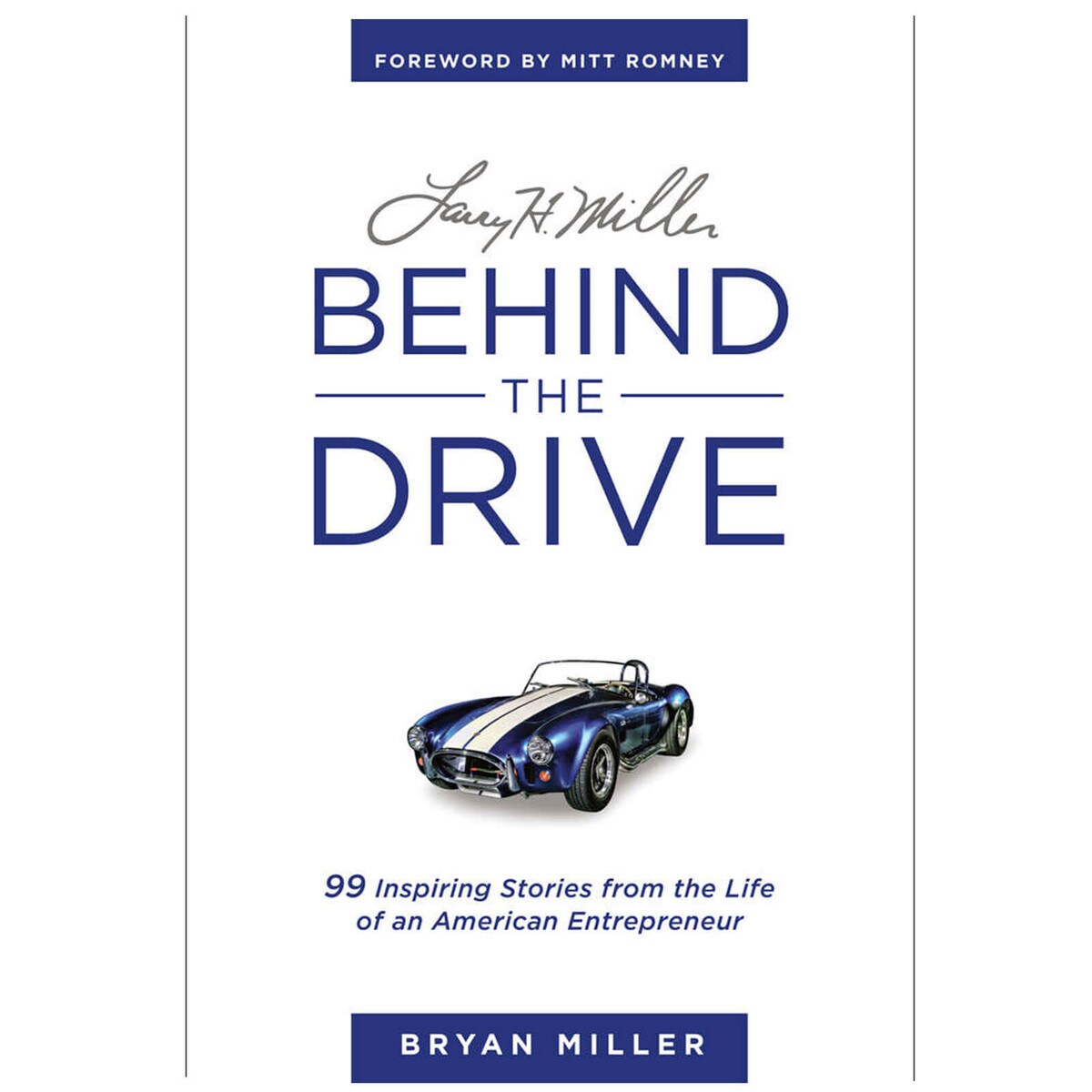 Larry H. Miller: Behind the Drive: 99 Inspiring Stories from the Life of an American Entrepreneur, edited by Bryan Miller (ISBN: 978-1-62972-094-4), is a collection of short anecdotes from the lives of those people on whom Larry Miller had a positive impact. Some of the people who contributed were well known, both inside and out of Utah. Others were people I’d never heard of. All had been helped in one way or another by the man that most knew only as the owner of the Utah Jazz (while his car dealership empire was well known, the Jazz were front and center in the minds of everyone that I knew). There was story after story of Larry Miller giving of his time and money to help someone out, including competitors. There were a couple stories from his immediate family indicating that he had a great appreciation and love for his family and wished, as he got to the end of this life, that he had made better decisions about how much time he spent with his family. He was a passionate, hard-working man, driven by love for his family, his community, and his God, and it showed in the way he helped out in so many different people’s lives. He paid off cars, he bought people appliances, he endowed scholarships for poor kids, he worked to keep the Jazz in Utah, seeing them as something the community could gel around, and he supported his family, friends, and community through service in the Church.
I enjoyed reading Miller’s autobiography, Driven, so it’s not too surprising that I enjoyed this book, too. This provided a differing viewpoint, but included some of the same conclusions. I was amazed at how many people he helped, often without asking a question. He had no second thoughts about paying off a struggling woman’s car loan. Employees, friends, and even strangers (when the wife of a Ukrainian he barely knew needed cancer treatment she could only get in America, he moved them to America and paid for her cancer treatments) benefited from his generosity with his hard-earned money. He was a personable person, taking time to get to know the little people, regularly spending his lunches with mechanics at dealerships or construction workers on building sites, not the managers or foremen. I’ve heard from other sources that Miller was a poor tipper, and that was addressed by a restaurant owner in the book, who said Miller usually gave 15% (standard at the time of the story), but his staff felt that simply because he was rich, he should’ve tipped more. Judging by the rest of the stories, I believe Larry Miller’s tips added up to well over 15% in his life. I found his children’s thoughts on family time fascinating and realized I could learn from that, too, even though he probably fell short in that area. Both the effective and less-effective examples are something we can, if we are smart, learn from.
Larry H. Miller: Behind the Drive: 99 Inspiring Stories from the Life of an American Entrepreneur, edited by Bryan Miller (ISBN: 978-1-62972-094-4), is a collection of short anecdotes from the lives of those people on whom Larry Miller had a positive impact. Some of the people who contributed were well known, both inside and out of Utah. Others were people I’d never heard of. All had been helped in one way or another by the man that most knew only as the owner of the Utah Jazz (while his car dealership empire was well known, the Jazz were front and center in the minds of everyone that I knew). There was story after story of Larry Miller giving of his time and money to help someone out, including competitors. There were a couple stories from his immediate family indicating that he had a great appreciation and love for his family and wished, as he got to the end of this life, that he had made better decisions about how much time he spent with his family. He was a passionate, hard-working man, driven by love for his family, his community, and his God, and it showed in the way he helped out in so many different people’s lives. He paid off cars, he bought people appliances, he endowed scholarships for poor kids, he worked to keep the Jazz in Utah, seeing them as something the community could gel around, and he supported his family, friends, and community through service in the Church.I enjoyed reading Miller’s autobiography, Driven, so it’s not too surprising that I enjoyed this book, too. This provided a differing viewpoint, but included some of the same conclusions. I was amazed at how many people he helped, often without asking a question. He had no second thoughts about paying off a struggling woman’s car loan. Employees, friends, and even strangers (when the wife of a Ukrainian he barely knew needed cancer treatment she could only get in America, he moved them to America and paid for her cancer treatments) benefited from his generosity with his hard-earned money. He was a personable person, taking time to get to know the little people, regularly spending his lunches with mechanics at dealerships or construction workers on building sites, not the managers or foremen. I’ve heard from other sources that Miller was a poor tipper, and that was addressed by a restaurant owner in the book, who said Miller usually gave 15% (standard at the time of the story), but his staff felt that simply because he was rich, he should’ve tipped more. Judging by the rest of the stories, I believe Larry Miller’s tips added up to well over 15% in his life. I found his children’s thoughts on family time fascinating and realized I could learn from that, too, even though he probably fell short in that area. Both the effective and less-effective examples are something we can, if we are smart, learn from.
 | This work, including all text, photographs, and other original work, is licensed under a Creative Commons Attribution Non-Commercial No Derivatives 3.0 License and is copyrighted © MMXIV John Pruess. |


 The Oligarchs: Wealth and Power in the New Russia (ISBN: 1-58648-001-4) by David E. Hoffman starts long before the ruble crash and financial crisis, telling the story of how Russia came to that point after the fall of Communism. The story is told in a very personal way, relying heavily on the author’s many personal interviews with the major players in industry and politics, as well as his and other journalists’ first-hand experiences during the “wild ’90s” in Russia. The book provides short biographies of the major players, household names in Russia and sometimes beyond well into the early 2000s: Aleksandr Smolensky, Yuri Luzhkov, Anatoly Chubais, Mikhail Khodorkovsky, Boris Berezovsky, and Vladimir Gusinsky. The book chronicles these men’s rise to power. They were entrepreneurs, opportunists, risk takers, visionaries, and criminals all rolled into one. The book also provides a lot of information on Boris Yeltsin since the story of the oligarchs is inseparably woven into Yeltsin’s story. From the dying throes of Communism to the dawn of