As a young boy, I enjoyed watching Disney’s Swiss Family Robinson. What is maybe kind of weird is that I remember the family singing “O, Christmas Tree” more than any other part of the movie. Like any true boy, the idea of fighting pirates on a deserted, tropical island easily captured my imagination, as did the concept of actually living in a tree house. Could it get any better? With my own children now getting to the point where they appreciate movies above and beyond Disney princesses, I have turned to the great movies of my childhood. These clean, fun movies beat just about anything the movie studios have to offer us today. For the economically-minded like myself, buying a DVD for $10.00 online also beats going to the movie theater, where you pay at least that for one ticket alone. Anyway, I recently got to relive some childhood excitement when we watched the classic Disney movie. It got me wondering, though, where they got their story from.
 The answer is The Swiss Family Robinson by Johann Wyss (ISBN: 978-0-14-310499-5), but with all movies, the book was only a starting point, and then the screenwriters went from there. (It’s worth noting that the original story hasn’t been in print much since its 1812 printing and that most people have read a French translator’s version that abridged the original and then added a new storyline halfway through.) Then again, it’s only fair to note that it seems Wyss was highly influenced by Defoe’s Robinson Crusoe. The story follows a Swiss pastor and his family (his wife and four boys) as they venture off to the colonies to start a new life. Their well-equipped ship is wrecked, but somehow all the articles and the ship itself is rather well preserved while all the passengers and crew die except the family. They make a raft and alight on the island that is to become their home. The family, through resourcefulness and through an expansive knowledge of the natural sciences, is able to get along rather impressively in their new jungle home. They’re constantly making trips along the beaches and into the interior of the island in an effort to find out all they can about their new home and to discover new natural resources such as plants and animals they can use to make their life a bit more comfortable and pleasant. Most trips result in a success of one form or another, and soon the family has a couple places to live, orchards, fields, and an abundant number of livestock and beasts of burden of all various types. There are some adventures along the way with wild animals, explosives, and the rigors of life under the open skies. The family’s chance for rescue and a return to society is foiled by rough weather, and they must await another such rare opportunity to come, but such opportunities and the adventures in the meantime are left to the reader to invent for himself.
The story was an interesting one and while overall an enjoyable one, not quite the page turner one would expect having seen the Disney movie. There are no pirates and no romances to be found in Wyss’s novel. In fact, he intended it mostly as a tale, cautionary in part, for his own sons. Therefore, there is a somewhat formal feel to it, and not just because of the old-fashioned language or old-fashioned customs. Those are, often, to be lamented since modern society does not embrace them, including reverence and gratitude before God, respect for one’s fellow man shown through respectful social interaction, respect for women, and respect for parents. Like all fiction involving juveniles, the young men and boys of the family seem to be able to do much more and know infinitely more than people of their age really would, but maybe young men of the early 1800s really were just that much more ready to enter the adult world than boys of our times. I also found it a little less interesting than it could’ve been because success was so forthcoming and because the characters, especially the father, seemed to have unlimited knowledge concerning wildlife, animal husbandry, agriculture, seamanship, and a myriad of other subjects. Again, I realize the everyday man of the 1800s was more knowledgeable about these than most are today, but it seemed just a little too far fetched in the story. Still, some dry passages notwithstanding, the book was enjoyable in most parts, is certainly not “children’s literature” as it was originally billed (mature teenagers at the earliest), and probably succeeded in its mission of inspiring the reader to be better since I came away wondering if it wouldn’t be possible to incorporate just a little more knowledge about the natural and mechanical worlds around me into my life.
The answer is The Swiss Family Robinson by Johann Wyss (ISBN: 978-0-14-310499-5), but with all movies, the book was only a starting point, and then the screenwriters went from there. (It’s worth noting that the original story hasn’t been in print much since its 1812 printing and that most people have read a French translator’s version that abridged the original and then added a new storyline halfway through.) Then again, it’s only fair to note that it seems Wyss was highly influenced by Defoe’s Robinson Crusoe. The story follows a Swiss pastor and his family (his wife and four boys) as they venture off to the colonies to start a new life. Their well-equipped ship is wrecked, but somehow all the articles and the ship itself is rather well preserved while all the passengers and crew die except the family. They make a raft and alight on the island that is to become their home. The family, through resourcefulness and through an expansive knowledge of the natural sciences, is able to get along rather impressively in their new jungle home. They’re constantly making trips along the beaches and into the interior of the island in an effort to find out all they can about their new home and to discover new natural resources such as plants and animals they can use to make their life a bit more comfortable and pleasant. Most trips result in a success of one form or another, and soon the family has a couple places to live, orchards, fields, and an abundant number of livestock and beasts of burden of all various types. There are some adventures along the way with wild animals, explosives, and the rigors of life under the open skies. The family’s chance for rescue and a return to society is foiled by rough weather, and they must await another such rare opportunity to come, but such opportunities and the adventures in the meantime are left to the reader to invent for himself.The story was an interesting one and while overall an enjoyable one, not quite the page turner one would expect having seen the Disney movie. There are no pirates and no romances to be found in Wyss’s novel. In fact, he intended it mostly as a tale, cautionary in part, for his own sons. Therefore, there is a somewhat formal feel to it, and not just because of the old-fashioned language or old-fashioned customs. Those are, often, to be lamented since modern society does not embrace them, including reverence and gratitude before God, respect for one’s fellow man shown through respectful social interaction, respect for women, and respect for parents. Like all fiction involving juveniles, the young men and boys of the family seem to be able to do much more and know infinitely more than people of their age really would, but maybe young men of the early 1800s really were just that much more ready to enter the adult world than boys of our times. I also found it a little less interesting than it could’ve been because success was so forthcoming and because the characters, especially the father, seemed to have unlimited knowledge concerning wildlife, animal husbandry, agriculture, seamanship, and a myriad of other subjects. Again, I realize the everyday man of the 1800s was more knowledgeable about these than most are today, but it seemed just a little too far fetched in the story. Still, some dry passages notwithstanding, the book was enjoyable in most parts, is certainly not “children’s literature” as it was originally billed (mature teenagers at the earliest), and probably succeeded in its mission of inspiring the reader to be better since I came away wondering if it wouldn’t be possible to incorporate just a little more knowledge about the natural and mechanical worlds around me into my life.
 | This work, including all text, photographs, and other original work, is licensed under a Creative Commons Attribution Non-Commercial No Derivatives 3.0 License and is copyrighted © MMXI John Pruess. |


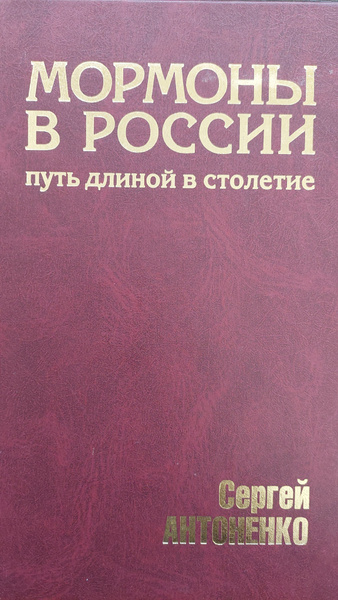 In Мормоны в России: Путь длиной в столетие (ISBN: 9-785-91189-005-6), or Mormons in Russia: A Century-long Path (my translation), by Sergei Antonenko, these two newer interests of mine are brought together in an academic, historical essay on the Church in Russia. Antonenko gives a brief history of the Church, including its founding, Brigham Young leading the Saints to Utah, and its relative stability and growth since that time. He also discusses in rather finite detail the theology of the Church. The next big portion of the work is dedicated to what various pre-Soviet writers and intellectuals in the imperial Russia wrote and thought about the Church. Dostoevsky and Tolstoy get specific mention. Finally, the history of the Church in post-Soviet Russia is discussed. Since this includes the late 1980s when missionaries traveled to the Soviet Union from Finland for the weekend only, it might be slightly inaccurate to say “post-Soviet Russia.” As with the rest of the book, the writing about the Church in Russia has less to do with specific incidents such as organizational changes, legal registrations, or sensational events like missionaries being kidnapped, and more to do with how the Church has fit or not fit into Russian society and the general Russian consciousness. It is, in places, a fascinating look into the perceptions — and souls — of Russia’s great people.
 Bosnia: In the Footsteps of Gavrilo Princip by Tony Fabijančić (ISBN: 978-0-88864-519-7) is a travelogue that traces the route of Gavrilo Princip’s travels through the former Yugoslavia and the Austro-Hungarian Empire. Set largely in the modern-day Balkans, the book uses Princip and his story as a way to understand the region’s complicated history and its rather sticky present through observation, interviews, and referencing historical sources. The author, rather sympathetic to Princip before undertaking his research and travels, was also optimistic at the outset about the chances for the various ethnic and religious groups of the former Yugoslavia to mend things up a little bit. By the end of his efforts and the end of the book, after traveling through thick forests, high alps, Mediterranean coastline, and the smog of big cities, he has changed his tune on both counts, considering Princip to have misjudged the impact of his actions, and not just misjudged, but having brought about more harm than good as well as coming to the realization that the peoples of the region, harboring some of the same prejudices and stereotypes as those held about 100 years ago as WWI broke out, aren’t breaking out of those molds any time soon.
 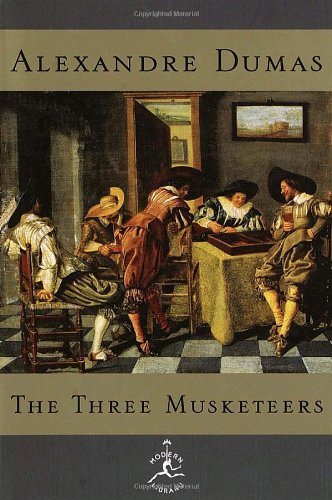 As those more in tune with pop culture than me know, The Three Musketeers (ISBN: 0-679-60332-8) by Alexandre Dumas tells the story of the young d’Artagnan and his three protectors and friends, the eponymous three Musketeers, who go by their pseudonyms, Athos, Aramis, and Porthos. Duelling brings d’Artagnan and the Musketeers together, and from there they fight duels and more serious battles together, continually looking out for each other. They manage to get themselves mixed up in high-level intrigue as the queen of France, Cardinal Richelieu, the king of France, and the Duke of Buckingham play out their political ambitions, romantic interests, and personal aspirations in Paris’s parlors, on battlefields, and through behind-the-scenes intrigues involving soldiers, churchmen, and criminals. There is a decent bit of action with horse rides, pistol fights, sword fights, battles between armies and between minds, and seduction. In the end, the bad guys get what is coming to them, and in what seems to be a bit of a pattern for Dumas, not all of the good guys make it out alive. D’Artagnan and his friends are more or less unscathed and have lived up to their immortal motto, “All for one, one for all!”
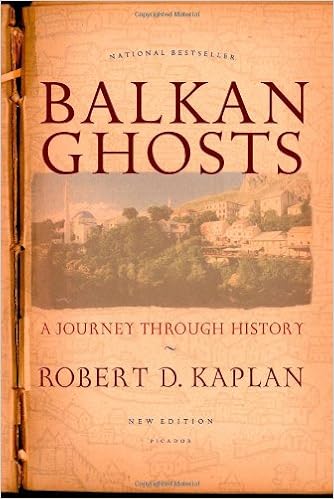 Balkan Ghosts by Robert D. Kaplan (ISBN: 978-0-312-42493-0), is self-styled as a travelogue, but is more akin to a feature story in a national magazine on current affairs. Kaplan weaves his extensive travels and living experience in the region and the accompanying interviews and everyday events with historical perspective and the relevant biographical information pertaining to the important figures in the Balkans’ history, his “ghosts.” Kaplan’s definition of the Balkans is a bit wider than most Americans’, so not only the former Yugoslavia, but Romania, Bulgaria, and Greece, too, are included in the discussion of this fascinating geographical region. Each country and each nation (ethnic group) has a few figures in its past who lived in such a way and made decisions in such a way as to continue to influence the way things are done and the way people think. With the exception of Greece, the Balkans also deal with a specter of a different type, the continued need to deal with the harsh consequences of communist dictatorships that broke people and destroyed countries immediately after the Nazis and fascism gave the same thing a whirl. It’s worth noting that the Nazis followed right on the heels of the Hapsburgs, who were, in most people’s estimation, better rulers than the succeeding ones, but on occasion no less ruthless. The great figures and great histories of the various peoples are presented with all the raw emotion that is associated with Balkanization, and Kaplan points out that since the histories are great, the people pick those moments when their histories were at an apex and claim that cultural, linguistic, and territorial summit as the way things should be now before any other discussions can be had. It puts them all in a hard place, but Kaplan argues that considering all the things these groups of people and these countries have been through, there’s really no way but up, although, as his reference to Shakespeare alludes to, it might be a painful process.
 Sheri Dew was one of the Church leaders who reached a rather high level of celebrity status in the Church, and maybe even a little out of it, largely because of her supposed novelty: a never-married member of the Relief Society presidency. She, like many other Church leaders who have become celebrities in their own right, used that increased ability to get a message out by writing a few books. God Wants a Powerful People (ISBN: 978-1-59038-813-6) is one of them. The premise of the book is simple. God is generous and is willing to make His children powerful people, people who can accomplish a lot, help a lot of other people, and in general make the world a better place. God wants to bless us. When we do certain things, like striving to be righteous, the blessings flow, and by taking advantage of them, we become powerful people, changing not only our own lives, but the lives of those around us. The book includes examples from everyday life on how we can go about becoming on of these powerful people, scriptures, ideas from Church leaders, and some common sense thrown in, too. As with anything in the gospel, the biggest keys are probably putting words and ideas into action and relying on Jesus Christ in all of our efforts to improve and to help others.
 Leon Aron, author of Russia’s Revolution: Essays, 1989–2006 (ISBN: 978-0-8447-4242-7), was always interested in Russia because he was born in the USSR. Although he emigrated and came to America after the Soviets started letting Jews leave, he remained interested in his homeland and became a respected commentator and scholar on the land of Peter the Great, Ivan the Terrible, Stalin, and now Vladimir Putin. Aron has written extensively on all things Russia, and in this book, he compiled essays that take the reader through life in Russia from the early days of Boris Yeltsin through the middle years of Putin’s first term in office as Russia’s president. Aron describes Yeltsin and his democratization efforts. He is quite a fan of Yeltsin, praising his statesmanship and ability to hold together a country that had partially fallen apart and threated to completely implode on a daily basis. Aron touches on every aspect of Russia reborn, including food, oil, politics, oligarchs, literature, the military, and international relations. All of these vastly different aspects of life in the post-Soviet Russia give an idea of what was happening in the country at the time the essay was written. Aron finishes up his compilation with discussions of Putin, a — to put it mildly — controversial figure and one of Russia’s largest struggles during the 1990s, Chechnya. Aron’s point, even with the various negatives that Putin and Chechnya seemed to usher in, was that much good has happened since the Soviet Union fell apart in Russia and even though there have been and continue to be bumps in the road (and they’re often big bumps), things are probably going in the right direction, but the only way to tell is to wait and see. The West didn’t get to its heights in 20 years, and Russia won’t either.
 The prolific French writer Alexandre Dumas’s epic adventure, The Count of Monte Cristo (ISBN: 0-679-60199-6), tells an intricately woven tale of injustice, revenge, hope, mercy, and even forgiveness. The first part of the book gives the reader no indications whatsoever of the impending treachery and troubles as one is acquainted with the hero, Edmond Dantès, a dashing, honest, and hard-working sailor about to fulfill a few of his life's dreams. A jealous neighbor, a competitor for the affections of his love, and colleague who couldn't bear seeing Dantès promoted before himself stop those plans, though, and send the main character's life in a totally different direction. Prison, though, affords us with our first adventure: sneaking out of prison in another prisoner's body bag. After that, there are many adventures to be had with Dantès on ships, with smugglers, and finally, in Paris as he exacts revenge on those who put him in prison and deprived him of his father, his beloved, and his desired job. In Paris, the rich Count of Monte Cristo wows the elites, works his way into their lives, and manages to bring those lives to screeching halts, usually through ignominious deaths. Although Dantès exacts his revenge, he starts to realize that maybe it's not all about justice, especially as he sees his former girlfriend reduced to a thoroughly depressed and unhappy state. His shows mercy almost to a fault toward those who were once nice to him, but eventually even to one of his avowed enemies.
 1984 is considered by many to be the epitomy of the dystopian (utopia gone wrong) novel, but it was not the first. Many years before 1984 was written, Russian author Eugene Zamiatin wrote We (ISBN: 0-525-47039-5). Zamiatin wrote his book, this edition translated by Gregory Zilboorg, to protest the direction the Bolshevik Party was taking the Soviet Union. Zamiatin was a Bolshevik, but did not subscribe to the Leninist idea of zero tolerance for dissenting ideas within the party. In the book, there is one, giant state (called the United State) that controls every single aspect of its citizens’ lives, down to the number of times they chew their state-provided food rations. The protagonist is one of the elite thanks to his role as the designer of a very advanced spaceship that will soon export the ideas and ways of the United State to some other people (ostensibly on another planet). He starts a journal since all citizens were encouraged to write something to send on the rocket. However, he meets another citizen, an attractive female, who introduces him to some concepts he’d never thought of before, such as acting and thinking for oneself. He is eventually introduced to people outside the walls of the United State, and a plan is hatched to use a test flight of the rocket to get both disaffected citizens of the United State and the people outside the wall to some new place in the world. The plan doesn’t go off, though, thanks to a spy, and the protagonist is forced to undergo a radical new surgery that removes his ability to imagine and then watches as the woman he loved is tortured. After the operation, he is again completely loyal to the totalitarian regime.
 As with having a prophet, the modern Church has the same organizational leadership structure as the ancient Church. That means we have apostles just as the ancient Jews and Nephites did. While only the senior apostle can exercise all of the revelatory and administrative keys for the Church, the apostles are also prophets, seers, and revelators. Even when not acting in an official capacity, it is worth listening to their counsel. In One More Strain of Praise (ISBN: 1-57008-679-6), Neal A. Maxwell offered some of just that type of counsel. Elder Maxwell briefly recounted some of the experiences of his life, including his battle with cancer, because he thought they had taught him something and made him a better person. He explained that he was able to better comprehend and understand Christ's atonement, His infinite love, and the interplay between mercy and justice. He explained how this critical understanding helped him and can help all people be happier, be more grateful, and share both the message of the atonement and the accompanying joy through loving service.
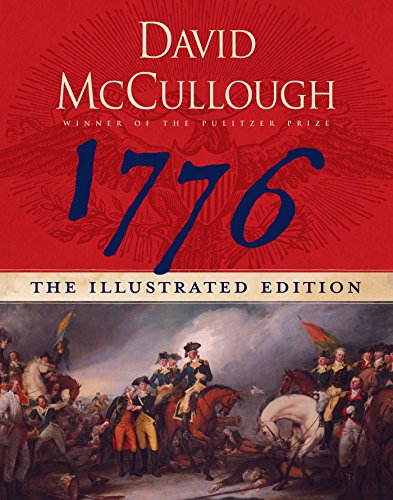 In 1776: The Illustrated Edition (ISBN: 978-1-4165-4210-0) by David McCullough, the award-winning writer and historian added a little bit of a twist to his seminal 1776: paintings, maps, copies of original documents, and other visual aids that help bring the drama America's first year as an independent nation to life. The book chronicles the activities of the colonists and the British throughout the year. Since the Revolutionary War lasted another six years, there is actually not a whole lot of Revolutionary War coverage in the book, but the set-up is there, and the key battles of the year, such as Washington's crossing of the Delaware to defeat formidable and intimidating Hessian forces, are there in great detail. McCullough explains the significance of the actions of Congress, Parliament, and the two belligerent armies. As the year comes to a close, the stage is set for the next few years of war, but one could easily predict the eventual outcome given the improbable patriot successes and the momentum they, regarded as simple "rabble" by the elite British forces, had gained in such a short time.
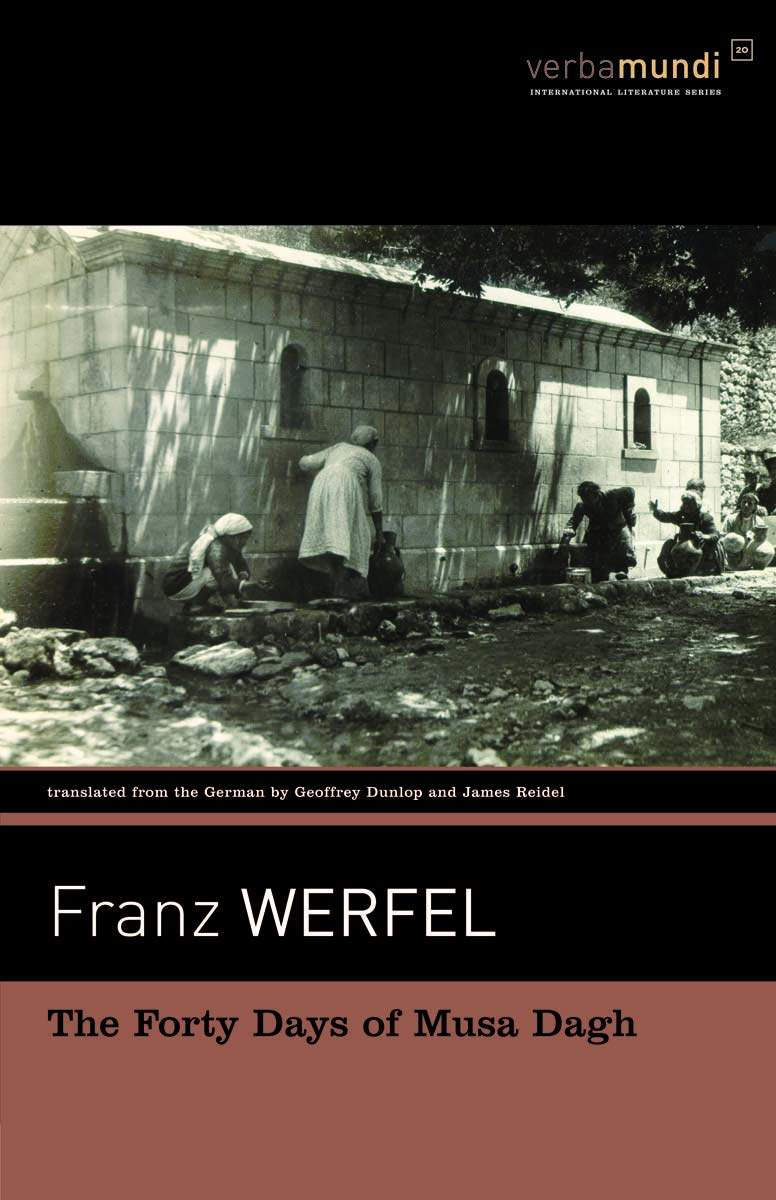 In the Turkish extermination of the ethnic Armenian population within Turkey's borders during World War I, German author Franz Werfel thought he saw something the world should learn from. To bring that message to the forefront, he wrote The Forty Days of Musa Dagh (ISBN: 978-1-56792-407-7). The novel is a fictionalized account of a home-grown Armenian resistance movement that succeeded in holding off far superior — numerically and technically — Turkish forces for fifty-three days (Werfel's forty days were a reference to the symbolic Biblical number), at which point French and British warships rescued the survivors. The book chronicles the efforts of (the fictional) Gabriel Bagradian and the villagers as they live off the land, fight valiantly for their freedom, and deal with everyday problems exacerbated by the situation. The story is, of course, an adventure story, what with the battles, mutiny, illicit love, petty jealousies, special missions, and a wide array of characters from mayors, widows, common criminals, and carpenters to German foreign ministry officers, priests, Turkish military leaders, and French admirals. Werfel told their stories in an attempt to warn the German people that they were headed into something eerily similar with the Germans playing the role of the Turks and the Jews the Armenians. Werfel's account ends with one twist of his imagination, leaving Bagradian on his hard-won mountain to face certain death, but death as a free man.
 The collection of essays contained in Volatile Borderland: Russia and the North Caucasus (ISBN: 978-0-9830842-1-1), edited by Glen E. Howard, is an attempt at shedding some light on the movers and shakers of the Russian North Caucasus, what the future holds, and what is driving current reforms, repressions, and realities. The authors are experts on Russia and the Caucasus, all either professors, journalists, or similarly qualified experts and policy advisors. Chechnya, Dagestan, Krasnodar, and Sochi and the various peoples that inhabit them are prominent players in the analysis, but exotic-sounding places like Adygeya and Kabardino-Balkaria also garner significant attention because they form a buffer zone between the explosive and more Islamic eastern North Caucasus and the rest of European Russia. As with most places in the world where high unemployment, Islamist thought, and rampant corruption have mixed, the North Caucasus is a tinderbox. The Russian authorities have tried a mixture of ridiculously high federal subsidies and oppressive, totalitarian-style control, which seems to be tenuously holding things under control, but most of the essayists agree that this situation could go at any time.
 In Daniel Defoe's classic fiction, Robinson Crusoe (ISBN: 978-0-14-143982-2), the eponymous hero is also initially rather suspicious of his chances of survival after being shipwrecked in the middle of nowhere. Having already lived through one adventure, he decides to give survival everything he's got, and works hard to salvage things from his old ship; learns through trial and error various farming, carpentry, sewing, hunting, and pottery skills; and explores the deserted island to learn just what is at his disposal. Two things change his situation immensely: one, he comes to be a more fully committed and believing Christian, and two, he saves an Indian from his cannibal pursuers, thereby gaining the Indian's services for life. That really comes in handy when Crusoe must fend off other cannibals and then a mutinous ship crew. In the end, Crusoe considers himself greatly blessed as he is able to save some lives, a ship, and get back to England, where he settles into a comfortable, middle-class life.
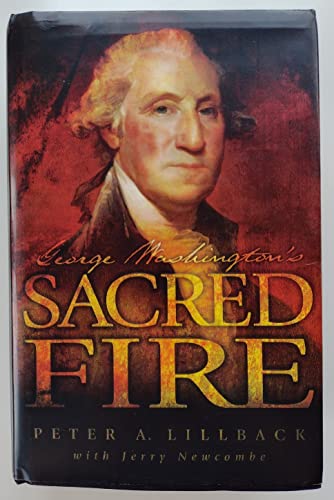 In his very thoroughly researched work, George Washington's Sacred Fire (ISBN: 978-0-9786052-6-8), Peter A. Lillback (with Jerry Newcombe), attacks the revisionist history of my fifth grade class. The book is a very careful examination of the case that has been made and widely accepted regarding Washington's deism. Lillback explains the arguments that writers, including a Paul Boller that seems to have written the standard in Washington religion-related books up to this point, have used to cast our founding father as a deist. He then picks those arguments apart one by one. He does this largely based on Washington's own words. He claims that this concept has received the short end of the stick throughout time. One prominent example is that it is often claimed Washington never or almost never used the name of Deity. Lillback found, after carefully combing through everything Washington ever wrote, that he not only used the name of Jesus Christ, he used hundreds upon hundreds of other names and titles for God, the Son, and the Holy Ghost. Similar research and proof were conducted and presented regarding other arguments against Washington being a Christian including topics as varied as communion, service attendance, other religiously-motivated behavior, knowledge of the Bible, and library holdings (Washington collected, signed, and sometimes commented on religious books, including compendiums of sermons). Lillback carefully establishes that Washington communed, attended services and participated in his church community, knew the Bible inside and out, owned many Christian books (and no deist ones), and, arguably most importantly, lived a Christian life. That final bit is important, because even though Lillback amply proves through Washington's own words (the main text of the book is over 700 pages; the appendices, including hundreds of excerpts from Washington's written prayers or communications where he indicates he is praying, are a couple hundred more), one must always remember with Washington, it was "deeds, not words."
 In On All Fronts: Czechoslovaks in World War II, Part 3 (ISBN: 0-88033-456-8), edited by Lewis M. White, there are many stories of people with Czechoslovak heritage fighting and resisting the Nazi occupation of their beloved land, fighting with the Allies to overthrow the Germans, and then fighting an unexpected enemy, their major liberator, when the USSR decided to prop up a Communist dictatorship in the post-war years. The book consists of short contributions from a wide variety of Czechoslovaks involved in the war in one way or another. The vast majority are contributions from men who served as officers in Czechoslovak regiments of Allied militaries. Many served in the French Foreign Legion, others in the Royal Air Force, and a disproportionately large number served in the Red Army. Other stories were from members of the underground resistance or partisans. All had a very common theme: the liberation of what was a free and democratic country from the grips of a totalitarian Nazi government. Stories of tense minutes hiding under the floorboards of a stranger's house, fighting off German tanks on swampy riverbanks, forced treks through the snowbound and freezing Tatras, and high-flying adventure in the skies over enemy territory make for interesting reading, especially since it is about a group that doesn't get much billing in the usual run-down of the history of World War II. While the book largely focuses on military successes, there is room for a few stories of defeat as well as some realism that describes the banalities and redundancies that afflict all military bureaucracies the world over in all eras. The end of the book sees a little change in focus as the stories do not have so much to do with the vanquished Germans, but with the intruding Red Army that presented a much different face than the French, the British, and the Americans.
 In 2008, my question was answered, and the Church published Teachings of Presidents of the Church: Joseph Smith for use in priesthood and Relief Society meetings throughout 2008 and 2009. Following the standard format, the book contains some historical information on Joseph Smith and then two years' worth of lessons (47 chapters in this case). Each one is about one or another aspect of the gospel. For the most part, the content of the chapters is taken directly from Joseph Smith's writings or sermons. As a result of the nature of the time he lived in, a healthy amount of the material from his sermons is according to a scribe or someone who heard the message first-hand and then wrote it on their own. All of the content has been carefully checked and corroborated by Church historians and editors before being approved by the Quorum of the Twelve Apostles. There is no room for doubt that one is reading the words of the prophet that opened this dispensation. The words, or the things we are all supposed to learn and come to know as true, explain just why this period of time on Earth, with the fully restored true church, is so special. From the Book of Mormon to the nature of God and from true priesthood authority to faith and from the organization of the Church to the reality of a living prophet, Joseph Smith laid out the teachings of God as he worked to restore the fullness of the gospel, and now we can read about it.
 It took eight years, but Heimerdinger finally got around to writing the sequel, Escape from Zarahemla (ISBN: 978-1-60861-539-1). In it, Kerra, Brock, their father, Chris, and their grandfather, Grandpa Lee, purposefully head off into a mysterious "rift in time" to see about some of the people left behind — Chris's Nephite wife and kid as well as Kerra's childhood friend (and now love interest), the Nephite soldier Kiddoni. It doesn't take but a few seconds before they're entangled in an ongoing war between the righteous Nephites and Lamanites, who have banded together to take on the Gadianton robbers. The twist to the whole thing is that the Gadiantons have someone in their midst trying to usurp power, a man rumored to practice a magic even blacker than that of your everyday Gadianton, Akuhuun. Like all Heimerdinger adventures, the books, written for teenagers, move along quickly, and you're pulled right into the action, of which there is never a shortage. One adventure after another befalls characters from throughout history, including an unexpected turn involving one of the gangsters that wanted to kill Brock after Brock ditched a quarter million worth of illegal drugs in the first book. In the end, it seems like things are good, notwithstanding the honorable deaths of a few of the good guys, especially since Chris and his family are reunited, as are Kerra and Kiddoni.
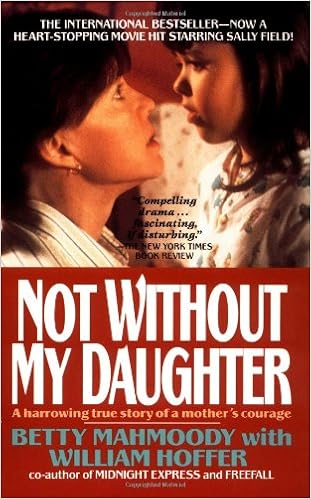 No matter my view of the world, a gripping story of international intrigue, raw, primordial bravery, faith, and patriotism, is told by Betty Mahmoody and William Hoffer in Not without My Daughter (ISBN: 0-312-92588-3), a memoir of Mahmoody's experiences when her husband took her and their daughter to Iran and then forcibly kept them there. Mahmoody starts with her flight to Iran from America's heartland, where she spent her entire life and moved from her blue-collar beginnings to entertaining and comfort of the upper middle class thanks to her Iranian husband. She had various reasons for agreeing on the flight to Iran, but staying there indefinitely wasn't one of them. That such a plan is her husband's plan is apparent within a week of arrival, and it's made worse by the fact that most of his family, and like most eastern cultures, family connections are extensive, is in on the kidnapping. Mahmoody and her kindergarten-age daughter, Mahtob, endure the next two years under what amounts to house arrest in an unfamiliar and usually hostile foreign land where hatred for America is not only the official line, but something many citizens openly and actively agree with. Eventually, Mahmoody is able to make contacts with various people, some simple shopkeepers, some foreign government officials, and others who are just the universal kind-hearted person you always hope exists out there. She uses these contacts to organize a treacherous escape for her and her daughter, and through a few minor miracles, they are smuggled to freedom.