The world of spies, probably because it’s so shrouded in mystery, has always been intriguing. I think this holds true for most people, as evidenced by the abundance of books advertising themselves as historically accurate as well as the standard fiction. Both genres have seen success as movies. My interest in spies typically does not dwell in the world of fiction, but in the realm of history and current events, although I did read and mostly enjoy the original Bourne trilogy. World War II and the Cold War have always interested me, and that is also true as far as spying goes. I actually heard about the book Spy Dust a few years ago, but never read it, thinking the title was maybe just a little bit too outlandish to really be about something that was real. (It turns out that it really is a real thing and something not just used by intelligence services, but police departments, too.)
 In Spy Dust: Two Masters of Disguise Reveal the Tools and Operations That Helped Win the Cold War (ISBN: 978-0-7434-2853-8) by Antonio and Jonna Mendez with Bruce Henderson, spy dust itself plays a rather minor role. The two authors and their craft, disguises, get the majority of the attention. The story follows both authors in their CIA careers a few years before they came to know about spy dust through an operation that saw them defeat the theretofore undefeated powder. Antonio was a master of disguise with years and years of experience; Jonna more of an extremely talented up-and-coming star in the CIA. The book focuses on their teamwork to exfiltrate someone they claim was a well-connected and high-placed Soviet spying for the U.S. The operation included a handful of Americans and the Russian and his family. They used all their disguise know-how, which includes a lot of things that aren’t so much about disguises, but simply about how one ports oneself and how people are not able to notice every little thing if what one is doing mostly follows the normal routine. The daring operation defeated the Russians’ spy dust and got everyone out of the country safely.
In general, I enjoyed the book. I thought the main story as well as a couple of the smaller operations discussed in the build-up to the one that gave the book its title were very interesting. When they finally got to telling about that final operation, it was actually pretty exciting reading, and I think I whipped through it pretty quickly with great anticipation, even though it’s obvious the book wouldn’t have been written had the operation gone south. My big complaint with the book was that it was slow in some parts. This is especially true when it comes to discussions of the romantic relationship between the two authors, who eventually married. They talk about it having an impact on their work, but that still seemed to me to be a minor detail and not something that needed to take up scores of pages. Maybe shorter books don’t sell? I personally thought the big operation in Moscow could’ve handled a little more detail, and with the discussion of the authors’ personal lives left out, the book would’ve really been cool. It was an interesting look at one small but important piece of the Cold War, but probably could’ve more than just interesting.
In Spy Dust: Two Masters of Disguise Reveal the Tools and Operations That Helped Win the Cold War (ISBN: 978-0-7434-2853-8) by Antonio and Jonna Mendez with Bruce Henderson, spy dust itself plays a rather minor role. The two authors and their craft, disguises, get the majority of the attention. The story follows both authors in their CIA careers a few years before they came to know about spy dust through an operation that saw them defeat the theretofore undefeated powder. Antonio was a master of disguise with years and years of experience; Jonna more of an extremely talented up-and-coming star in the CIA. The book focuses on their teamwork to exfiltrate someone they claim was a well-connected and high-placed Soviet spying for the U.S. The operation included a handful of Americans and the Russian and his family. They used all their disguise know-how, which includes a lot of things that aren’t so much about disguises, but simply about how one ports oneself and how people are not able to notice every little thing if what one is doing mostly follows the normal routine. The daring operation defeated the Russians’ spy dust and got everyone out of the country safely.In general, I enjoyed the book. I thought the main story as well as a couple of the smaller operations discussed in the build-up to the one that gave the book its title were very interesting. When they finally got to telling about that final operation, it was actually pretty exciting reading, and I think I whipped through it pretty quickly with great anticipation, even though it’s obvious the book wouldn’t have been written had the operation gone south. My big complaint with the book was that it was slow in some parts. This is especially true when it comes to discussions of the romantic relationship between the two authors, who eventually married. They talk about it having an impact on their work, but that still seemed to me to be a minor detail and not something that needed to take up scores of pages. Maybe shorter books don’t sell? I personally thought the big operation in Moscow could’ve handled a little more detail, and with the discussion of the authors’ personal lives left out, the book would’ve really been cool. It was an interesting look at one small but important piece of the Cold War, but probably could’ve more than just interesting.
 | This work, including all text, photographs, and other original work, is licensed under a Creative Commons Attribution Non-Commercial No Derivatives 3.0 License and is copyrighted © MMXIV John Pruess. |


 War and Peace (ISBN: 978-0-19-953605-4) by Leo Tolstoy (Louise and Aylmer Maude translation) is arguably what we would call historical fiction today. The only difference is that it was written soon after the events it depicts and likely had some direct impact of one sort or another on its author. He definitely paints his version of the events surrounding Napoleon’s campaigns. There is a lot of Tolstoy’s philosophy woven into the story, but essentially, the story follows a few main characters through their youth and into adulthood as they embark upon their careers and family life. Tolstoy’s characters are varied and present all kinds of different people with all sorts of different character traits. The reader also gets to become acquainted with the characters in all kinds of situations, which lets one see the best and the worst of the characters. There are hundreds of members of the supporting cast, some playing a more important role than others. With so many people in the book, it’s probably a legitimately arguable point just who the main characters are, but I think it was Pierre and Natasha, the two that one sees from beginning to end in the book. Natasha, young, beautiful, and fun-loving, is the object of just about every young man’s fancy. She falls in love, spurns her fiancé for the temporary affection of a married man and known womanizer, later repents of that mistake, but must suffer when, seemingly through chance, her original fiancé, wounded severely in the war, is evacuated from burning Moscow along with her family and dies as they make the trek. Pierre as a young man is short-sighted, rash, and searching for something more in life than the dissipated life he leads drinking, playing cards, and chasing women. Throughout the book, one sees him struggle to figure out what life is about. He tries Masonry, civil service, an ill-advised marriage, and philanthropy. None of them really do it for him. When captured by the French while observing the battles near Moscow, he meets a peasant soldier from whom he learns a lot about the meaning of life. After Napoleon’s retreat, the changed Pierre is re-acquainted with Natasha, and eventually they go on to form a happy family.
 In Conform: Exposing the Truth about Common Core and Public Education by Glenn Beck, Kyle Olson, and Kevin Balfe (ISBN: 978-1-4767-7388-9), the authors attack the federal government- and union-led approach to education in America. The first half of the book is dedicated to debunking the typical arguments one hears about why public schools are the only way to go. They also focus on the idea that the government should control schools, curricula, and even what students eat. They present argument after argument showing that centrally-controlled education fails the vast majority of students outside the average and even a good many who are average. They show that the current system encourages mediocrity, whether that be in students, teachers, or the school systems themselves. Education policy is controlled by bureaucrats far removed from the process, unions who, despite what they say, care more about collecting money for their bosses than what teachers or students need, and administrators, legislators, teachers, and union officials who have an agenda to push. The second part of the book talks about what us normal people can do to change. We don’t have to conform to the system, the authors argue, but if we want to control our own or our kids’ education, we have to be involved in bringing about the change we want to see. We have to participate in school boards, in meetings, on curriculum committees, and in elections, as voters, candidates, and campaign workers or volunteers. They cite examples of places real change has taken place and note that more can happen should we choose to make it happen.
 Assisted: An Autobiography (ISBN: 978-1-60907-570-5) by John Stockton, if nothing else, proved me right in my assumption. Memoir might be a better description of the book, but those arguments about semantics take nothing away from a rather thorough look at Stockton’s life as a little kid roaming the neighborhood with his friends on long summer days to his time as an NBA star and through his post-retirement activities. He told about his upbringing, his childhood, his high school days, his experiences in college, including various summer jobs, basketball, and dating. He talked about making it in the NBA, being a rookie, changes in the game, some of former Jazz owner Larry Miller’s quirks, and a host of other things that fans and disinterested parties alike might find interesting. He talked about his family, and his parents and wife in particular. He discussed a couple of his coaches, including Jerry Sloan, an NBA great and another hard-nosed, down-to-earth, blue-collar guy. Stockton’s discussion of the Olympics was fascinating because he was very open about his love for his country and the great responsibility he felt putting U.S.A. on his chest. He discussed his life after basketball, except that it hasn’t really been life after basketball as some of his kids of played at a very high level, he’s restored a warehouse and turned it into a community sports center, and he’s still involved in the occasional pickup game. Finally, as part of the proving my assumptions true, his tale is woven throughout with references to family, God, prayer, hard work, and other old-fashioned values.
 Bosnia: A Short History by Noel Malcolm (ISBN: 0-8147-5561-5) explains just who the Bosnians are and who they have been throughout history. Their history, like those of all the peoples of the Balkan region, is muddled thanks to it being at the crossroads of the East and the West. Although rarely sought after militarily, both the Ottomans and the Hapsburgs brought it under control at different times. Before that, though, Bosnia had carved out its own identity seperate from its neighbors, Croatia, Serbia, and Slovenia. Bosnian history goes back to the ancient Illyrians and continues through Rome, Byzantium, and various Slavic tribes and rulers. It continued, to a certain extent, in the short time period between World War I and the introduction of Communism. It made it through the fall of Yugoslavia and continues its unique fractured and rather dysfunctional way today. Religion, both Christianity and Islam, as well as earlier, pagan forms of worship, have played a major role in the forming of the Bosnian people. The history, like much of Eastern Europe, is fragmented and often overly complicated, but it is rich and features a people who present something unique to the world.
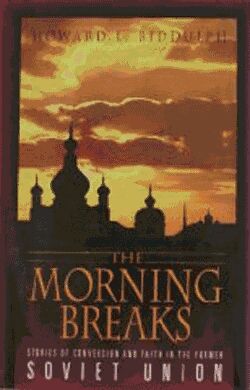 In The Morning Breaks: Stories of Conversion and Faith in the Former Soviet Union by Howard L. Biddulph (ISBN: 978-1-57345-152-9), one can read about a relatively new chapter in that deep religious history. President Biddulph was the leader of the first mission in Ukraine after the fall of the Soviet Union (his responsibilities actually started just before the USSR fell). He describes the miraculous nature of the early missionary work in Ukraine, often incorporating the thoughts and experiences of the first, pioneering Ukrainian Saints. Some of testimonies of these people, always simple, are very strong. All the experiences show the loving guidance of a Father in Heaven who wants His children to succeed in all that they undertake. He talked of the people who made the Church successful in those wild times because of their extreme faith and true willingness to be instruments in the hands of the Almighty. There were some of the typical-for-Eastern-Europe struggles with infinite layers of bureaucracy that were resolved; there were smaller miracles such as the sun shining through as Ukraine was dedicated for missionary work; and there were the many individualized miracles that took place each and every time a missionary decided to open his mouth one more time or an investigator decided to follow through on a commitment. After a long period of stagnation and darkness, the Iron Curtain had fallen and the light of the gospel shone through to take its place.
 The Revolutionary War and an oppressive monarchist government are ancient history in the average American’s mind. That’s kind of too bad, though, because it has warped people’s minds as to why the Founding Fathers thought it so important to bear arms. In Control: Exposing the Truth about Guns by Glenn Beck (ISBN: 978-1-4767-3987-8), the arguments typically trotted out by those who oppose guns (they would say they just support so-called gun control, but that’s just putting a fancy name on one thing so people think one is going on about something else) are dealt with one by one with logic and facts. In fairness, the anti-gun crowd claims to be using logic and facts, too, but the book’s careful look at various studies puts most of the anti-gun arguments to shame. The gun massacres that make headlines are shown to be the anomalies that they truly are, for example, especially since Beck gives page after page of example debunking the idea that gun massacres are an American phenomenon and that they’ve never been stopped by a level-headed gun owner. Beck also talks a lot about our culture of violence and debunks a lot of the patently false and simply misinformed ideas regarding violence in video games. In the end, though, he focuses on the real point of it all. The examples, studies, facts, statistics, and even a few opinions all point to the idea that the Founders were men who loved liberty. They regarded liberty with such high respect that they were willing to die for it. They knew that only liberty provided the basis for the pursuit of
  In The Long Walk: The True Story of a Trek to Freedom (ISBN: 978-1-59921-975-2) by Sławomir Rawicz, one can read about just such an escape and one that combines World War II history, the Gulag, and adventure travel into one. Billed as a true story, the reader follows Rawicz, a Polish cavalry officer, from Moscow's notorious Lubyanka to the a small outpost of a prison camp in northern Siberia, and then about 4,000 miles south, to India, after his escape. The escape itself is one of the few truly exciting scenes in the book, as the rest reads much like a travelogue, but it is all adventure after adventure as the small party of fugitives walks through Russia and then the wastelands of Mongolia and China. They pick up a fellow escapee near Lake Baikal and experience Oriental hospitality over and over again in their travels through the deserts and mountains of western East Asia. These usually touching, sometimes comical, visits are a major reason the travelers made it to India alive. As is to be expected, they lose a few of the party along the way to starvation and exhaustion. In the end, though, their desire to be free is triumphant, as they walk out of the hills and into the arms of a British Indian patrol.
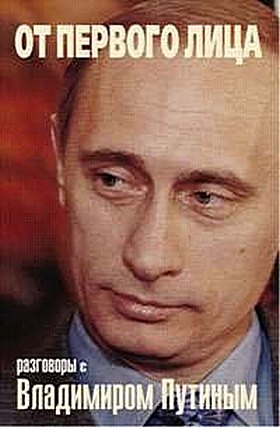 От первого лица: Разговоры с Владимиром Путиным (ISBN: 5-264-00257-6), or First Person: Discussions with Vladimir Putin (my translation), by Nataliya Gevorkyan, Natalya Timakova, and Andrei Kolesnikov is a book that consists of not much more than a series of interviews with Vladimir Putin. There were sections in which old friends, his ex-wife, an old teacher, and even his daughters made some comments, but it was mostly just transcripts of Putin talking to the three reporters. Putin talked about his childhood, his schooling, his career ambitions, his family, his time in Germany, his athletic endeavors, and his meteoric rise from unknown in St. Petersburg to the heights of power in Moscow. Putin went into quite a bit of detail about his childhood, schooling, judo exploits, and even talked quite a bit about his courtship of his ex-wife (they were still married when the book was written). He also talked a lot about the early days of real, democratic politics in St. Petersburg, which was the springboard for his political career. Finally, the reporters asked a lot of questions about the Russian issues of day, most of which had to do with Chechnya. Putin explained why he chose the positions he did on Chechnya and how he figured it made Russia a more secure country.
 The answer is The Swiss Family Robinson by Johann Wyss (ISBN: 978-0-14-310499-5), but with all movies, the book was only a starting point, and then the screenwriters went from there. (It’s worth noting that the original story hasn’t been in print much since its 1812 printing and that most people have read a French translator’s version that abridged the original and then added a new storyline halfway through.) Then again, it’s only fair to note that it seems Wyss was highly influenced by Defoe’s Robinson Crusoe. The story follows a Swiss pastor and his family (his wife and four boys) as they venture off to the colonies to start a new life. Their well-equipped ship is wrecked, but somehow all the articles and the ship itself is rather well preserved while all the passengers and crew die except the family. They make a raft and alight on the island that is to become their home. The family, through resourcefulness and through an expansive knowledge of the natural sciences, is able to get along rather impressively in their new jungle home. They’re constantly making trips along the beaches and into the interior of the island in an effort to find out all they can about their new home and to discover new natural resources such as plants and animals they can use to make their life a bit more comfortable and pleasant. Most trips result in a success of one form or another, and soon the family has a couple places to live, orchards, fields, and an abundant number of livestock and beasts of burden of all various types. There are some adventures along the way with wild animals, explosives, and the rigors of life under the open skies. The family’s chance for rescue and a return to society is foiled by rough weather, and they must await another such rare opportunity to come, but such opportunities and the adventures in the meantime are left to the reader to invent for himself.
 In Мормоны в России: Путь длиной в столетие (ISBN: 9-785-91189-005-6), or Mormons in Russia: A Century-long Path (my translation), by Sergei Antonenko, these two newer interests of mine are brought together in an academic, historical essay on the Church in Russia. Antonenko gives a brief history of the Church, including its founding, Brigham Young leading the Saints to Utah, and its relative stability and growth since that time. He also discusses in rather finite detail the theology of the Church. The next big portion of the work is dedicated to what various pre-Soviet writers and intellectuals in the imperial Russia wrote and thought about the Church. Dostoevsky and Tolstoy get specific mention. Finally, the history of the Church in post-Soviet Russia is discussed. Since this includes the late 1980s when missionaries traveled to the Soviet Union from Finland for the weekend only, it might be slightly inaccurate to say “post-Soviet Russia.” As with the rest of the book, the writing about the Church in Russia has less to do with specific incidents such as organizational changes, legal registrations, or sensational events like missionaries being kidnapped, and more to do with how the Church has fit or not fit into Russian society and the general Russian consciousness. It is, in places, a fascinating look into the perceptions — and souls — of Russia’s great people.
 Bosnia: In the Footsteps of Gavrilo Princip by Tony Fabijančić (ISBN: 978-0-88864-519-7) is a travelogue that traces the route of Gavrilo Princip’s travels through the former Yugoslavia and the Austro-Hungarian Empire. Set largely in the modern-day Balkans, the book uses Princip and his story as a way to understand the region’s complicated history and its rather sticky present through observation, interviews, and referencing historical sources. The author, rather sympathetic to Princip before undertaking his research and travels, was also optimistic at the outset about the chances for the various ethnic and religious groups of the former Yugoslavia to mend things up a little bit. By the end of his efforts and the end of the book, after traveling through thick forests, high alps, Mediterranean coastline, and the smog of big cities, he has changed his tune on both counts, considering Princip to have misjudged the impact of his actions, and not just misjudged, but having brought about more harm than good as well as coming to the realization that the peoples of the region, harboring some of the same prejudices and stereotypes as those held about 100 years ago as WWI broke out, aren’t breaking out of those molds any time soon.
 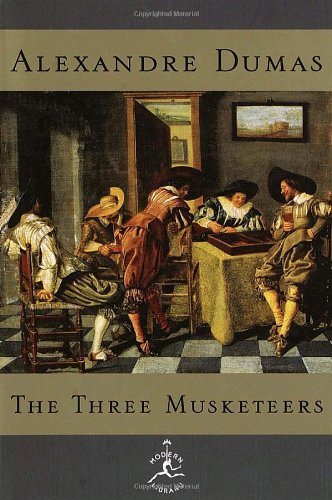 As those more in tune with pop culture than me know, The Three Musketeers (ISBN: 0-679-60332-8) by Alexandre Dumas tells the story of the young d’Artagnan and his three protectors and friends, the eponymous three Musketeers, who go by their pseudonyms, Athos, Aramis, and Porthos. Duelling brings d’Artagnan and the Musketeers together, and from there they fight duels and more serious battles together, continually looking out for each other. They manage to get themselves mixed up in high-level intrigue as the queen of France, Cardinal Richelieu, the king of France, and the Duke of Buckingham play out their political ambitions, romantic interests, and personal aspirations in Paris’s parlors, on battlefields, and through behind-the-scenes intrigues involving soldiers, churchmen, and criminals. There is a decent bit of action with horse rides, pistol fights, sword fights, battles between armies and between minds, and seduction. In the end, the bad guys get what is coming to them, and in what seems to be a bit of a pattern for Dumas, not all of the good guys make it out alive. D’Artagnan and his friends are more or less unscathed and have lived up to their immortal motto, “All for one, one for all!”
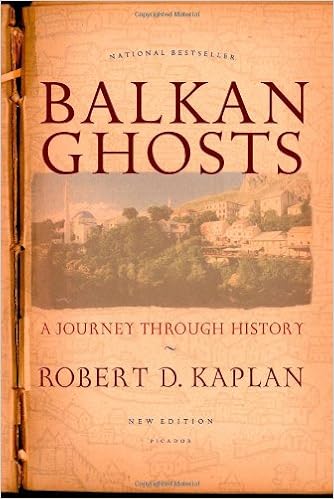 Balkan Ghosts by Robert D. Kaplan (ISBN: 978-0-312-42493-0), is self-styled as a travelogue, but is more akin to a feature story in a national magazine on current affairs. Kaplan weaves his extensive travels and living experience in the region and the accompanying interviews and everyday events with historical perspective and the relevant biographical information pertaining to the important figures in the Balkans’ history, his “ghosts.” Kaplan’s definition of the Balkans is a bit wider than most Americans’, so not only the former Yugoslavia, but Romania, Bulgaria, and Greece, too, are included in the discussion of this fascinating geographical region. Each country and each nation (ethnic group) has a few figures in its past who lived in such a way and made decisions in such a way as to continue to influence the way things are done and the way people think. With the exception of Greece, the Balkans also deal with a specter of a different type, the continued need to deal with the harsh consequences of communist dictatorships that broke people and destroyed countries immediately after the Nazis and fascism gave the same thing a whirl. It’s worth noting that the Nazis followed right on the heels of the Hapsburgs, who were, in most people’s estimation, better rulers than the succeeding ones, but on occasion no less ruthless. The great figures and great histories of the various peoples are presented with all the raw emotion that is associated with Balkanization, and Kaplan points out that since the histories are great, the people pick those moments when their histories were at an apex and claim that cultural, linguistic, and territorial summit as the way things should be now before any other discussions can be had. It puts them all in a hard place, but Kaplan argues that considering all the things these groups of people and these countries have been through, there’s really no way but up, although, as his reference to Shakespeare alludes to, it might be a painful process.
 Sheri Dew was one of the Church leaders who reached a rather high level of celebrity status in the Church, and maybe even a little out of it, largely because of her supposed novelty: a never-married member of the Relief Society presidency. She, like many other Church leaders who have become celebrities in their own right, used that increased ability to get a message out by writing a few books. God Wants a Powerful People (ISBN: 978-1-59038-813-6) is one of them. The premise of the book is simple. God is generous and is willing to make His children powerful people, people who can accomplish a lot, help a lot of other people, and in general make the world a better place. God wants to bless us. When we do certain things, like striving to be righteous, the blessings flow, and by taking advantage of them, we become powerful people, changing not only our own lives, but the lives of those around us. The book includes examples from everyday life on how we can go about becoming on of these powerful people, scriptures, ideas from Church leaders, and some common sense thrown in, too. As with anything in the gospel, the biggest keys are probably putting words and ideas into action and relying on Jesus Christ in all of our efforts to improve and to help others.
 Leon Aron, author of Russia’s Revolution: Essays, 1989–2006 (ISBN: 978-0-8447-4242-7), was always interested in Russia because he was born in the USSR. Although he emigrated and came to America after the Soviets started letting Jews leave, he remained interested in his homeland and became a respected commentator and scholar on the land of Peter the Great, Ivan the Terrible, Stalin, and now Vladimir Putin. Aron has written extensively on all things Russia, and in this book, he compiled essays that take the reader through life in Russia from the early days of Boris Yeltsin through the middle years of Putin’s first term in office as Russia’s president. Aron describes Yeltsin and his democratization efforts. He is quite a fan of Yeltsin, praising his statesmanship and ability to hold together a country that had partially fallen apart and threated to completely implode on a daily basis. Aron touches on every aspect of Russia reborn, including food, oil, politics, oligarchs, literature, the military, and international relations. All of these vastly different aspects of life in the post-Soviet Russia give an idea of what was happening in the country at the time the essay was written. Aron finishes up his compilation with discussions of Putin, a — to put it mildly — controversial figure and one of Russia’s largest struggles during the 1990s, Chechnya. Aron’s point, even with the various negatives that Putin and Chechnya seemed to usher in, was that much good has happened since the Soviet Union fell apart in Russia and even though there have been and continue to be bumps in the road (and they’re often big bumps), things are probably going in the right direction, but the only way to tell is to wait and see. The West didn’t get to its heights in 20 years, and Russia won’t either.
 The prolific French writer Alexandre Dumas’s epic adventure, The Count of Monte Cristo (ISBN: 0-679-60199-6), tells an intricately woven tale of injustice, revenge, hope, mercy, and even forgiveness. The first part of the book gives the reader no indications whatsoever of the impending treachery and troubles as one is acquainted with the hero, Edmond Dantès, a dashing, honest, and hard-working sailor about to fulfill a few of his life's dreams. A jealous neighbor, a competitor for the affections of his love, and colleague who couldn't bear seeing Dantès promoted before himself stop those plans, though, and send the main character's life in a totally different direction. Prison, though, affords us with our first adventure: sneaking out of prison in another prisoner's body bag. After that, there are many adventures to be had with Dantès on ships, with smugglers, and finally, in Paris as he exacts revenge on those who put him in prison and deprived him of his father, his beloved, and his desired job. In Paris, the rich Count of Monte Cristo wows the elites, works his way into their lives, and manages to bring those lives to screeching halts, usually through ignominious deaths. Although Dantès exacts his revenge, he starts to realize that maybe it's not all about justice, especially as he sees his former girlfriend reduced to a thoroughly depressed and unhappy state. His shows mercy almost to a fault toward those who were once nice to him, but eventually even to one of his avowed enemies.