
Heir to the Empire by Timothy Zahn (ISBN: 978-0-593-35876-4) is the first in a trilogy (seems writers and publishers have long found trilogies to be very marketable) featuring a blue-skinned, red-eyed humanoid alien as the brains behind what is left of the Empire after Luke Skywalker and the Rebellion had conquered the Empire in the movies. Thrawn is written as an incredibly smart military and political genius who not only knows the art of war and diplomacy, but is also a student of culture, particularly the arts. He uses this knowledge to help him understand his enemies and stay one step ahead of them. The book also includes movie favorites like Luke Skywalker, Han Solo, Leia Organa, Lando Calrissian, and others. They have their own adventures fighting off remnants of the Empire (commanded by Thrawn), dealing with pirates (the underworld always being a Star Wars staple), and fighting with new enemies like the ape-like Rukh or the human Mara Jade. Rukh and his species are ruthless killers, but not quite up to the task of defeating Wookies, and Leia ends up making an uneasy truce with one of the aliens since they are all loyal to Darth Vader and Leia is his daughter. Luke Skywalker, Han, Lando, and the famous droids R2-D2 and C-3PO are captured by Mara Jade and other pirates, spend time negotiating with them, and eventually get away by banding together with the pirates to fight off Imperial forces aided by an imposter Jedi. The last big event in the book is Thrawn’s forces attempting to attack a freight depot and make off with hundreds of ships for his depleted Imperial navy. With Luke Skywalker’s aid, that attack is more or less thwarted, but since the books is the first in a series, it feels very much left open and unresolved.
I thought the book was OK. Other Star Wars books I’ve read, like the Ahsoka book, were better. I found that this one simply didn’t hold my attention. To me, that’s saying something because I came in already thinking Thrawn was a pretty cool character. Maybe it’s because there were other storylines? I was also seriously underwhelmed with the writing. I thought it was to repetitive and cliché. One does not need to hear about the same facial expression every time a character thinks or does the same thing. The reader gets it after the first couple times. I thought that maybe a different way of saying things or some different words could’ve been used. I know it’s painfully obvious when a writer has been using a thesaurus, but a little variety couldn’t hurt. I think I wasn’t too impressed with the sections about the old Star Wars characters. This story would’ve been better had it been all new, not the writer’s take on characters that every person has their own ideas about. Fans who are all in will likely like the book, but for us who just kind of hover on the edges of Star Wars fandom, it was forgettable.

|
This work, including all text, photographs, and other original work, is licensed under a Creative Commons Attribution-NonCommercial-NoDerivatives 4.0 International License and is copyrighted © MMXXI John Pruess. |


 Up from Slavery by Booker T. Washington (ISBN: 978-0-9997797-3-6) tells of the famous educator’s life from his early boyhood as a slave to his rise as a professor and principal (these days we’d probably say president) of the Tuskegee Institute. The book was short on the childhood section, understandably so, since he was so quite young when slavery ended and had spent his days like all the other slaves: working. Once freed, he and his family struggled like many to find work that would pay the bills, but they succeeded, and his mom encouraged an innate love for learning that eventually led to Washington’s heading off to the Hampton School. A popular place with newly freed blacks trying to improve their lot, the school didn’t have a lot of room, but Booker so impressed the lady in charge of admissions when he was asked to clean some of the school rooms, that he made it in. He didn’t squander a single opportunity, graduated, and then set about to provide opportunities for others. What that led to was his founding the Tuskegee Institute. The greater section of the book is spent chronicling how the school came about, its struggles and successes, and its growth and Washington’s efforts to promote the school and secure the funding needed to keep it on its own two feet. He worked hard no matter what he was involved in, whether teaching, overseeing the school, working in his own home with animals and in his garden, or fundraising. He was also a well-known and in-demand orator, invited to speak at functions, fairs, and other public events. Throughout the book, he spends significant time noting that service, hard work, fulfilling one’s duties, giving things one’s best shot, and honesty are the keys to success and happiness in life. He also touches on the question of race and racism, but only as a reality that is in the background and that mostly stays there when one develops the abovementioned qualities and masters skills that others require, such as the brickmaking, animal husbandry, sewing, architecture, dairy farming, and others that his school taught in addition to academic subjects.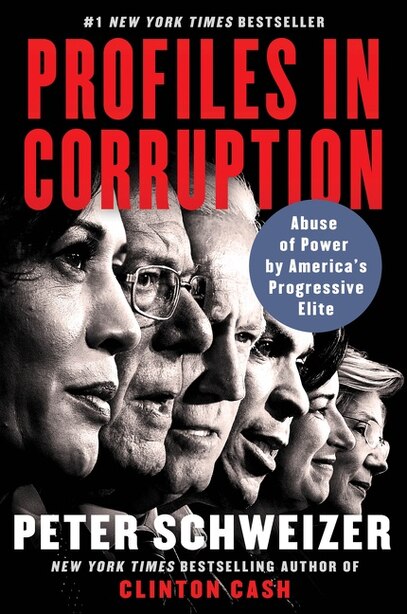
 Franklin & Washington: The Founding Partnership by Edward J. Larson (ISBN: 978-0-06-288016-1) takes an often detailed look at how Benjamin Franklin and George Washington worked toward common goals during the Revolutionary era, often working in concert to attain the desired outcome of a free United States. Larson provides an overview of each man’s life, which establishes that even before they knew each other, they had much in common. They were colonists, their early fortunes were tied to the western frontiers of their respective colonies, and they were involved in military and political matters. While their person routes to success were different, with Franklin rising to wealth and fame via hard work, ingenuity, and learning and exploiting the political scene, Washington had a slightly easier route that involved coming into land and marrying into a wealthy family. Ultimately, though, he, too, was a self-made man, parlaying his surveying and military skills into productive aspects of management and leadership, letting him be a successful estate owner and businessman with a strong ability to find workable compromises in otherwise explosive situations. Once both were convinced that British rule was not the way to go for the colonies, they poured their hearts and souls into independence. They believed strongly in liberty, and put their money where their mouths were, sacrificing time, money, and more to the cause of liberty. Franklin spent years abroad; Washington spent years leading the Continental Army. Once independence had been secured, both turned their attention to helping the thirteen colonies unify, something both strongly believed in. This was more time and sacrifice. They were leaders at the Constitutional Convention. Their styles there sometimes differed, but they worked toward a common goal of a unified country with a federal government strong enough to keep the states in check at times. Larson also spends a significant amount of time talking about one of the biggest differences between the two, which was their outlook on slavery. While they started life someone on the same footing there, Franklin slowly evolved to eventually come to an abolitionist viewpoint. Washington never moved from his position as a slave holder, although he was willing to go along with the anti-slavery clauses in the Constitution.
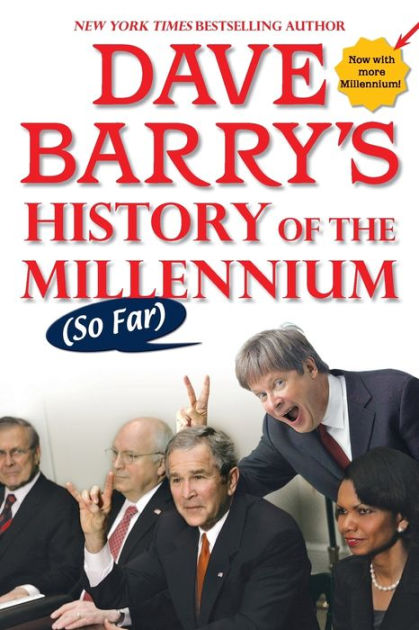 Dave Barry’s History of the Millennium (So Far) by Dave Barry (ISBN: 978-0-399-15437-9) is a compilation of those year-end columns for the first few years of the 2000s. Since those were always multi-page columns, the book is a decent length even though it doesn’t even deal with a full decade. The style of Barry’s columns relies on a couple main devices. One is to make fun of real events, and given the state of American politics, that is easy to do. Often, it seemed like he didn’t have to do a lot of writing; the material was writing itself. Another is to start by reporting a real event and then, suddenly and usually rather abruptly, turn it into something surreal or absurd. The subject of the jokes is wide ranging and includes politics, religion, sports, crime, popular culture (singers, movie stars, and generic celebrities who are famous for now real reason), and some bizarre things that make hometown papers only. As the cover to the book suggests, the Republican Party and President Bush are the subject of many jokes, but politicians at all levels find themselves in Barry’s crosshairs. Another continuing theme throughout the book is that things really are getting worse. Each year’s summary starts out with a comment about how we all hoped the year would be a good one and would improve on the past, but that, as usual, we were all disappointed with just how the latest year turned out. Given the ineptitude around us, why should we keep being so optimistic? It’s never dark humor, but there is a level of sarcasm or cynicism that often gives the jokes an edge.
 Reagan and Gorbachev: How the Cold War Ended by Jack F. Matlock, Jr. (ISBN: 0-679-46323-2) is a very detailed, play-by-play recounting of most (all?) of the diplomatic events leading up to the end of the Cold War. Matlock was a career diplomat that served on the National Security Council. This position and his academic and diplomatic career as a specialist on Russia provided him with an insider’s perspective on the processes that led up to the end of the Cold War. The book chronicles, often in great detail, various meetings, negotiations, summits, and communications that involved leaders of the United States and the Soviet Union. The focus was, of course, on what the two countries’ leaders, Reagan and Gorbachev, did, including their preparations before their meetings, their political efforts in their home countries in order to secure the ability to push their preferred policies forward. Matlock talked about the papers prepared for Reagan and how Reagan studied them. He talked about the negotiation processes. He recounted meetings between secretaries of state and foreign ministers. Those meetings, though, and the preparations were made possible by the leaders’ efforts to put people in place that would assist them. The preparations were made because the leaders desired that, something that was not always the case with the leaders who came before them. While Matlock endeavored to explain that so-called summit meetings weren’t the most important things in the diplomatic arsenal, those are what got headlines and what, ultimately, required the most preparation and resulted in the headline deals that moved the West and the Soviets away from nuclear war and toward peace. He, therefore, spent most of the book talking about these meetings that took place in Moscow, Washington, Geneva, and Reykjavík.
 Assassination: Operation Anthropoid: 1941–1942 by Michal Burian, Aleš Knížek, Jiří Rajlich, and Eduard Stehlík (ISBN: 80-7278-158-8) tells the story of one of the better-known assassinations in World War II, that of Reinhard Heydrich, the commander of the Reich Security Main Office (RSHA), acting governor of the Protectorate of Bohemia and Moravia, and a principal architect of the Holocaust. The operation was conceived by Czechoslovaks in exile in the UK, but carried out by paratroop commandos in occupied Czechoslovakia in concert with local members of the resistance. Like many of the operations in occupied Czechoslovakia, most of the people involved ended up dead. Radio operators, paratroopers and soldiers, resistance members who helped the paratroopers hide, farmers who lent a place to stay or a warm meal, all of them met the same fate once the Nazis discovered that they were in any way associated with the efforts against Germany. Thankfully for the Czechoslovaks, there were enough people that were willing to risk it all, and two of the paratroopers who had undergone intensive and extensive training in the UK, Jozef Gabčík and Jan Kubiš, were able to execute their plan against Heydrich. The plan was to shoot him, but that didn’t initially work, so a bomb was tossed toward his car. The explosion, which happened just outside the back of the car, didn’t kill Heydrich initially, and the attackers had to run away, chased for a short distance by their target. A week later, Heydrich succumbed to his wounds, and in the coming weeks, Nazi reprisals wiped out complete Czechoslovak towns and eventually also wiped out Gabčík and Kubiš.
 The Complete Far Side by Gary Larson (ISBN: 978-1-4494-6004-4) contains every single panel from the comic, which ran from 1979 to 1995. It is not really a book, but three books in a set. The comics are presented more or less in chronological order, so the reader can see how Larson’s style evolved during the early years. There is really not a whole lot to include in an overview of a collection of comics, and that is the case here. There is an eclectic collection of dinosaurs, cows (especially cows), squid, doctors, scientists, space aliens, chickens, dogs, and mailmen, among others. The jokes range from rather macabre stuff to funny plays on words or a surrealist or absurdist take on a famous saying or proverb. Every so often, there are pop culture references that are sometimes hard to get (at least for someone like myself who has never been big on pop culture and always has to look names and titles up when crossword puzzles reference these in clues). The drawing style is unique with the always obese-looking characters and simply drawn animals, scenery, and other settings, but it’s a classic, and having every panel in one place is nice.
 The Czech Black Book, edited by Robert Littell, is a collection of original source documents from the first week of the invasion. There are press releases, official announcements, and news stories that were curated in response to Russian propaganda that claimed Russia and other Warsaw Pact countries came to Czechoslovakia to help and at the request of the Czechoslovaks (the Russians called their collection the White Book, hence the Czech one being black). The documents from the Czechs show a much different picture. The news reports feature interviews of high-level Czechoslovaks as well as from men on the street, and the feeling is that they simply wanted to be left alone and chart their own course through history unhindered by the Russians, whom they had previously considered friends. There was often a feeling expressed that the invasion had done unrepairable damage to that relationship. The government press releases and communiqués showed a government united around the reformers in the Czechoslovak Communist Party and a total disdain for the few leaders who preferred the Russian socialist path. The Czechoslovak leaders weren’t ready to throw communism or socialism away (it reminded me of Gorbachev a little), but they certainly wanted to be able to choose their own way, and the Russians weren’t ready for their satellites to have that level of independence. Trade unions, clubs, and other organizations also called on the citizens of Czechoslovakia to resist the invaders, although not violently, but by the interesting peaceful means of ignoring them. They were to refuse to help the Russians whenever possible, to continue their everyday lives as if nothing was happening around them since strikes and other resistance would simply give the Russians the excuse they needed to escalate the action. Even when a few Czechoslovak citizens lost their lives, were arrested, or otherwise assaulted, the general population kept its cool, and the Czechoslovak leaders attributed the end of the invasion, in large part, to this reaction (or non-reaction, as the case may be) by the people. In the end, negotiations were carried out, and the invaders left, although not under the conditions that the Czechoslovaks would’ve desired.
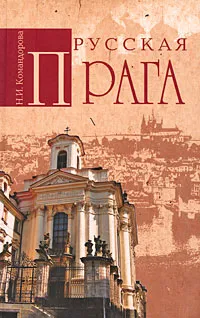 Русская Прага (Russian Prague, my translation) by Natalya Ivanovna Komandorova (ISBN: 978-5-9533-3746-5) presents an overview of some of the common history between Russia and the Czech Republic. It starts in tsarist times and ends with a small section about post-Communist interaction between the two countries. The medieval links between the two countries were focused largely on trade with a little religion thrown in, typical for a time when church and state were intimately intertwined. The many interfamilial marriages and constantly changing alliances during the 1700s and 1800s resulted in some interaction between the two nations, and academic and intellectual interests were added to the subjects of correspondence. These reasons for a Russian presence in what was then Czechoslovakia exploded in the early 1900s as Russia experienced what is nowadays referred to as brain drain when the Bolsheviks came to power. Czechoslovakia, and Prague in particular, proved to be a welcoming place for Russian academics, politicians, and intellectuals who wanted to escape persecution and restrictions on their freedoms in Soviet Russia. There were links between the two countries in the post-World War II era, too, but they tended to be less positive. The Soviets worked to keep tabs on and even control the Russian diaspora. Russian-Czechoslovak relations took a hit they would never really recover from when the Soviets invaded in 1968. Modern relations between the two countries have returned to the medieval focus on trade with a significant level of distrust toward the Russians on the part of many Czechs.
 Iron Curtain: The Crushing of Eastern Europe, 1944–1956 by Anne Applebaum (ISBN: 978-1-4000-9593-3) discusses just how Communist regimes came to power in Europe following World War II. The book chronicles how the Communists came to power in Eastern Europe, focusing on Hungary, Poland, and East Germany, with a fair number of examples from Czechoslovakia and occasionally Romania. The Communists rose to power quickly in post-war Europe through a comprehensive strategy that thoroughly encompassed the lives of the people. This included the police, youth organizations, the media, political organizations, the arts, and the economies of the countries where the Soviet Union was victorious over Germany. In many cases, a combination of factors worked together to make the Communist takeover work. First, it was the Soviet Union that was in control in these areas. Even in places where there was arguable Allied control, it was the Soviets doing the day-to-day administration, so they worked to install people and organizations that were compatible with their ideas of how things should work. Second, there had already been strong support for Communist, socialist, and other Left-leaning ideologies before and during the war. This only continued after the war. Third, the activists were the ones most involved. They were also the ones who were willing to use violence to reach their goals. While most regular people were concerned about getting a job, rebuilding their homes and businesses, and helping their friends and families, activists were getting involved in politics, unions, youth and religious organizations, and the media. This helped them make sure that things were done they way they wanted. In the rare cases when there was some push-back, the activists, often with help from the police or the newly formed secret police organizations, violently quashed any dissent. Applebaum does discuss resistance a little, but this is a short section, which seems to accurately represent the proportions of active and passive support or acquiescence to the regime and resistance.
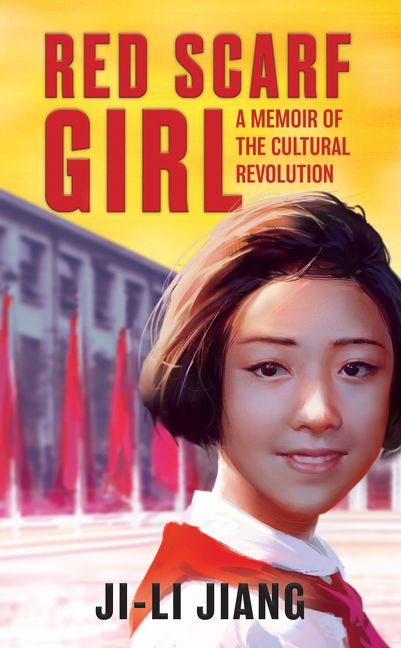 Red Scarf Girl: A Memoir of the Cultural Revolution by Ji-li Jiang (ISBN: 978-0-06-446208-2) details one of the worst parts of China’s Communist history, the Cultural Revolution. The book, a memoir, is told from the viewpoint of the author as the events unfolded. Her family history included a well-to-do grandfather, a Muslim grandmother, and a father who had joined the Communist Party in its infancy when it was still illegal and then had a falling out with its leaders. This put her at a disadvantage when Mao began the Cultural Revolution to retain his power (power struggles seem to be a fixture of Communist regimes) since her family was not considered “red” enough. Ji-li was a true believer in Mao and the Revolution at the beginning of the book, but as things went along and friends and neighbors were denounced, goals and dreams shattered, lives ruined (or lost), and her own family affected, she came to understand that devotion to a cause or a leader should not trump one’s devotion to the truth and to one’s family. Like many Chinese, she was later disappointed when she found out that the Cultural Revolution and all the damage it had done was not really to advance Communism, but to allow Chairman Mao to hang on to power. Ji-li paints a descriptive picture of what life was like before the chaos, and it actually didn’t seem too bad. When the Cultural Revolution starts, though, things change quickly and they change drastically, as all things old are thrown out. Kids can no longer read comics, neighbors stop talking to each other and some look for ways to harm neighbors and former friends. School is changed, favoring class status instead of merit. Houses are ransacked, people imprisoned, beat, sometimes killed. Hope is lost for many. Some, like Ji-li’s father, resist heroically, never admitting to the accusations leveled falsely against him. Life eventually settles down, but it’s never the same again, and even to a young girl, it’s obvious that there were freedoms and opportunities lost.
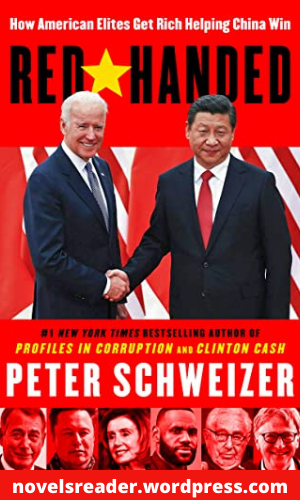 Red-handed: How American Elites Get Rich Helping China Win by Peter Schweizer (ISBN: 978-0-06-306114-9) chronicles corruption among American elites as it pertains to China. The book shows how many facets of American society are compromised because of their deep, corrupt financial ties to China. Both major political parties (already for decades) have been selling out to China along with big business, the green lobby, the American entertainment industry, and even America’s sports leagues. While the Clintons and the Bidens headline the political corruption, the Bushes and Mitch McConnell are also exposed. Politicians and diplomats consistently use their time in office to make connections with high-ranking Chinese, then cash in on public service, brokering Chinese access to American halls of power. Some, like the Clintons, Bidens, and McConnells, don’t even bother waiting until they’re out of office. The worst part about it from an American security standpoint is that many of the deals involve dual-use technologies, defense industry, and hi-tech products that, when protected, protect America’s edge and advantage in the world. The NBA has sold out to China for the billions of dollars it can make there. In turn, players, coaches, executives, and even fans are prevented from expressing certain views. The same holds true for Hollywood, where anti-American messages are de jour, but the studios must walk on eggshells when it comes to China, Taiwan, and Tibet. A short section at the end talks about what can be done and passes out a little praise to the few to whom it is due. Ultimately, American political discourse is constrained, and American national interests are subjugated to a country that does not, according to the statements of its own leaders, believe in a positive-sum game, but a zero-sum game, and it’s willing to do what it takes to be the one on top.
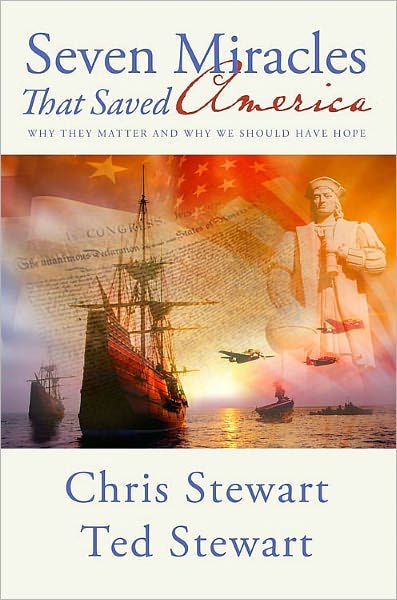 Seven Miracles That Saved America: Why They Matter and Why We Should Have Hope (ISBN: 978-1-60641-144-5) by Chris and Ted Stewart explores singular events and unique people in American history that, had things unfolded even slightly differently, could have resulted in a vastly different America. All of these events and people hinge on such a fine line that it is easy to see that they were influenced by God. The miracles that the authors review in detail are the following: Columbus and Columbus’s discoveries, Jamestown, a summer fog during the Revolutionary War, the advent of the American Constitution, Abraham Lincoln and the battle of Gettysburg, the battle of Midway, and Ronald Reagan and how the assassination attempt against him failed by less than one inch (just a little bit more and the bullet kills him). Each one of the miracles is reviewed in detail by the authors and the scene is set through some historical fiction. At the end of each section, the authors ask some questions that invite the reader to think about what would have happened in each of these situations had things — and usually it’s quite an exhaustive list of things — turned out even slightly different. For example, with the foggy morning during the Revolutionary War that allowed American troops to withdraw and regroup without suffering losses, it really was a question of a few hours and things could have been vastly different. The same could be said about the battle of Midway. There, it really was more like minutes since one of the pilots flying and trying to locate Japanese fleet only had minutes before needing to return to base without running out of fuel. At the last possible minute, though, he spotted the Japanese ships, and that allowed the Americans to attack first, which proved critical in the battle, along with other decisions and rare direct hits during the bombing runs. The point being made is that there were just too many decisions at so many different points along the way that for those who recognize that God has a role in human existence, these events were miraculous and they resulted in an exceptional country that has long been a light on a hill.
 Saints: No Unhallowed Hand (ISBN: 978-1-62972-648-9) is the second volume of a multi-volume history published by the Church itself. This volume follows the Church’s exodus from Nauvoo to the Salt Lake Valley. It tells the story of the wagon trains and hand cart companies that forged the Mormon Trail. The Church was forging into new territory as well, as Brigham Young became the second president of the Church and the second prophet of this era. In addition to trekking across the North American plains, the Church was expanding internationally, with missionaries taking the message of the restored gospel to Europe, South Africa, and the islands of the Pacific. Missionary work didn’t always go so well, and there were plenty of other locations, like Southeast Asia, where missions resulted in extremely few converts. The book also chronicles the early Church’s struggles with the American government. After the lack of concern the federal government showed the Church when Missouri’s official position was persecution, most Church members were wary of the U.S. government. Brigham Young and his successors were wary, but also saw the wisdom of working toward a reconciled position. This led to things like the Mormon Battalion and helped influence Church members’ thinking as some later struggled to accept the end of polygamy. A major theme in the book was the construction of temples. They required great sacrifice, but also resulted in great blessings.
  Escape: Children of the Holocaust by Allan Zullo (ISBN: 978-0-545-09929-5) and Sophie Scholl: Die Weiße Rose by Achim Seiffarth (ISBN: 978-3-12-556024-6) are books written for young people (junior high kids seemed to be the target audience), but present some of the stories of Nazi Germany that are good for readers of any age to know. Zullo’s book told the story of about a dozen Jewish children and their survival of the Holocaust. The stories were varied and all captivating. They usually started with the pre-war life of the kids or, at least, their life under Hitler when it still wasn’t too crazy. This allowed for the reader to see how quickly things went downhill. Inevitably, before long, families were separated, people were in ghettos or concentration camps, and life would never be the same again as kids were forced to grow up quickly and learned that the adult world wasn’t all it was cracked up to be since it induced a lot of pain, suffering, and cruelty. The kids in Zullo’s book all displayed incredible levels of resiliency, though, scraping by and taking advantage of what was few chances and opportunities were given them, such as a truck taking workers to another camp with a sympathetic guard who was known to let one or two people at a time make a run for it. The stories, which are of those who survived, do not glass over the fact that the survivors of the ghettos and camps were in the vast minority, and it is sobering to read of all the friends and family these survivors lost. Seiffarth’s book is written for learners of German, but although relatively simply written, still does a great job presenting a fascinating story. Sophie Scholl was a young woman who went from teenager to college student during the Nazi rise to power. Originally a believer in what Hitler was doing, as she came closer to adulthood, she saw the errors intrinsic to nationalist socialism. Following the lead of her older brother, an activist in the underground resistance, her religious father, who could not abide the unfair treatment of Jews and others oppressed by the regime, and a college professor who encouraged free thinking and debate even when it was unpopular, Sophie joined the resistance, helping to distribute anti-Nazi flyers. Her efforts helped present what was an unpopular opinion to the masses, especially as she helped found resistance cells among young people in cities outside her hometown. Eventually, the Nazi regime caught up to her, her brother, others in their circle, including their professor, and they were executed.
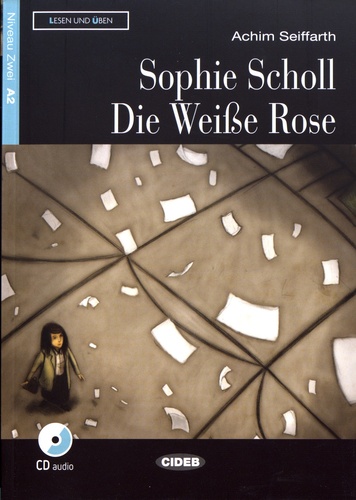 As stated above, while both books are juvenile literature, they are quality works. I enjoyed trying to stretch my knowledge of German, the native language of my grandparents and other ancestors who have a story or two of their own involving the Nazi authorities. The stories in Escape easily kept my attention, told interesting details, and were from a variety of people, such as those from Germany proper as well as from occupied territories. This variety gave more flavor and a nice, broad overview of what are certainly not isolated incidents. I thought Sophie Scholl was also a nice overview that provided sufficient detail to be informative and yet not get bogged down. I had seen a movie on her a few years ago, but this book gave me some new information and was, I thought, better (I always think that about books relative to movies, though). Both of these books present an interesting and accurate picture of what life was like under the Nazis — for Jews in the first and for conscientious Germans in the other. They remind us what we should be fighting to avoid, even if it’s only a step or two in that direction, and the kind of people we should be striving to be, even if that striving leads to unpopular positions, ostracization, and, possibly, the ultimate sacrifice. Liberty — for ourselves and for others — is worth those things.
 Stasiland: Stories from behind the Berlin Wall by Anna Funder (ISBN: 978-1-84708-355-7) is a book written in a journalistic style that tells a variety of stories from East Germany: former Stasi, dissidents, people who tried to escape, and just regular people. The book, because of its style, also followed the author’s journey through East Germany and dealing with the psychological damage being so close to it dealt her. The people interviewed included a woman who was not political at all, but one day, found herself close to the border, saw a possibility, and went for it. She was caught, imprisoned, and forever scarred by the traumatic experience. She later married a guy who was punished for an escape attempt simply because he swam out toward a boat that was Swedish while at an East German beach. Endless trouble from the state eventually killed him. Another was a neighbor of the author, a rock musician who was famous throughout the country. Eventually, the authorities decided he and his group were just too much, though, and they were informed they no longer existed. The state disbanded the group. One of the most heart-rending stories came thanks to a woman who essentially traded her freedom for that of others. She and her husband had a very sick baby that was being treated in a West German hospital because the East Germans didn’t have the right medicines and abilities. The parents were only allowed a couple visits, and never together, in an effort to prevent defection. Later, the parents prepared to make an escape attempt via a tunnel. The Stasi, East Germany’s brutal secret police, found out about the tunnel, though, and the escape attempt was called off. That didn’t prevent the parents of the sick boy from being persecuted. Eventually, the mother was told she could go to the West and see her son, but there were conditions. One of the conditions would’ve sold out some of the others who had been involved in the escape attempt. In an amazing act of heroism, she didn’t give in. The boy grew up in the West under the care of nurses and doctors. The interviews with the former Stasi were less exciting. Most seemed to lament, in one way or another, the passing of the former East Germany and the power, authority, and privilege many of them had, usually at the expense of others. The reunification wasn’t kind to everyone, resulting, in some cases, in increased crime and poverty for those who struggled to adapt to the new order.