Salt Lake City, Utah, is home to an interesting state park that is currently called This Is the Place Heritage Park. I remember it as This Is the Place State Park. It is home to a grand monument to Brigham Young, the Mormon pioneers, and other explorers of the early American West. The rest of the park is a number of reconstructed early pioneer homes, outbuildings, and buildings such as a blacksmith’s shop, a general store, and other buildings typical of frontier towns. As a kid, the thing that attracted me most to the park was that they sold candy in the general store, there were farm animals to see, and there were a few things that kids could do, such as give combing wool a try (it was much more difficult than it looked). I had little appreciation for the pioneers that the park and monument were originally meant to honor (“originally” is a key word because now it’s billed as a “living history museum” and they’ve even added that old, traditional pioneer facility, the splash pad).
 Saints: No Unhallowed Hand (ISBN: 978-1-62972-648-9) is the second volume of a multi-volume history published by the Church itself. This volume follows the Church’s exodus from Nauvoo to the Salt Lake Valley. It tells the story of the wagon trains and hand cart companies that forged the Mormon Trail. The Church was forging into new territory as well, as Brigham Young became the second president of the Church and the second prophet of this era. In addition to trekking across the North American plains, the Church was expanding internationally, with missionaries taking the message of the restored gospel to Europe, South Africa, and the islands of the Pacific. Missionary work didn’t always go so well, and there were plenty of other locations, like Southeast Asia, where missions resulted in extremely few converts. The book also chronicles the early Church’s struggles with the American government. After the lack of concern the federal government showed the Church when Missouri’s official position was persecution, most Church members were wary of the U.S. government. Brigham Young and his successors were wary, but also saw the wisdom of working toward a reconciled position. This led to things like the Mormon Battalion and helped influence Church members’ thinking as some later struggled to accept the end of polygamy. A major theme in the book was the construction of temples. They required great sacrifice, but also resulted in great blessings.
 The book is written in the same way as the first volume in the series, so there were no surprises this time with formatting, style, or anything like that. I probably enjoyed reading this volume a little more than the first one because I am less familiar with the early missionary efforts and the stories of Church members across Europe and the Pacific. I thought most of the stories were good: interesting and something one can learn from. The book dealt in depth with polygamy, which was never something I struggled with, but I know it’s a question that many, both inside and outside the Church have. The book touched on the Mountain Meadow massacre in a way that I thought presented a good level of detail and the level to which Church members were involved. The stories of faith and sacrifice were what made the book a worthwhile read, though, teaching of their importance and the attendant blessings they bring to our lives.

|
This work, including all text, photographs, and other original work, is licensed under a Creative Commons Attribution-NonCommercial-NoDerivatives 4.0 International License and is copyrighted © MMXXI John Pruess. |


 Escape: Children of the Holocaust by Allan Zullo (ISBN: 978-0-545-09929-5) and Sophie Scholl: Die Weiße Rose by Achim Seiffarth (ISBN: 978-3-12-556024-6) are books written for young people (junior high kids seemed to be the target audience), but present some of the stories of Nazi Germany that are good for readers of any age to know. Zullo’s book told the story of about a dozen Jewish children and their survival of the Holocaust. The stories were varied and all captivating. They usually started with the pre-war life of the kids or, at least, their life under Hitler when it still wasn’t too crazy. This allowed for the reader to see how quickly things went downhill. Inevitably, before long, families were separated, people were in ghettos or concentration camps, and life would never be the same again as kids were forced to grow up quickly and learned that the adult world wasn’t all it was cracked up to be since it induced a lot of pain, suffering, and cruelty. The kids in Zullo’s book all displayed incredible levels of resiliency, though, scraping by and taking advantage of what was few chances and opportunities were given them, such as a truck taking workers to another camp with a sympathetic guard who was known to let one or two people at a time make a run for it. The stories, which are of those who survived, do not glass over the fact that the survivors of the ghettos and camps were in the vast minority, and it is sobering to read of all the friends and family these survivors lost. Seiffarth’s book is written for learners of German, but although relatively simply written, still does a great job presenting a fascinating story. Sophie Scholl was a young woman who went from teenager to college student during the Nazi rise to power. Originally a believer in what Hitler was doing, as she came closer to adulthood, she saw the errors intrinsic to nationalist socialism. Following the lead of her older brother, an activist in the underground resistance, her religious father, who could not abide the unfair treatment of Jews and others oppressed by the regime, and a college professor who encouraged free thinking and debate even when it was unpopular, Sophie joined the resistance, helping to distribute anti-Nazi flyers. Her efforts helped present what was an unpopular opinion to the masses, especially as she helped found resistance cells among young people in cities outside her hometown. Eventually, the Nazi regime caught up to her, her brother, others in their circle, including their professor, and they were executed.
 As stated above, while both books are juvenile literature, they are quality works. I enjoyed trying to stretch my knowledge of German, the native language of my grandparents and other ancestors who have a story or two of their own involving the Nazi authorities. The stories in Escape easily kept my attention, told interesting details, and were from a variety of people, such as those from Germany proper as well as from occupied territories. This variety gave more flavor and a nice, broad overview of what are certainly not isolated incidents. I thought Sophie Scholl was also a nice overview that provided sufficient detail to be informative and yet not get bogged down. I had seen a movie on her a few years ago, but this book gave me some new information and was, I thought, better (I always think that about books relative to movies, though). Both of these books present an interesting and accurate picture of what life was like under the Nazis — for Jews in the first and for conscientious Germans in the other. They remind us what we should be fighting to avoid, even if it’s only a step or two in that direction, and the kind of people we should be striving to be, even if that striving leads to unpopular positions, ostracization, and, possibly, the ultimate sacrifice. Liberty — for ourselves and for others — is worth those things.
 Stasiland: Stories from behind the Berlin Wall by Anna Funder (ISBN: 978-1-84708-355-7) is a book written in a journalistic style that tells a variety of stories from East Germany: former Stasi, dissidents, people who tried to escape, and just regular people. The book, because of its style, also followed the author’s journey through East Germany and dealing with the psychological damage being so close to it dealt her. The people interviewed included a woman who was not political at all, but one day, found herself close to the border, saw a possibility, and went for it. She was caught, imprisoned, and forever scarred by the traumatic experience. She later married a guy who was punished for an escape attempt simply because he swam out toward a boat that was Swedish while at an East German beach. Endless trouble from the state eventually killed him. Another was a neighbor of the author, a rock musician who was famous throughout the country. Eventually, the authorities decided he and his group were just too much, though, and they were informed they no longer existed. The state disbanded the group. One of the most heart-rending stories came thanks to a woman who essentially traded her freedom for that of others. She and her husband had a very sick baby that was being treated in a West German hospital because the East Germans didn’t have the right medicines and abilities. The parents were only allowed a couple visits, and never together, in an effort to prevent defection. Later, the parents prepared to make an escape attempt via a tunnel. The Stasi, East Germany’s brutal secret police, found out about the tunnel, though, and the escape attempt was called off. That didn’t prevent the parents of the sick boy from being persecuted. Eventually, the mother was told she could go to the West and see her son, but there were conditions. One of the conditions would’ve sold out some of the others who had been involved in the escape attempt. In an amazing act of heroism, she didn’t give in. The boy grew up in the West under the care of nurses and doctors. The interviews with the former Stasi were less exciting. Most seemed to lament, in one way or another, the passing of the former East Germany and the power, authority, and privilege many of them had, usually at the expense of others. The reunification wasn’t kind to everyone, resulting, in some cases, in increased crime and poverty for those who struggled to adapt to the new order.
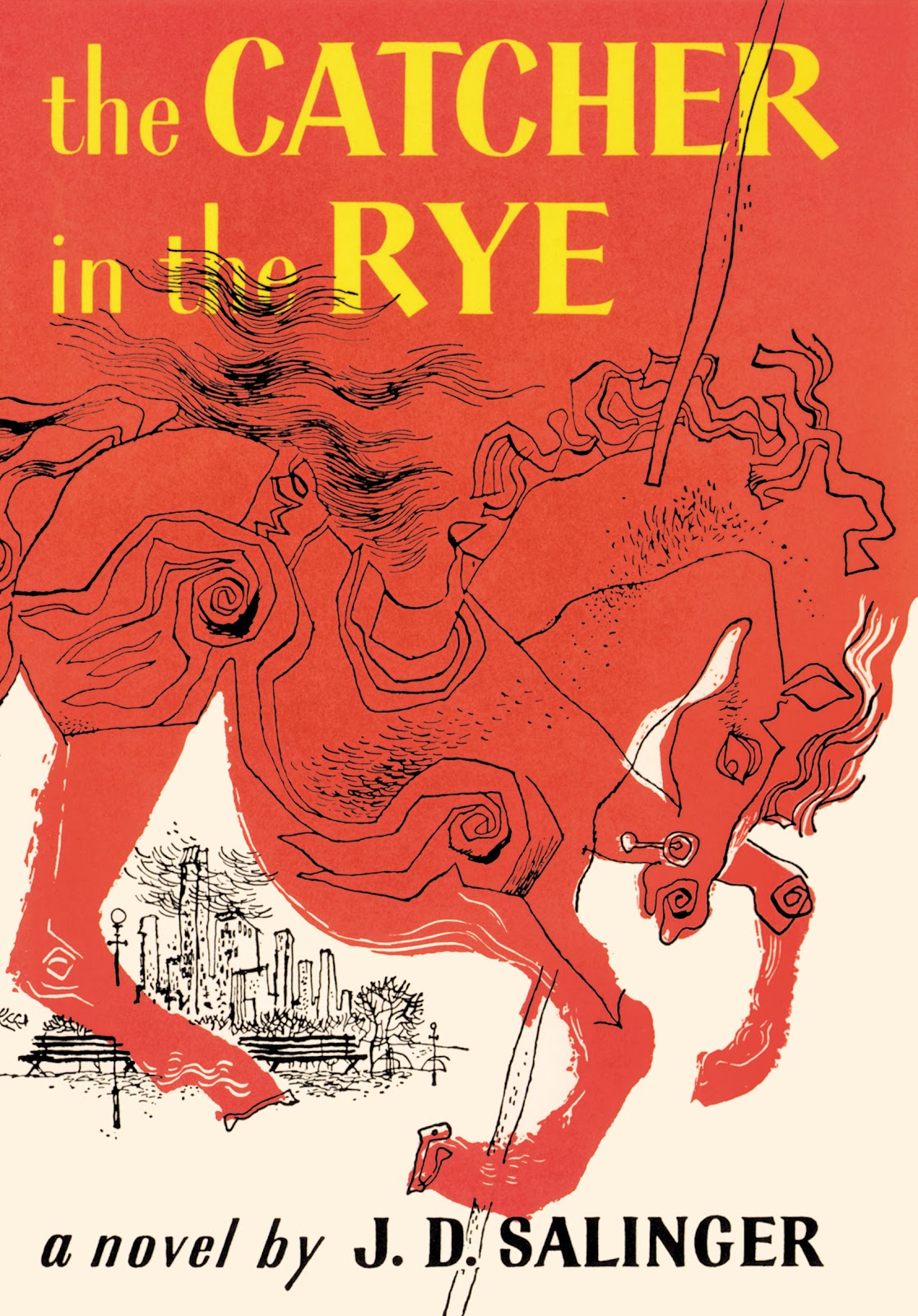 I am not sure if the Catcher in the Rye by J. D. Salinger (ISBN: 978-0-316-76917-4) was assigned reading for the regular English class, but it certainly wasn’t for the AP English class, so I never had to read it in high school. The main character in the book, Holden Caulfield, though, is in high school (well, technically, he’s just been expelled from yet another fancy boarding school), and is struggling with much of what teenagers often contend with, such as a fear of growing up, struggles with making or keeping friends, troubles with figuring out one’s identity, and depression. The main character is the narrator of the story, which is really just a his train-of-consciousness re-telling of about three days of his life, starting with his having been kicked out of school right before Christmas break, and how he deals with that. He introduces the reader to some of his teachers, his roommates and dormmates, his sister, a friend from back home, and a few other people he runs into as he tries to avoid going home before he’s supposed to show up at home for Christmas break. He expresses a lot of negativity for the world and for the people he has contact with, usually because they come across to him as fake. His rare moments of joy come from his little sister and from other little kids he runs into since they are still innocent and present to the world just who they are, not trying to hide anything or be something they’re not. He tells his sister that his dream job would be to be a “catcher in the rye,” saving kids running in a rye field toward a cliff from falling off the edge, which is a metaphor for helping people preserve their innocence and lack of “phoniness” (one of his favorite words).
 Tower of Secrets: A Real Life Spy Thriller by Victor Sheymov (ISBN: 978-0-9858930-4-0) is a story more in line with stories of regular people defecting than athletes, but Sheymov wasn’t exactly a regular guy. He was an officer in one of the Soviet security agencies, the same KGB that was the subject of so much Western fiction. The KGB he describes in the book often sounds much more like what one imagines working in the IRS or some other boring bureaucratic organization would be like, but he also talks about the things the KGB is more famous for. Sheymov described his life abroad as an employee of the Soviet Union, working to protect the Soviets’ state secrets and he described his life at home in the Soviet Union. I found both of them to be rather interesting portrayals of life. He tells of both the good and the bad, lending an air of credibility to the work. Eventually, Sheymov and his wife start to question the system they live in. This is especially shocking to Sheymov himself because he works as part of the system and some of his initial resistance to going against that system is the result of the privilege it has afforded him and his family. Finally, though, they come to the realization that whatever positives they get from the communist system don’t outweigh the negatives for themselves, their daughter, and for people around them. The USSR was pretty locked down, though, especially for someone working for the government. Sheymov and his wife cooked up a plan to get out, but had to make contact with a Western intelligence agency to make that work. He chose the Americans and ran a risky operation by himself while on a business trip to Poland, where he disguised himself, hopped out a bathroom window, walked into the American embassy, and then returned to his comrades. Sometime later, more disguises, a train journey, riding in a car with false spaces under the back seats, and smugglers all played a role in getting the Sheymovs to the West.
 While I normally try to summarize the book or provide highlights and some of the author’s main points, that seemed a little less useful for a book of scripture, but since part of the impetus behind reading it in Russian was to help maintain (re-gain?) at least a semblance of Russian-language skills, I thought I would hearken back to my mission days and try to give the same type of overview of the Книга Мормона that we gave as missionaries when doing what we called street contacting, simply walking up to people, asking if they’d give us a few minutes of their time, and then explaining who we were and what, in generic terms, our message was. If people were willing to listen for a few minutes, we usually had a chance to talk about the Book of Mormon, which was new and unique for upwards of 90% of the people with whom we spoke. Most missionaries, myself included, liked to use the illustrations included at the front of the book. We typically told people we met that the Book of Mormon was a book of scripture, the same as the Bible is a book of scripture, that testified of Jesus Christ. It was written by ancient prophets, starting with a man named Lehi, who left Jerusalem and moved to the American continent. The book recorded the history and prophecies of Lehi’s descendants, culminating in a visit to these people by the resurrected Savior, where He taught His gospel and performed miracles just as He had done in Jerusalem. This record was compiled by another ancient prophet, named Mormon, and buried, later to come forth, with God’s help, through a modern-day prophet named Joseph Smith. The book ends with a promise that if we ask God about its truthfulness, He will answer us.
 Democracy in America by Alexis de Tocqueville (ISBN: 978-0-553-21464-2) are the results of the aristocrat’s observations of the fledgling United States. He and a companion were assigned by the French government to learn about the prison system in the U.S., which they did, but de Tocqueville came home with extensive notes on all aspects of life in America and wrote about the unique American take on democracy, a subject that was always of interest to de Tocqueville. The book consists of two volumes and does, in fact, cover just about every aspect of American life. The author’s discussion includes the following non-exhaustive list of topics: socio-economic upward mobility, sense of community, belief in God, history of the American Indians (especially interesting to members of the Church of Jesus Christ of Latter-day Saints since de Tocqueville’s sources point to all the Indian languages coming from one source), the arm of Providence in the American founding, religion as the foundation of morality, the importance of a judiciary that can be recalled (impeached), the inability of a central power (government) to control every aspect of its citizenry’s lives, centralization’s tendency to promote stagnation, government’s purpose being to secure the welfare of the people and not to establish order and regularity, executive authority’s tendency to abuse power, the negatives of re-elecction being a possibility for politicians, the importance of sound men being appointed to the Supreme Court because of the court’s inherent power, the dangers of political parties (de Tocqueville shared this observation with many of America’s Founders), freedom of the press working best when the media is characterized by a wide variety in sources, the role of individualism and how politics work best when one does not look to the government for solutions of one’s problems, government is a necessary evil, laws’ tendency to prevent wealth, the importance of a strong middle class, lawyers’ negative impact on society, how when one loses one’s religion, one tends to try to take it from others, the pursuit of happiness, the importance of common foundations for society and community to exist, and the relative importance of freedom relative to the opinion of others.

 Incidents in the Life of a Slave Girl by Harriet Jacobs, whose pen name was Linda Brent (available
 Clinton Cash: The Untold Story of How and Why Foreign Governments and Businesses Helped Make Bill and Hillary Rich by Peter Schweizer (ISBN: 978-0-06-265943-9) talks more about Bill and Hillary Clinton after the Clinton presidency than during it, but the story told would not have been possible if it weren’t for Bill Clinton having held America’s highest office first. After leaving office after eight years, the Clintons decided to stay intimately involved in politics. Hillary was elected to the Senate, ran for president, and was secretary of state under Obama. In the book, Schweizer chronicles how the Clintons leveraged their proximity to power to rake in piles and piles of money. The author points out that there is nothing technically wrong about that fact. What was so suspicious was the timing, amount, and source of much of that money. The book carefully points out the machinations that often took place under the radar. When certain shady businessmen wanted to get involved in the Kazakh mining business, big donations were made to the Clintons’ foundation, Bill made a high-profile visit to Kazakhstan, said some stuff that, in some ways, legitimized Kazakhstan’s dictator, and suddenly those same businessmen had a deal. When Russia wanted in on buying American uranium and Hillary sat on a Senate committee that was involved in the approval of that plan, those involved in the deal were donating to the Clintons. Similar actions took place when India wanted to get nuclear technology. The Clintons had shadowy dealings in South America and in Africa. When the Clintons were in a position to possibly affect the outcome of a decision, they and their friends seemed to benefit and America seemed to lose. Schweizer ends his book with an appeal to those who have the legal authority to investigate these suspicious dealings.
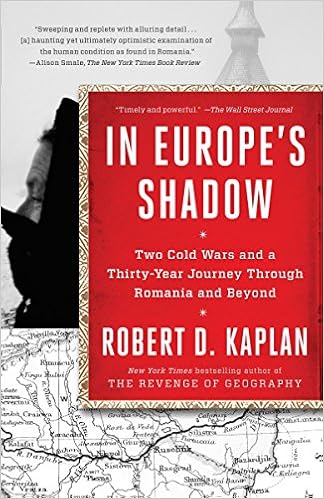 In Europe’s Shadow: Two Cold Wars and a Thirty-year Journey through Romania and Beyond by Robert D. Kaplan (ISBN: 978-0-8129-8662-4) is a wide-ranging survey of Romanian history, focusing on the post-World War I XX century and the first decade or so of the XXI century. Kaplan has
  Outrage, Inc.: How the Liberal Mob Ruined Science, Journalism, and Hollywood by Derek Hunter (ISBN: 978-0-06-283552-9) talks about that very ice age and how it never came, but the same alarmism that drove the talk about it has not abated at all. In fact, according to Hunter, the hype about the ice age’s replacement cause, climate change, is exponentially greater and has been combined with overwrought hype about dozens of other issues. The thesis of Hunter’s work is that that hype is lacking a foundation in reality, but has overtaken all of pop culture, a lot of the news media, and a lot of the scientific world. He talks a lot about the Leftist bias in all of those areas that the Right so often complains about. In each section, he provides concrete examples and then some analysis to drive home the points being made. He digs into some things that many readers probably would not even consider on their own, such as the budgets (and sources of those same budgets) for various movies. He found that while the movie studios and producers make their mainstream fare, they also unabashedly spend millions on agenda-driven movies that usually don’t do well at the box office. An agenda-driven press, though, happily covers those films in great detail. Hunter discusses the origins of some of pop culture’s environmentalist stars like Bill Nye and Neil deGrasse Tyson and why they are really only qualified to speak about certain issues, but seem to be asked for what are portrayed as authoritative statements on a variety of things. Hunter notes that if people can be incited to anger, they do what all people do when angry: make less-effective decisions, including asking for government policy that limits liberty and voting in politicians that want to expand government control.
 Church of Cowards: A Wake-up Call to Complacent Christians by Matt Walsh (ISBN: 978-1-62157-920-5) is a book about that very call to action. In the book, Walsh discusses some of what he perceives to be problems in America and then talks about how they are largely, if not completely, overcome by Christians getting up and putting their religious beliefs into action. While he is Catholic (not discussed in the book, but a known fact), the book is not directed at any specific denomination; the things he says are meant to be applicable by all believers. He notes that polls generally find America to be about 70% Christian, but that America does not function like a country that is 70% Christian. The opening chapter presents a fictionalized situation where barbarians come to America to slaughter Christians, something like ancient Rome, but can’t find anyone that will stand up for what the barbarians believe to be Christianity. The people they find are wishy-washy and non-committal about anything other than their openness and tolerance. The rest of the book that looks deeper into those watered-down values and how far they are from what Walsh believes is taught in the Bible. Modern man’s disdain for organized religion, the commitment many show to entertainment instead of God, and a brand of religion that doesn’t require any sacrifice from its adherents are a few of the topics that draw Walsh’s ire in a, typical for his Internet-based daily show, scathing take-down of modern American Christianity. The book asks those who call themselves Christian to start taking their religion more seriously, which, for most, will mean making effort to change and become more active.
 It seems there are
 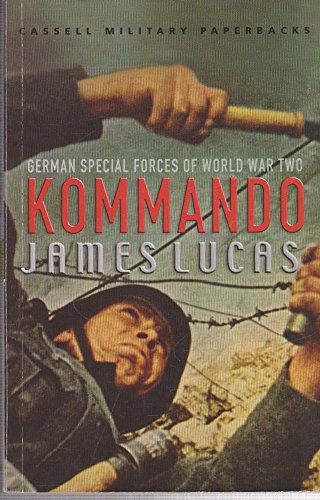 Kommando: German Special Forces of World War Two by James Lucas (ISBN: 0-304-35127-X) is a book that takes a look at special forces from the other side. Lucas is clearly pro-Ally and writes from a perspective driven purely by scholarly interest. The writing is dispassionate and appropriately covers the material. He discusses German special forces in the army, navy, and air force during World War II. He notes that German efforts in this area, just like happens to be the case for many other countries, historical and modern, were hampered by bureaucratic infighting, although this is probably a good thing in the case of World War II. The book catalogues various battles and operations that German special forces were involved in, some successful, such as the taking of a large fortress, the Belgian Fort Eben-Emael, and others resulting in large losses for the Germans, such as an attempt at capturing Yugoslav Partisan leader Josip Tito. There were also descriptions of guerilla action and more political things, such as an operation in Poland, where the intent of the operation was to make it look like the Poles were revolting, harming Germans, and giving Germany a reason to attack. There were descriptions of the German Navy trying to conduct special operations in specially designed boats and submarines, most of which were abject failures. The air force didn’t fare much better, although the author places much of the blame for this on German military leadership, including Hitler, who expected too much and did not use the special forces in appropriate situations. Finally, the book examines non-military forces, which were special only in the sense that they weren’t regular soldiers. In general, using civilians was even more havoc-filled than the failed operations that involved professional soldiers.