I’m not a big movie watcher, so I’ve never seen a Bond movie and pulp fiction rarely interests me (admittedly, I’ve read the original Bourne books — and liked them better than the movies, of course), but I know that bad-guy Russians, usually affiliated with the KGB play a role in at least some of those movies and a lot of fictional spy thrillers. It, of course, fits well with the Cold War that wasn’t so much a motif through the 1980s, but real life. It’s an easy way to capture people’s imaginations and draw them into a story. What has always been even more intriguing than those stories, though, is real life. I remember Cuban and Eastern European athletes defecting during international competitions and thought that was brave of them. Movies like Night Crossing regular people defecting had an even larger impact on me. These people knew the value of freedom and were willing to risk their lives for it.
 Tower of Secrets: A Real Life Spy Thriller by Victor Sheymov (ISBN: 978-0-9858930-4-0) is a story more in line with stories of regular people defecting than athletes, but Sheymov wasn’t exactly a regular guy. He was an officer in one of the Soviet security agencies, the same KGB that was the subject of so much Western fiction. The KGB he describes in the book often sounds much more like what one imagines working in the IRS or some other boring bureaucratic organization would be like, but he also talks about the things the KGB is more famous for. Sheymov described his life abroad as an employee of the Soviet Union, working to protect the Soviets’ state secrets and he described his life at home in the Soviet Union. I found both of them to be rather interesting portrayals of life. He tells of both the good and the bad, lending an air of credibility to the work. Eventually, Sheymov and his wife start to question the system they live in. This is especially shocking to Sheymov himself because he works as part of the system and some of his initial resistance to going against that system is the result of the privilege it has afforded him and his family. Finally, though, they come to the realization that whatever positives they get from the communist system don’t outweigh the negatives for themselves, their daughter, and for people around them. The USSR was pretty locked down, though, especially for someone working for the government. Sheymov and his wife cooked up a plan to get out, but had to make contact with a Western intelligence agency to make that work. He chose the Americans and ran a risky operation by himself while on a business trip to Poland, where he disguised himself, hopped out a bathroom window, walked into the American embassy, and then returned to his comrades. Sometime later, more disguises, a train journey, riding in a car with false spaces under the back seats, and smugglers all played a role in getting the Sheymovs to the West.
I enjoyed reading the book. I found a few similarities to Next Stop Execution: some good descriptions of everyday Soviet life that grounded the book and made it interesting for those of us who weren’t there and some of the discussions about working for what was the world’s most feared intelligence service were neat to read. I also found the authors’ egoism to be similar. This book also suffers from being self-published, so there are more than a handful of typos, which can be kind of distracting. The story of getting that first contact with the Americans set up and then the plan to get the Sheymovs out of the USSR, though, was gripping stuff and well worth the read. Just like the book’s subtitle promises, it was just like a good story and less like a memoir. Sheymov’s discussion of his ideological change was also very interesting and it involved various aspects of life. He accurately noted that communism promised security and justice, but did so at a great price: freedom, both economic and intellectual. He also grappled with the knowledge that communism has killed many thousands of people, oddly, in the name of equality. Socialism, in the end, is built for preventing others from succeeding instead of helping people achieve. These accurate criticisms of socialism and communism are extremely relevant today and serve as the most powerful of Sheymov’s fun and educational book.

|
This work, including all text, photographs, and other original work, is licensed under a Creative Commons Attribution Non-Commercial No Derivatives 3.0 License and is copyrighted © MMXIV John Pruess. |


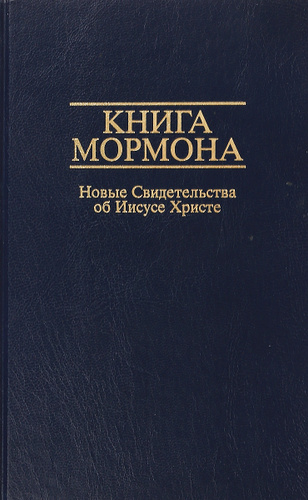 While I normally try to summarize the book or provide highlights and some of the author’s main points, that seemed a little less useful for a book of scripture, but since part of the impetus behind reading it in Russian was to help maintain (re-gain?) at least a semblance of Russian-language skills, I thought I would hearken back to my mission days and try to give the same type of overview of the Книга Мормона that we gave as missionaries when doing what we called street contacting, simply walking up to people, asking if they’d give us a few minutes of their time, and then explaining who we were and what, in generic terms, our message was. If people were willing to listen for a few minutes, we usually had a chance to talk about the Book of Mormon, which was new and unique for upwards of 90% of the people with whom we spoke. Most missionaries, myself included, liked to use the illustrations included at the front of the book. We typically told people we met that the Book of Mormon was a book of scripture, the same as the Bible is a book of scripture, that testified of Jesus Christ. It was written by ancient prophets, starting with a man named Lehi, who left Jerusalem and moved to the American continent. The book recorded the history and prophecies of Lehi’s descendants, culminating in a visit to these people by the resurrected Savior, where He taught His gospel and performed miracles just as He had done in Jerusalem. This record was compiled by another ancient prophet, named Mormon, and buried, later to come forth, with God’s help, through a modern-day prophet named Joseph Smith. The book ends with a promise that if we ask God about its truthfulness, He will answer us.
 Democracy in America by Alexis de Tocqueville (ISBN: 978-0-553-21464-2) are the results of the aristocrat’s observations of the fledgling United States. He and a companion were assigned by the French government to learn about the prison system in the U.S., which they did, but de Tocqueville came home with extensive notes on all aspects of life in America and wrote about the unique American take on democracy, a subject that was always of interest to de Tocqueville. The book consists of two volumes and does, in fact, cover just about every aspect of American life. The author’s discussion includes the following non-exhaustive list of topics: socio-economic upward mobility, sense of community, belief in God, history of the American Indians (especially interesting to members of the Church of Jesus Christ of Latter-day Saints since de Tocqueville’s sources point to all the Indian languages coming from one source), the arm of Providence in the American founding, religion as the foundation of morality, the importance of a judiciary that can be recalled (impeached), the inability of a central power (government) to control every aspect of its citizenry’s lives, centralization’s tendency to promote stagnation, government’s purpose being to secure the welfare of the people and not to establish order and regularity, executive authority’s tendency to abuse power, the negatives of re-elecction being a possibility for politicians, the importance of sound men being appointed to the Supreme Court because of the court’s inherent power, the dangers of political parties (de Tocqueville shared this observation with many of America’s Founders), freedom of the press working best when the media is characterized by a wide variety in sources, the role of individualism and how politics work best when one does not look to the government for solutions of one’s problems, government is a necessary evil, laws’ tendency to prevent wealth, the importance of a strong middle class, lawyers’ negative impact on society, how when one loses one’s religion, one tends to try to take it from others, the pursuit of happiness, the importance of common foundations for society and community to exist, and the relative importance of freedom relative to the opinion of others.

 Incidents in the Life of a Slave Girl by Harriet Jacobs, whose pen name was Linda Brent (available
 Clinton Cash: The Untold Story of How and Why Foreign Governments and Businesses Helped Make Bill and Hillary Rich by Peter Schweizer (ISBN: 978-0-06-265943-9) talks more about Bill and Hillary Clinton after the Clinton presidency than during it, but the story told would not have been possible if it weren’t for Bill Clinton having held America’s highest office first. After leaving office after eight years, the Clintons decided to stay intimately involved in politics. Hillary was elected to the Senate, ran for president, and was secretary of state under Obama. In the book, Schweizer chronicles how the Clintons leveraged their proximity to power to rake in piles and piles of money. The author points out that there is nothing technically wrong about that fact. What was so suspicious was the timing, amount, and source of much of that money. The book carefully points out the machinations that often took place under the radar. When certain shady businessmen wanted to get involved in the Kazakh mining business, big donations were made to the Clintons’ foundation, Bill made a high-profile visit to Kazakhstan, said some stuff that, in some ways, legitimized Kazakhstan’s dictator, and suddenly those same businessmen had a deal. When Russia wanted in on buying American uranium and Hillary sat on a Senate committee that was involved in the approval of that plan, those involved in the deal were donating to the Clintons. Similar actions took place when India wanted to get nuclear technology. The Clintons had shadowy dealings in South America and in Africa. When the Clintons were in a position to possibly affect the outcome of a decision, they and their friends seemed to benefit and America seemed to lose. Schweizer ends his book with an appeal to those who have the legal authority to investigate these suspicious dealings.
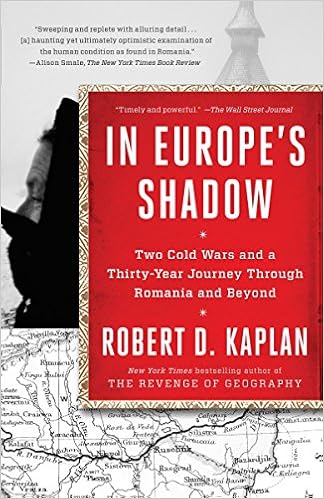 In Europe’s Shadow: Two Cold Wars and a Thirty-year Journey through Romania and Beyond by Robert D. Kaplan (ISBN: 978-0-8129-8662-4) is a wide-ranging survey of Romanian history, focusing on the post-World War I XX century and the first decade or so of the XXI century. Kaplan has
  Outrage, Inc.: How the Liberal Mob Ruined Science, Journalism, and Hollywood by Derek Hunter (ISBN: 978-0-06-283552-9) talks about that very ice age and how it never came, but the same alarmism that drove the talk about it has not abated at all. In fact, according to Hunter, the hype about the ice age’s replacement cause, climate change, is exponentially greater and has been combined with overwrought hype about dozens of other issues. The thesis of Hunter’s work is that that hype is lacking a foundation in reality, but has overtaken all of pop culture, a lot of the news media, and a lot of the scientific world. He talks a lot about the Leftist bias in all of those areas that the Right so often complains about. In each section, he provides concrete examples and then some analysis to drive home the points being made. He digs into some things that many readers probably would not even consider on their own, such as the budgets (and sources of those same budgets) for various movies. He found that while the movie studios and producers make their mainstream fare, they also unabashedly spend millions on agenda-driven movies that usually don’t do well at the box office. An agenda-driven press, though, happily covers those films in great detail. Hunter discusses the origins of some of pop culture’s environmentalist stars like Bill Nye and Neil deGrasse Tyson and why they are really only qualified to speak about certain issues, but seem to be asked for what are portrayed as authoritative statements on a variety of things. Hunter notes that if people can be incited to anger, they do what all people do when angry: make less-effective decisions, including asking for government policy that limits liberty and voting in politicians that want to expand government control.
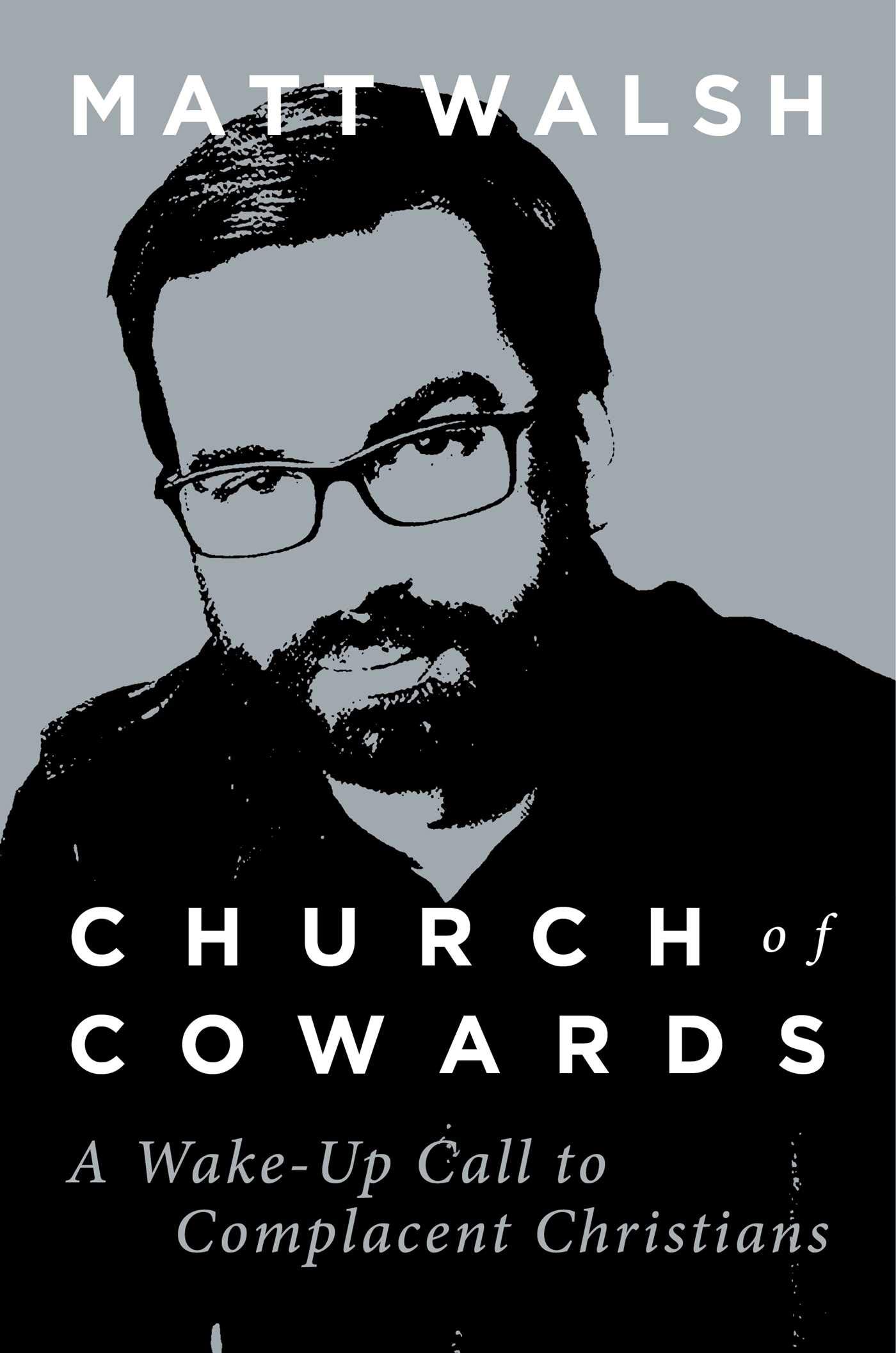 Church of Cowards: A Wake-up Call to Complacent Christians by Matt Walsh (ISBN: 978-1-62157-920-5) is a book about that very call to action. In the book, Walsh discusses some of what he perceives to be problems in America and then talks about how they are largely, if not completely, overcome by Christians getting up and putting their religious beliefs into action. While he is Catholic (not discussed in the book, but a known fact), the book is not directed at any specific denomination; the things he says are meant to be applicable by all believers. He notes that polls generally find America to be about 70% Christian, but that America does not function like a country that is 70% Christian. The opening chapter presents a fictionalized situation where barbarians come to America to slaughter Christians, something like ancient Rome, but can’t find anyone that will stand up for what the barbarians believe to be Christianity. The people they find are wishy-washy and non-committal about anything other than their openness and tolerance. The rest of the book that looks deeper into those watered-down values and how far they are from what Walsh believes is taught in the Bible. Modern man’s disdain for organized religion, the commitment many show to entertainment instead of God, and a brand of religion that doesn’t require any sacrifice from its adherents are a few of the topics that draw Walsh’s ire in a, typical for his Internet-based daily show, scathing take-down of modern American Christianity. The book asks those who call themselves Christian to start taking their religion more seriously, which, for most, will mean making effort to change and become more active.
 It seems there are
 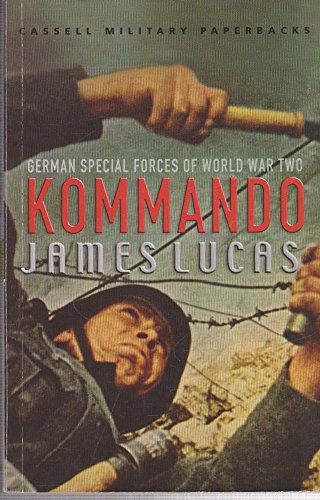 Kommando: German Special Forces of World War Two by James Lucas (ISBN: 0-304-35127-X) is a book that takes a look at special forces from the other side. Lucas is clearly pro-Ally and writes from a perspective driven purely by scholarly interest. The writing is dispassionate and appropriately covers the material. He discusses German special forces in the army, navy, and air force during World War II. He notes that German efforts in this area, just like happens to be the case for many other countries, historical and modern, were hampered by bureaucratic infighting, although this is probably a good thing in the case of World War II. The book catalogues various battles and operations that German special forces were involved in, some successful, such as the taking of a large fortress, the Belgian Fort Eben-Emael, and others resulting in large losses for the Germans, such as an attempt at capturing Yugoslav Partisan leader Josip Tito. There were also descriptions of guerilla action and more political things, such as an operation in Poland, where the intent of the operation was to make it look like the Poles were revolting, harming Germans, and giving Germany a reason to attack. There were descriptions of the German Navy trying to conduct special operations in specially designed boats and submarines, most of which were abject failures. The air force didn’t fare much better, although the author places much of the blame for this on German military leadership, including Hitler, who expected too much and did not use the special forces in appropriate situations. Finally, the book examines non-military forces, which were special only in the sense that they weren’t regular soldiers. In general, using civilians was even more havoc-filled than the failed operations that involved professional soldiers.
 Savage Continent: Europe in the Aftermath of World War II by Keith Lowe (ISBN: 978-1-250-03356-7) takes a very raw look at the immediate post-World War II period in European history. The author catalogues the side of post-war Europe that is not usually highlighted in articles and books: genocide, ethnic cleansing, corruption, and violence. The wartime years are famous for those, but they continued, usually on a smaller scale and in a more isolated fashion, for years after the Allies defeated the Axis powers. Lowe examines the post-war conditions and how they created the ideal setting for further violence. While the Allied armies tried to gain control and figure out just what they had on their hands, displaced persons and refugees wandered Europe. There were plenty of instances of vigilante justice and people looking for revenge against the Germans or other people that had truly or only purportedly wronged others. In Poland, Hungary, Czechoslovakia, and a few other places, the German concentration camps were still being used, either has temporary housing or by the Soviets or others for their original purposes, just against a new type of inmate. Ukrainian and Poles fought. Greece went into a civil war. Jews continued to find no quarter. The Allies and international organizations worked hard to remedy the harsh conditions, but given the level of destruction the war had wrought, it was often slow going. Finally, the emerging struggle of the Cold War meant that some of these problems were not given the focus that some would have liked them to have been under.
 Dave Barry’s Money Secrets: Like: Why Is There a Giant Eyeball on the Dollar? (ISBN: 1-4000-4758-7) is a parody of financial advice books or self-help books and contains a lot of Barry’s goofball humor as well as the kinds of juxtapositions of what people are always saying and what actually happens in real life that have kept comedians in business since the dawn of time. He talks about the need for money, the lack of money, the history of money, investment opportunities, financial gurus, famous rich people (the bit on Donald Trump was surprisingly germane), tipping, and the stock market, among other things. None of it is sound financial advice, but it the vast majority of it hits home, like all good humor, because there’s some truth to it.
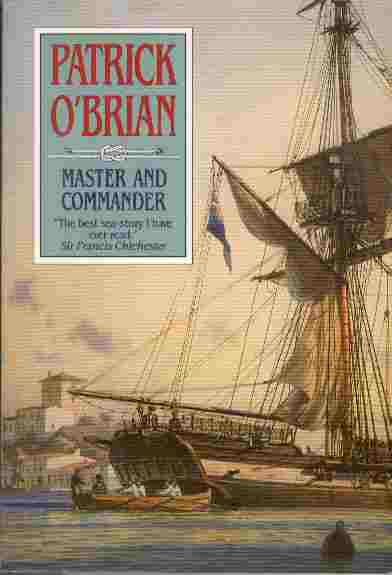 Master and Commander by Patrick O’Brian (ISBN: 0-393-30705-0) is the first in what turned out to be a twenty-book series. The novel starts off with the main protagonist, Jack Aubrey, being promoted and taking the helm of his own ship. He finds a guy named Stephen Maturin to be the ship’s surgeon, and off the two main characters in the series go, sailing for the Royal Navy. Their first duty is convoy escort, but having successfully completed that, they are given permission to cruise, looking for prizes (enemy ships, as the setting for the books is the Napoleonic Wars). Aubrey leads his crew to a few successes, some minor, some much more significant. Throughout, life aboard a ship and life in port are presented in life-like detail, right down to the ropes and pulleys aboard the ship. While Aubrey and Maturin headline the action, the story includes the other officers and men aboard, giving a complete picture. The story is loosely based on some actual events in the Royal Navy’s history. When the crew is in port, one is also introduced into Captain Harte, Aubrey’s superior, and Harte’s wife, with whom Aubrey is having an affair. That comes back to bite Aubrey toward the end of the novel, when he is prevented from getting any of his prize money, which is Harte’s way of getting back at him.
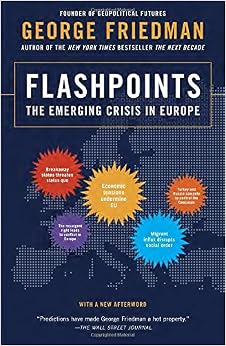 In Flashpoints: The Emerging Crisis in Europe by George Friedman (ISBN: 978-0-307-95113-7), the author examines the history of Europe between the great wars and then wants to know if Europe will continue in its post-World War II ways or return to its long history of war. He argues that Europe’s history of conflict has not come to an end. The war in Bosnia & Herzegovina after Yugoslavia disintegrated and Russia’s invasions of Georgia and Ukraine are given as the most prominent examples of how Europe has not been very peaceful since the fall of the Soviet Union, and that’s relatively recent. He discusses many of the problems Europe is facing, such as immigration from predominantly Muslim societies, the UK’s distance from the EU (the book was written before Brexit was finalized), friction between northern Europe and southeastern Europe, and economic concerns throughout the European Union. Friedman bases a lot of his analysis on what he calls
 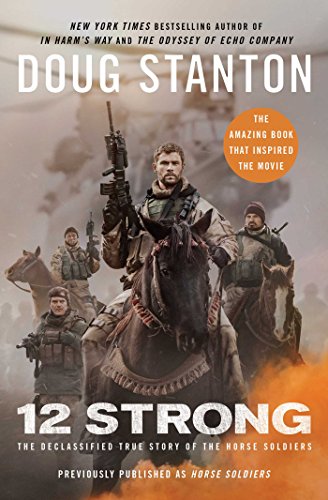 12 Strong: The Declassified True Story of the Horse Soldiers by Doug Stanton (ISBN: 978-1-5011-7995-2) tells the story of the earliest American soldiers to go into Afghanistan after the attacks that rocked America. The book starts with the airplanes flying into the World Trade Center and the reactions of the Army Special Forces soldiers who would eventually be the first to respond. The reader learns quite a bit about the lives of the twelve guys to go into Afghanistan. There were a variety of backgrounds, but all were committed to serving their country and making sure the terrorists didn’t strike again. The book tells of their preparations, some of which were rather unorthodox, including buying things from local stores or ordering supplies from catalogs. Actually getting into Afghanistan was a complicated matter, even with bases nearby in Uzbekistan. The helicopter rides from Uzbekistan to Afghanistan were harrowing experiences with pilots flying blind in unfamiliar territory with unfamiliar weather patterns. They eventually made it, though, and then the soldiers got to doing what they were trained to do. It wasn’t just fighting, though, as they were also trained to adapt to local conditions and get in the heads of the people they would be fighting with and against. They had to make allies out of temperamental Afghan warlords. The book portrays this as happening fairly easily and quickly, which may have been the case, but the men expressed a lot of trepidation about how their interactions with the Afghan leaders would go and were grateful for the American firepower that backed up what they were claiming they’d be able to help with. The initial American soldiers were careful to remain in their advisory roles and let the Afghans run the war. This also built respect and trust, and was a key to both building alliances and successful military action. The special forces soldiers were convinced that their work in Afghanistan was so successful because it was really the Afghans’ fight against the Taliban — America was just helping. One subplot, if it can be called that, in the book is the story of John Walker Lindh, the American who joined the Taliban. He was a prisoner that some of the soldiers in the book came in contact with. The book closes with happy reunions for the soldiers after completing their tour of duty, but then some must turn around and go to Iraq. They answered the call of duty, but most did not see the war in Iraq in the same light as that in Afghanistan, and it ended in the loss of life for some of them. They didn’t see the same system in Iraq, where the Americans were simply advisors and the suppliers of firepower, and that bode badly, according to them.
 Saints: The Standard of Truth (ISBN: 978-1-62972-492-8) is the first volume of a multi-volume history published by the Church itself. It basically covers the time period that corresponds to Joseph Smith’s life. It presents information about the Smith family, Joseph’s early years, his growing interest in religion as a teenager, the First Vision, the long path to Joseph acquiring the golden plates, the translation and publication of the Book of Mormon, and the founding of the Church. As the story goes along, the cast of characters grows rapidly to include the others who played key roles in the restoration of God’s Church on the earth, such as Joseph’s wife, Emma, Martin Harris, Oliver Cowdery, the Whitmer family, and others. Once the Church is founded, the book traces the history of the Church, focusing a little bit less on Joseph Smith, although never really getting away from him since he was so incredibly central to the story. One reads about the Church’s westward progression through Kirtland, Ohio, onto Missouri, and then to Nauvoo. Along the way, stories famous to anyone who has been in the Church long, such as two sisters rescuing the pages of what would become the Doctrine and Covenants or the early Saints praying for the ice on the river to break so their boat could get through, are presented. There were also a few lesser-known stories. The book ends with Brigham Young being called as the second president of the Church and his vision of moving the members of the Church even farther West in a quest for safety and freedom.